
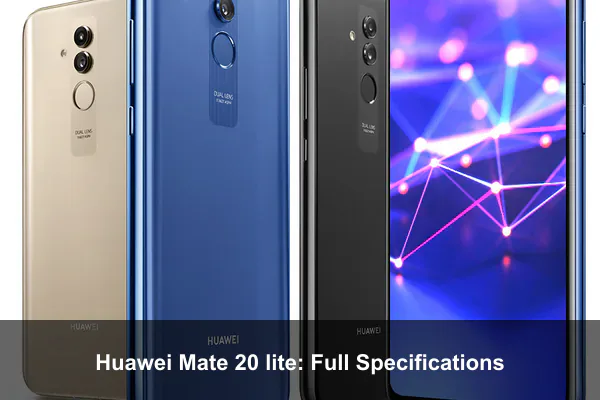
The Huawei Mate 20 lite arrived in late 2018 as the accessible gateway into Huawei’s flagship Mate series, blending a glass-sandwich design with a tall 6.3-inch notched display and dual cameras on both the front and rear. Positioned at roughly 230 EUR at launch, it targeted buyers who wanted Mate-family styling and a generous battery without paying flagship money.
Years later, this Kirin 710-powered handset is a useful reference point for understanding how Huawei built out its mid-range lineup before the U.S. trade restrictions reshaped the brand’s roadmap. Here is a closer look at what the Mate 20 lite offered and how its specs still stack up in context.
Full Specifications
Network
| Technology | GSM / HSPA / LTE |
| 2G bands | GSM 850 / 900 / 1800 / 1900 |
| 3G bands | HSDPA 850 / 900 / 1700(AWS) / 1900 / 2100 – SNE-LX1, SNE-LX3 |
| HSDPA 850 / 900 / 1900 / 2100 – SNE-LX2 | |
| 4G bands | 1, 3, 7, 8, 20 – SNE-LX1 |
| 1, 3, 5, 7, 8, 18, 19, 28, 38, 40, 41 – SNE-LX2, INE-LX2 | |
| 2, 4, 5, 7, 12, 17, 28 – SNE-LX3 | |
| Speed | HSPA 42.2/5.76 Mbps, LTE (3CA) Cat12 600/150 Mbps |
Launch
| Announced | 2018, August. Released 2018, September |
| Status | Discontinued |
Body
| Dimensions | 158.3 x 75.3 x 7.6 mm (6.23 x 2.96 x 0.30 in) |
| Weight | 172 g (6.07 oz) |
| Build | Glass front, glass back, aluminum frame |
| SIM | · Nano-SIM· Nano-SIM + Nano-SIM |
Display
| Type | IPS LCD |
| Size | 6.3 inches, 97.4 cm2 (~81.7% screen-to-body ratio) |
| Resolution | 1080 x 2340 pixels, 19.5:9 ratio (~409 ppi density) |
Platform
| OS | Android 8.1 (Oreo), upgradable to Android 10, EMUI 12 |
| Chipset | Kirin 710 (12 nm) |
| CPU | Octa-core (4×2.2 GHz Cortex-A73 & 4×1.7 GHz Cortex-A53) |
| GPU | Mali-G51 MP4 |
Memory
| Card slot | microSDXC (uses shared SIM slot) |
| Internal | 64GB 4GB RAM, 64GB 6GB RAM |
| eMMC 5.1 |
Main Camera
| Dual | 20 MP, f/1.8, 27mm (wide), PDAF Auxiliary lens |
| Features | LED flash, panorama, HDR |
| Video | 1080p@30/60fps |
Selfie camera
| Dual | 24 MP, f/2.0, 26mm (wide), 1/2.8", 0.9µm 2 MP, depth sensor |
| Features | HDR |
| Video | 1080p@30fps |
Sound
| Loudspeaker | Yes |
| 3.5mm jack | Yes |
Comms
| WLAN | Wi-Fi 802.11 a/b/g/n/ac, dual-band, Wi-Fi Direct |
| Bluetooth | 4.2, A2DP, LE |
| Positioning | GPS, GLONASS, BDS |
| NFC | Yes (SNE-LX1 only) |
| Radio | FM radio |
| USB | USB Type-C 2.0 |
Features
| Sensors | Fingerprint (rear-mounted), accelerometer, gyro, proximity, compass |
Battery
| Type | Li-Ion 3750 mAh, non-removable |
| Charging | 18W wired |
Misc
| Colors | Sapphire Blue, Black, Platinum gold |
| Models | SNE-AL00, SNE-LX1, SNE-LX2, SNE-LX3, INE-LX2 |
| Price | About 230 EUR |
Our Tests
| Performance | AnTuTu: 136583 (v7) GeekBench: 5574 (v4.4) GFXBench: 6.7fps (ES 3.1 onscreen) |
| Display | Contrast ratio: 1470:1 (nominal), 3.051 (sunlight) |
| Camera | Photo / Video |
| Loudspeaker | Voice 67dB / Noise 70dB / Ring 84dB |
| Audio quality | Noise -94.7dB / Crosstalk -73.1dB |
| Battery (old) | Endurance rating 97h |
Price and Availability
The Huawei Mate 20 lite offers a compelling combination of features and performance. While the base price is around €230, the actual cost may vary depending on your location and retailer. Below, you’ll find the approximate price of the Huawei Mate 20 lite converted into various currencies. Please note that these are estimates based on recent exchange rates as of May 25, 2026 and may not reflect the exact price you’ll find at a retailer.
- United States: $267
- Japan: ¥42,534
- United Kingdom: £199
- Australia: A$374
- Canada: C$369
- Taiwan: NT$8,400
- Denmark: kr1.716
- Saudi Arabia: ﷼1,003
- South Korea: ₩404,876
- Germany: €230
- Brazil: R$1.338
- Vietnam: ₫6.923.529
- Kenya: KSh 34,624
- India: ₹25,543
- Indonesia: Rp 4.720.620
- Nigeria: ₦365,073
- Pakistan: ₨74,574
- Philippines: ₱16,443
- Bangladesh: ৳৩২,৭৮৬
Where the Mate 20 lite Fits in Huawei’s Lineup
Despite carrying the Mate badge, the Mate 20 lite shares more DNA with Huawei’s nova series than with the true Mate 20 flagships. It launched alongside the Mate 20 and Mate 20 Pro but used the more modest Kirin 710 chipset, making it a stepping stone for buyers attracted to the Mate name at a sub-300 EUR price point.
Design and Build Quality
Huawei wrapped the Mate 20 lite in a glass front and back with an aluminum frame, a premium combination at this price tier in 2018. At 158.3 x 75.3 x 7.6 mm and 172 grams, it stays manageable in hand, and the Sapphire Blue, Black, and Platinum Gold finishes lean elegant rather than flashy. A rear-mounted fingerprint sensor handles biometrics.
Display Experience
The 6.3-inch IPS LCD pushes a 1080 x 2340 resolution at a 19.5:9 aspect ratio, yielding around 409 ppi and an 81.7% screen-to-body ratio thanks to a teardrop-style notch. Lab measurements show a 1470:1 contrast ratio, respectable for an LCD panel of this generation, though sunlight legibility (3.051) is average.
Performance and Software
The Kirin 710 pairs four Cortex-A73 cores at 2.2 GHz with four Cortex-A53 cores at 1.7 GHz, backed by a Mali-G51 MP4 GPU. AnTuTu v7 scores around 136,583, placing it firmly in upper mid-range territory for its era. Shipped on Android 8.1 with EMUI, it was later upgradable to Android 10 with EMUI 12, extending its software life meaningfully.
Cameras: A Front-Heavy Dual Setup
The rear pairs a 20 MP f/1.8 main sensor with a depth auxiliary lens, supporting 1080p video at 30 or 60 fps. More distinctively, the selfie array uses a 24 MP main shooter with a 2 MP depth sensor — an unusual emphasis on front-facing imaging that reflects Huawei’s read of the selfie-driven mid-range market at the time.
Battery and Charging
A 3,750 mAh Li-Ion cell drives the phone, paired with 18W wired charging. The endurance rating of 97 hours in legacy testing reflects strong all-day stamina, helped by the efficient 12 nm Kirin 710 and the LCD panel.
Connectivity and Extras
You get Wi-Fi 802.11 a/b/g/n/ac dual-band, Bluetooth 4.2, USB Type-C 2.0, a 3.5mm headphone jack, FM radio, and tri-GNSS positioning (GPS, GLONASS, BDS). NFC is restricted to the SNE-LX1 variant, so prospective buyers should verify model codes before importing.
Who Should Consider This Phone Today
As a current daily driver, the Mate 20 lite has aged out of relevance for demanding users, but it remains a sensible secondary device, a parent’s phone, or a backup handset. Collectors of pre-sanction Huawei hardware will also appreciate that it still ships with full Google Mobile Services, unlike Huawei’s post-2019 releases.
Conclusion
The Huawei Mate 20 lite was a smartly packaged mid-ranger that punched above its 230 EUR launch price with premium materials, a large display, and dual cameras front and back. It is best recommended today to buyers seeking an affordable Huawei device with Google services intact, or as a lightweight secondary phone — not as a primary handset for performance-hungry users.
