
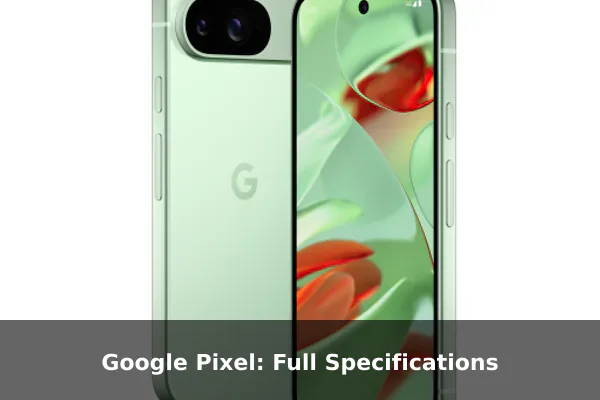
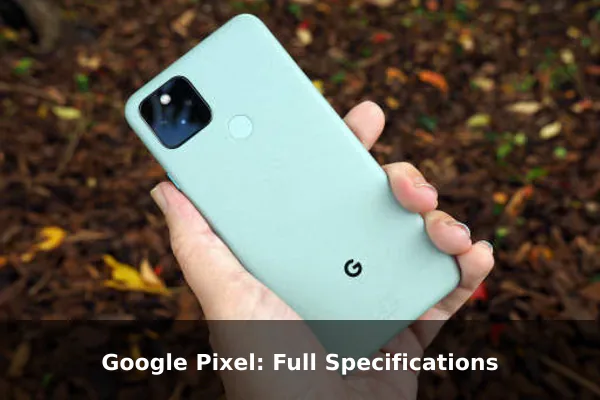
The Google Pixel is the original compact Pixel phone, announced on October 4, 2016 and released on October 20, 2016. It marked Google’s move from Nexus-style reference devices to a cleaner, Google-branded Android flagship with focused hardware, a sharp AMOLED screen, and a camera-first identity.
This article looks at the Google Pixel from a specs-focused angle, especially its value as a discontinued legacy Android phone. Instead of repeating the full specification table, the sections below explain what the hardware means for buyers comparing it with newer budget and used-market phones.
Full Specifications
Network
| Technology: | GSM / HSPA / LTE |
| 2G bands: | GSM 850 / 900 / 1800 / 1900 |
| 3G bands: | HSDPA 800 / 850 / 900 / 1700(AWS) / 1900 / 2100 |
| 4G bands: | 1, 2, 3, 4, 5, 7, 8, 12, 13, 17, 18, 19, 20, 21, 26, 28, 32, 38, 39, 40, 41 |
| Speed: | HSPA 42.2/5.76 Mbps, LTE (3CA) Cat9 450/50 Mbps or LTE (3CA) Cat11 600/75 Mbps |
Launch
| Announced: | 2016, October 04. Released 2016, October 20 |
| Status: | Discontinued |
Body
| Dimensions: | 143.8 x 69.5 x 8.5 mm (5.66 x 2.74 x 0.33 in) |
| Weight: | 143 g (5.04 oz) |
| Build: | Glass front (Gorilla Glass 4), aluminum/glass back, aluminum frame |
| SIM: | Nano-SIM |
| Water-repellent coating |
Display
| Type: | AMOLED |
| Size: | 5.0 inches, 68.9 cm2 (~69.0% screen-to-body ratio) |
| Resolution: | 1080 x 1920 pixels, 16:9 ratio (~441 ppi density) |
| Protection: | Corning Gorilla Glass 4 |
Platform
| OS: | Android 7.1 (Nougat), upgradable to Android 10 |
| Chipset: | Qualcomm MSM8996 Snapdragon 821 (14 nm) |
| CPU: | Quad-core (2×2.15 GHz Kryo & 2×1.6 GHz Kryo) |
| GPU: | Adreno 530 |
Memory
| Card slot: | No |
| Internal: | 32GB 4GB RAM, 128GB 4GB RAM |
| UFS 2.0 |
Main Camera
| Single: | 12.3 MP, f/2.0, 1/2.3″, 1.55µm, PDAF |
| Features: | Laser AF, Dual-LED flash, HDR, panorama |
| Video: | 4K@30fps, 1080p@60/120fps, 1080p@30fps (gyro-EIS), 720p@240fps |
Selfie camera
| Single: | 8 MP, f/2.4, 1/3.2″, 1.4µm |
| Video: | 1080p@30fps |
Sound
| Loudspeaker: | Yes |
| 3.5mm jack: | Yes |
Comms
| WLAN: | Wi-Fi 802.11 a/b/g/n/ac, dual-band, Wi-Fi Direct, DLNA |
| Bluetooth: | 4.2, A2DP, LE, aptX |
| Positioning: | GPS, GLONASS |
| NFC: | Yes |
| Radio: | No |
| USB: | USB Type-C 3.0 |
Features
| Sensors: | Fingerprint (rear-mounted), accelerometer, gyro, proximity, compass, barometer |
Battery
| Type: | Li-Ion 2770 mAh, non-removable |
| Charging: | 18W wired, PD |
| Stand-by: | Up to 456 h (3G) |
| Talk time: | Up to 26 h (3G) |
| Music play: | Up to 110 h |
Misc
| Colors: | Quite Black, Very Silver, Really Blue |
| SAR: | 0.92 W/kg (head) 0.58 W/kg (body) |
| SAR EU: | 0.33 W/kg (head) 0.61 W/kg (body) |
| Price: | About 290 EUR |
Our Tests
| Performance: | Basemark OS II 2.0: 2461Basemark X: 33023 |
| Display: | Contrast ratio: ∞ |
| Loudspeaker: | Voice 74dB / Noise 68dB / Ring 78dB |
| Audio quality: | Noise -93.0dB / Crosstalk -92.6dB |
| Battery (old): | Endurance rating 64h |
Price and Availability
The Google Pixel offers a compelling combination of features and performance. While the base price is around €290, the actual cost may vary depending on your location and retailer. Below, you’ll find the approximate price of the Google Pixel converted into various currencies. Please note that these are estimates based on recent exchange rates as of September 14, 2026 and may not reflect the exact price you’ll find at a retailer.
- United States: $336
- Japan: ¥51,666
- United Kingdom: £249
- Australia: A$470
- Canada: C$466
- Taiwan: NT$10,644
- Denmark: kr2.168
- Saudi Arabia: ﷼1,261
- South Korea: ₩451,944
- Germany: €290
- Brazil: R$1.722
- Vietnam: ₫8.698.746
- Kenya: KSh 43,577
- India: ₹32,107
- Indonesia: Rp 5.914.404
- Nigeria: ₦453,422
- Pakistan: ₨93,326
- Philippines: ₱21,047
- Bangladesh: ৳৪১,৪৯২
Value Position in the Used Phone Market
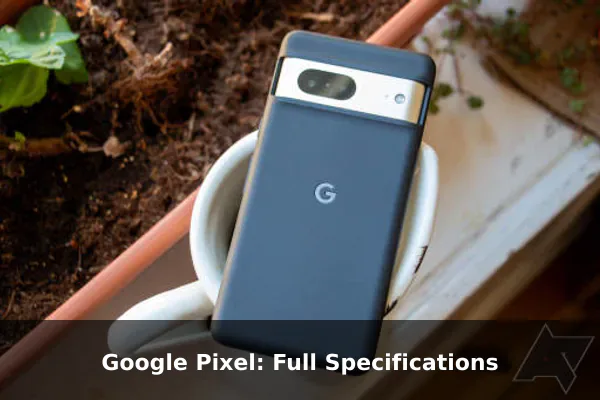
The Google Pixel launched as a premium compact Android phone, and the listed source price of about 290 EUR should be treated as historical or reference pricing rather than a current retail figure. Since the phone is discontinued, real availability depends on used, refurbished, or collector listings, where condition, battery health, storage size, and accessories matter more than launch-era pricing.
Its value today is not about chasing the latest features. The stronger angle is that it offers a clean Pixel experience in a small body, with a high-density AMOLED display, capable single rear camera hardware, UFS 2.0 storage, and USB Type-C. For buyers who mainly want a backup phone, a lightweight Android test device, or a simple compact handset, the Pixel still has a clear identity. However, the absence of 5G, expandable storage, and modern update support limits its everyday practicality.
Design and Build Quality
The original Google Pixel uses a glass front protected by Gorilla Glass 4, an aluminum frame, and a distinctive aluminum and glass rear design. At 143.8 x 69.5 x 8.5 mm and 143 g, it is much smaller and lighter than most modern smartphones. That compact footprint is one of its most meaningful advantages, especially for users who prefer one-handed handling over large-screen media consumption.
The rear-mounted fingerprint sensor is another practical detail. It keeps the front clean and gives fast biometric access without relying on an under-display scanner. The phone also includes a water-repellent coating, but it should not be confused with a modern IP-rated water-resistance claim. For a discontinued device of this age, buyers should be cautious around moisture, worn seals, and repaired units.
Display Experience
The 5.0-inch AMOLED display is small by current standards, but the 1080 x 1920 resolution and roughly 441 ppi pixel density remain sharp. Text, interface elements, and photos should look crisp, and the 16:9 aspect ratio feels traditional compared with taller modern screens. The source test data also lists an infinite contrast ratio, which reflects the expected strength of AMOLED panels with deep blacks.
The trade-off is size. This is not the phone to choose for long video sessions, split-screen multitasking, or large gaming controls. Instead, the display suits users who prefer pocketability, reading messages, managing calls, using maps, and taking quick photos. Gorilla Glass 4 protection is useful, but any used Pixel should still be checked for burn-in, scratches, and uneven brightness before purchase.
Performance and Storage
The Snapdragon 821 chipset, paired with 4GB of RAM, was flagship-class hardware in 2016. The quad-core Kryo CPU and Adreno 530 GPU can still handle basic Android tasks, lightweight apps, browsing, music, messaging, and older games. The listed Basemark OS II 2.0 score of 2461 and Basemark X score of 33023 help place it as a former high-end device rather than an entry-level phone from its era.
That said, expectations need to be realistic. Current apps are heavier, background services are more demanding, and Android 10 is the final listed upgrade path from the original Android 7.1 software. The 32GB model is especially restrictive because there is no microSD card slot. Buyers who plan to store offline music, photos, or many apps should strongly prefer the 128GB version.
Camera Character
The Google Pixel’s 12.3 MP rear camera uses large 1.55 micrometer pixels, phase detection autofocus, laser autofocus, HDR, panorama support, and dual-LED flash. It is a single-camera system, so there is no ultrawide, telephoto, macro, or dedicated depth sensor. Its appeal is more straightforward: a focused main camera that helped establish the Pixel reputation for computational photography.
Video support is also strong for its generation, with 4K recording at 30fps, 1080p at up to 120fps, gyro-assisted electronic stabilization at 1080p 30fps, and 720p slow motion at 240fps. The 8 MP front camera records 1080p at 30fps, which is adequate for basic selfies and video calls. Buyers expecting modern night modes, multiple focal lengths, or advanced portrait processing should look newer, but the original Pixel remains interesting for simple point-and-shoot photography.
Battery and Charging
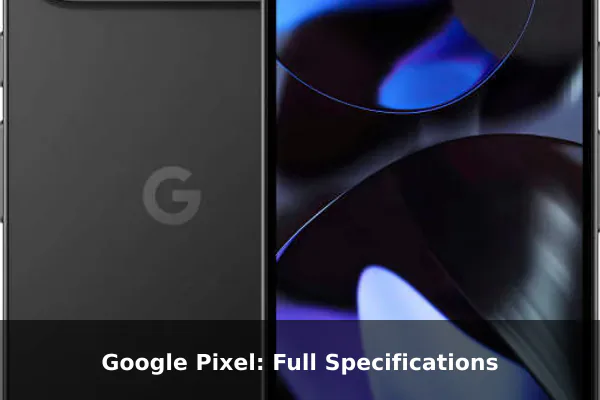
The 2770 mAh non-removable battery is modest by modern standards, but it matches the phone’s compact body and 5.0-inch display. The source test data lists an older endurance rating of 64 hours, along with up to 456 hours of 3G standby, up to 26 hours of 3G talk time, and up to 110 hours of music playback. These figures are useful for historical comparison, but real-world results today will depend heavily on battery age.
The phone supports 18W wired charging with USB Power Delivery, which remains practical for a compact legacy device. The more important buying check is battery health. Since every original Pixel is now an older unit, a refurbished phone with a recently replaced battery may be much more usable than a cheaper unit with its original cell.
Software and Long-Term Support
The Pixel shipped with Android 7.1 Nougat and is listed as upgradable to Android 10. That software history matters because the original Pixel was designed as a clean Google Android device rather than a heavily customized phone. The interface is direct, app compatibility remains reasonable for many basic tasks, and the phone is useful for anyone studying the early Pixel software experience.
The limitation is support. Google’s official Pixel update schedule should be checked for broader context, but this model should be treated as a legacy phone rather than a secure long-term daily driver. For banking, work accounts, sensitive communication, or years of future app compatibility, a newer Pixel or another current Android phone is the safer choice.
Connectivity and Extras
The Google Pixel covers GSM, HSPA, and LTE, with broad 4G band support and LTE carrier aggregation listed in the source data. It also includes Wi-Fi 802.11 a/b/g/n/ac, Bluetooth 4.2 with aptX, GPS and GLONASS positioning, NFC, and USB Type-C 3.0. The presence of a 3.5mm headphone jack is a welcome legacy feature, especially for wired audio users.
There is no FM radio and no 5G. Network compatibility should be checked carefully with the buyer’s carrier, especially because regional model variants and carrier shutdowns can affect older LTE phones. The SAR values and FCC-style radio details are best verified through official support or regulator references when exact market compliance matters.
Who Should Buy the Google Pixel?
The Google Pixel makes the most sense for buyers who specifically want a compact, clean Android phone with a sharp AMOLED screen, a capable single rear camera, NFC, USB-C, and a headphone jack. It can work well as a backup phone, a lightweight secondary device, a photography curiosity, or a collector piece from the beginning of the Pixel line.
It is less suitable for users who need long battery life, current security updates, 5G, expandable storage, a large screen, or modern camera versatility. The 128GB model is the better version to seek, and condition should matter more than price alone. A well-kept unit can still feel charming and useful, but a worn battery or damaged display will quickly erase the appeal.
Conclusion
The Google Pixel is best understood as a compact legacy flagship with a clean Android identity, sharp AMOLED display, practical camera hardware, and strong historical importance. It is not the right choice for demanding modern use, but it can still be worthwhile as a backup, collector, or simple compact phone. Buy it only in good condition, preferably with 128GB storage and a healthy battery.
References
- Google Pixel Phone Help – Pixel phone hardware tech specs – Official Google source for Pixel hardware specifications, including display, dimensions, processor, cameras, battery, connectivity, network bands, materials, and warranty details for recent models.
- Google Pixel Phone Help – Pixel phone hardware tech specs (earlier models) – Official Google source for older Pixel model specifications, useful if the article targets the original Google Pixel or legacy Pixel phones.
- Google Store – Compare Google Pixel phones – Official Google comparison page for current and recent Pixel phones, helpful for verifying headline specs and model-to-model differences.
- Google Pixel Phone Help – Pixel software update schedule – Official Google reference for Android version support, Pixel updates, and security update timelines.
- FCC Equipment Authorization Search – Primary U.S. regulator source for device filings, FCC IDs, radio certifications, SAR, and hearing-aid compatibility details when verifying specific Pixel model variants.
