
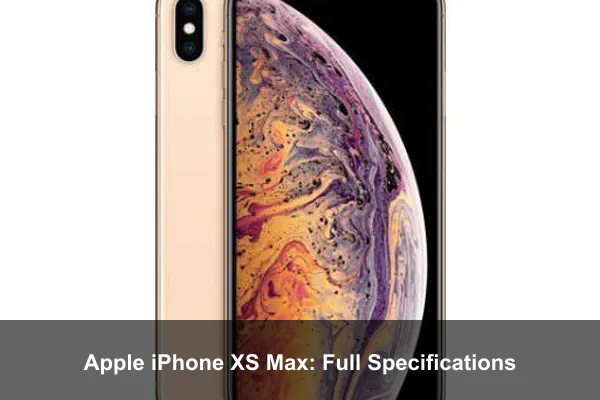
The Apple iPhone XS Max arrived in September 2018 as Apple’s first true plus-sized flagship in the modern bezel-less era, pairing a sprawling 6.5-inch Super Retina OLED panel with the then-revolutionary A12 Bionic chipset. Years after its discontinuation, it has settled into a curious position in the second-hand market — a once-premium handset now circulating at around 210 EUR, making it an unusually accessible entry point into Apple’s high-end hardware.
This article looks at the iPhone XS Max not as a brand-new launch but as a mature device being evaluated in 2026: how its hardware holds up, where its limitations show, and which type of buyer can still get meaningful value out of it today.
Full Specifications
Network
| Technology: | GSM / CDMA / HSPA / EVDO / LTE |
| 2G bands: | GSM 850 / 900 / 1800 / 1900 |
| CDMA 800 / 1900 | |
| 3G bands: | HSDPA 850 / 900 / 1700(AWS) / 1900 / 2100 |
| CDMA2000 1xEV-DO | |
| 4G bands: | 1, 2, 3, 4, 5, 7, 8, 12, 13, 14, 17, 18, 19, 20, 25, 26, 28, 29, 30, 32, 34, 38, 39, 40, 41, 46, 66 – A2101 |
| 1, 2, 3, 4, 5, 7, 8, 12, 13, 14, 17, 18, 19, 20, 25, 26, 29, 30, 32, 34, 38, 39, 40, 41, 46, 66, 71 – A1921, A2104 | |
| Speed: | HSPA 42.2/5.76 Mbps, LTE (4CA) Cat16 1024/150 Mbps, EV-DO Rev.A 3.1 Mbps |
Launch
| Announced: | 2018, September 12. Released 2018, September 21 |
| Status: | Discontinued |
Body
| Dimensions: | 157.5 x 77.4 x 7.7 mm (6.20 x 3.05 x 0.30 in) |
| Weight: | 208 g (7.34 oz) |
| Build: | Glass front (Corning-made glass), glass back (Corning-made glass), stainless steel frame |
| SIM: | Nano-SIM + eSIMNano-SIM + Nano-SIM (China) |
| IP68 dust tight and water resistant (immersible up to 2m for 30 min) Apple Pay (Visa, MasterCard, AMEX certified) |
Display
| Type: | Super Retina OLED, HDR10, Dolby Vision, 625 nits (HBM) |
| Size: | 6.5 inches, 102.9 cm2 (~84.4% screen-to-body ratio) |
| Resolution: | 1242 x 2688 pixels, 19.5:9 ratio (~458 ppi density) |
| Protection: | Scratch-resistant glass |
| 3D Touch |
Platform
| OS: | iOS 12, upgradable to iOS 18.6 |
| Chipset: | Apple A12 Bionic (7 nm) |
| CPU: | Hexa-core (2×2.5 GHz Vortex + 4×1.6 GHz Tempest) |
| GPU: | Apple GPU (4-core graphics) |
Memory
| Card slot: | No |
| Internal: | 64GB 4GB RAM, 256GB 4GB RAM, 512GB 4GB RAM |
| NVMe |
Main Camera
| Dual: | 12 MP, f/1.8, 26mm (wide), 1/2.55″, 1.4µm, dual pixel PDAF, OIS 12 MP, f/2.4, 52mm (telephoto), 1/3.4″, 1.0µm, PDAF, OIS, 2x optical zoom |
| Features: | Quad-LED dual-tone flash, HDR (photo/panorama) |
| Video: | 4K@24/30/60fps, 1080p@30/60/120/240fps, HDR, stereo sound rec. |
Selfie camera
| Single: | 7 MP, f/2.2, 32mm (standard) SL 3D, (depth/biometrics sensor) |
| Features: | HDR |
| Video: | 1080p@30/60fps, gyro-EIS |
Sound
| Loudspeaker: | Yes, with stereo speakers |
| 3.5mm jack: | No |
Comms
| WLAN: | Wi-Fi 802.11 a/b/g/n/ac, dual-band, hotspot |
| Bluetooth: | 5.0, A2DP, LE |
| Positioning: | GPS, GLONASS, GALILEO, QZSS |
| NFC: | Yes |
| Radio: | No |
| USB: | Lightning, USB 2.0 |
Features
| Sensors: | Face ID, accelerometer, gyro, proximity, compass, barometer |
Battery
| Type: | Li-Ion 3174 mAh, non-removable (12.08 Wh) |
| Charging: | 15W wired, PD2.0, 50% in 30 min Wireless (Qi) |
Misc
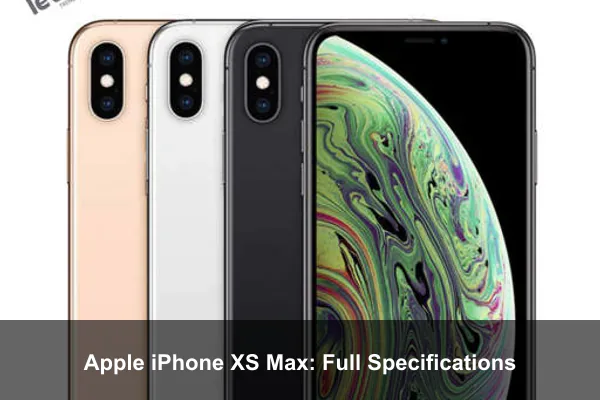
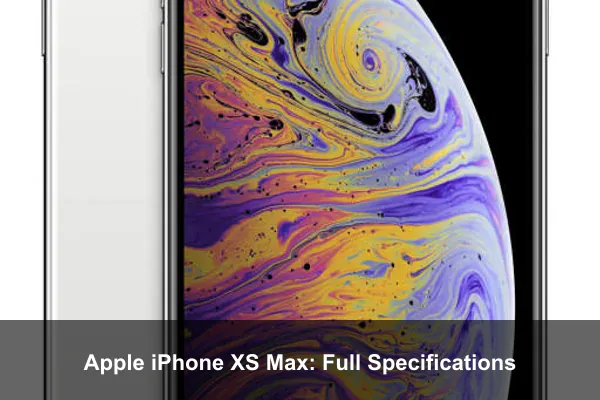
| Colors: | Space Gray, Silver, Gold |
| Models: | A1921, A2101, A2102, A2104, iPhone11,6 |
| SAR: | 1.16 W/kg (head) 1.17 W/kg (body) |
| SAR EU: | 0.99 W/kg (head) 0.99 W/kg (body) |
| Price: | About 210 EUR |
Our Tests
| Performance: | AnTuTu: 353210 (v7) GeekBench: 11432 (v4.4) GFXBench: 47fps (ES 3.1 onscreen) |
| Display: | Contrast ratio: Infinite (nominal), 4.516 (sunlight) |
| Camera: | Photo / Video |
| Loudspeaker: | Voice 70dB / Noise 74dB / Ring 84dB |
| Audio quality: | Noise -93.7dB / Crosstalk -82.8dB |
| Battery (old): | Endurance rating 79h |
Price and Availability
The Apple iPhone XS Max offers a compelling combination of features and performance. While the base price is around €210, the actual cost may vary depending on your location and retailer. Below, you’ll find the approximate price of the Apple iPhone XS Max converted into various currencies. Please note that these are estimates based on recent exchange rates as of May 27, 2026 and may not reflect the exact price you’ll find at a retailer.
- United States: $244
- Japan: ¥38,896
- United Kingdom: £182
- Australia: A$341
- Canada: C$337
- Taiwan: NT$7,679
- Denmark: kr1.567
- Saudi Arabia: ﷼916
- South Korea: ₩368,134
- Germany: €210
- Brazil: R$1.228
- Vietnam: ₫6.387.317
- Kenya: KSh 31,660
- India: ₹23,353
- Indonesia: Rp 4.341.296
- Nigeria: ₦332,220
- Pakistan: ₨68,110
- Philippines: ₱15,034
- Bangladesh: ৳২৯,৯৯৩
Value in 2026: What 210 EUR Actually Buys You
At roughly 210 EUR on the used and refurbished market, the iPhone XS Max sits in territory normally occupied by entry-level Android handsets. What sets it apart is the pedigree — a stainless steel frame, IP68 rating, OLED HDR display, and a chipset that still receives current iOS updates. For buyers who prioritise build quality and software longevity over raw modern performance, that price-to-capability ratio remains genuinely compelling.
Design and Build: Premium Materials That Aged Well
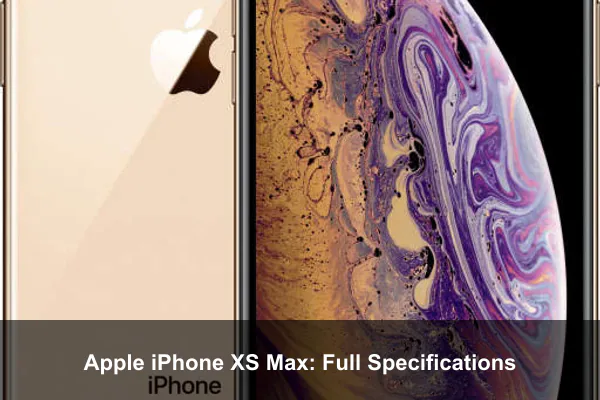
The 157.5 x 77.4 x 7.7 mm chassis is heavy at 208 g, but the glass sandwich with a polished stainless steel frame still feels distinctly premium next to today’s aluminium mid-rangers. IP68 dust and water resistance (up to 2 m for 30 minutes) is a genuine functional bonus at this price point, and the Space Gray, Silver, and Gold finishes have aged with grace rather than going out of style.
The 6.5-Inch Super Retina OLED Experience
This was Apple’s largest OLED display at launch, delivering 1242 x 2688 pixels at 458 ppi, HDR10 and Dolby Vision support, and 625 nits of high-brightness mode output. The notch dates the design language, but image quality — deep blacks, accurate colour, and infinite nominal contrast — remains competitive with modern mid-range OLEDs. The 3D Touch layer, since deprecated on newer iPhones, is a quietly nostalgic feature for long-time users.
A12 Bionic: Still Punching Above Its Weight
The 7 nm A12 Bionic — hexa-core CPU with 2 performance Vortex cores at 2.5 GHz and 4 efficiency Tempest cores, plus a 4-core Apple GPU — scored 353,210 on AnTuTu v7 and 11,432 on GeekBench v4.4 in our tests. In 2026, those numbers no longer impress on paper, but in real-world iOS use the chip still handles social apps, streaming, navigation, and most casual games without stutter. Heavy 3D titles and pro-grade editing apps are where it shows its age.
Dual 12 MP Camera: Optical Zoom and Smart HDR
The rear camera pairs a 26 mm f/1.8 wide with a 52 mm f/2.4 telephoto, both with OIS, enabling 2x optical zoom and Apple’s first-generation Smart HDR pipeline. It still produces respectable daylight stills and competent 4K video at up to 60 fps with stereo audio. Low-light performance trails modern computational-photography systems, particularly compared with current iPhones or recent Pixels, but it remains entirely usable for everyday shooting.
Battery and Charging: A Mixed Bag
The 3,174 mAh battery delivered a 79-hour endurance rating in our original testing, and that figure has likely degraded on most second-hand units. The 15 W wired charging via Lightning and Qi wireless support feel slow next to today’s 65–100 W standards, but PD 2.0 still hits 50% in roughly 30 minutes. Battery replacement is worth budgeting for if buying used.
Software: Seven Years of iOS Updates
Launched on iOS 12 and officially supported through iOS 18.6, the XS Max has received seven major OS upgrades — a longevity record few Android devices at any price can match. This is arguably the single strongest reason to consider it in 2026: continued security patches, current app compatibility, and access to the modern iOS feature set.
Connectivity: Lightning Holds It Back
Wi-Fi 802.11ac dual-band, Bluetooth 5.0, NFC for Apple Pay, and broad LTE band support cover the essentials. The omissions sting more today than they did at launch: no 5G, no USB-C (Lightning with USB 2.0 speeds), no 3.5 mm jack, and no microSD slot. The 64/256/512 GB storage tiers with 4 GB RAM are fixed for life.
Who Should Buy It Today
The iPhone XS Max in 2026 makes the most sense for three buyers: someone wanting their first iPhone on a tight budget, a parent or older user who values iOS simplicity over cutting-edge specs, or an existing Apple-ecosystem owner needing an affordable secondary device. Power users, mobile gamers, and anyone planning to keep a phone for 3+ more years should look at newer models like the iPhone 13 or 14 instead.
Conclusion
The Apple iPhone XS Max is a graceful aging flagship — premium materials, a still-excellent OLED panel, capable cameras, and software support that extends well beyond what most rivals offer. At around 210 EUR it is a sensible budget gateway into the Apple ecosystem, provided you accept Lightning charging, no 5G, and likely needing a fresh battery. Recommended for budget-conscious iOS first-timers and ecosystem secondary-device buyers; pass if you need modern connectivity or long-term future-proofing.
