
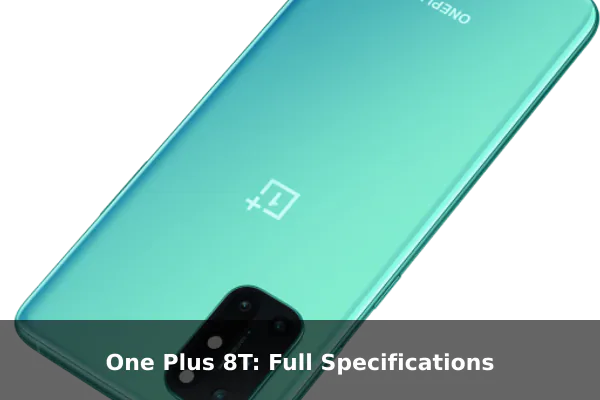
The One Plus 8T is a 2020 flagship-class Android phone built around a 120Hz Fluid AMOLED display, Snapdragon 865 5G performance, dual-SIM support, and very fast 65W wired charging. It sits in an interesting place for specs-focused buyers because many of its core components still read like premium hardware, even though the phone is no longer new.
This article looks at the One Plus 8T from a practical specification angle: how the display, chipset, cameras, battery, software status, and network variants hold up for buyers comparing it with newer mid-range and older flagship phones.
Full Specifications
Network
| Technology: | GSM / CDMA / HSPA / LTE / 5G |
| 2G bands: | GSM 850 / 900 / 1800 / 1900 |
| CDMA 800 / 1900 & TD-SCDMA | |
| 3G bands: | HSDPA 800 / 850 / 900 / 1700(AWS) / 1800 / 1900 / 2100 |
| 4G bands: | 1, 2, 3, 4, 5, 7, 8, 12, 13, 17, 18, 19, 20, 25, 26, 28, 32, 34, 38, 39, 40, 41, 42, 66 – EU |
| 1, 2, 3, 4, 5, 7, 8, 12, 13, 17, 18, 19, 20, 25, 26, 28, 29, 30, 34, 38, 39, 40, 41, 46, 48, 66, 71 – NA | |
| 1, 2, 3, 4, 5, 7, 8, 12, 17, 18, 19, 20, 26, 34, 38, 39, 40, 41, 46 – IN | |
| 1, 2, 3, 4, 5, 7, 8, 12, 17, 18, 19, 20, 26, 34, 38, 39, 40, 41 – CN | |
| 5G bands: | 1, 3, 7, 28, 41, 78 SA/NSA – EU |
| 1, 2, 3, 5, 25, 41, 66, 71 SA/NSA – NA | |
| 1, 3, 78 SA/NSA – IN | |
| 41, 78, 79 SA/NSA – CN | |
| Speed: | HSPA 42.2/5.76 Mbps, LTE (5CA) Cat18 1200/200 Mbps, 5G 7.5 Gbps DL |
Launch
| Announced: | 2020, October 14 |
| Status: | Available. Released 2020, October 16 |
Body
| Dimensions: | 160.7 x 74.1 x 8.4 mm (6.33 x 2.92 x 0.33 in) |
| Weight: | 188 g (6.63 oz) |
| Build: | Glass front (Gorilla Glass 5), glass back (Gorilla Glass 5), aluminum frame |
| SIM: | Nano-SIM + Nano-SIM |
Display
| Type: | Fluid AMOLED, 120Hz, HDR10+ |
| Size: | 6.55 inches, 103.6 cm2 (~87.0% screen-to-body ratio) |
| Resolution: | 1080 x 2400 pixels, 20:9 ratio (~402 ppi density) |
| Protection: | Corning Gorilla Glass 5 |
Platform
| OS: | Android 11, upgradable to Android 14, OxygenOS 14 |
| Chipset: | Qualcomm SM8250 Snapdragon 865 5G (7 nm+) |
| CPU: | Octa-core (1×2.84 GHz Cortex-A77 & 3×2.42 GHz Cortex-A77 & 4×1.80 GHz Cortex-A55) |
| GPU: | Adreno 650 |
Memory
| Card slot: | No |
| Internal: | 128GB 8GB RAM, 256GB 12GB RAM |
| UFS 3.1 |
Main Camera
| Quad: | 48 MP, f/1.7, 26mm (wide), 1/2.0″, 0.8µm, PDAF, OIS 16 MP, f/2.2, 14mm, 123˚ (ultrawide), 1/3.6″, 1.0µm 5 MP, f/2.4, (macro) 2 MP, f/2.4, (monochrome) |
| Features: | Dual-LED flash, HDR, panorama |
| Video: | 4K@30/60fps, 1080p@30/60/240fps, Auto HDR, gyro-EIS |
Selfie camera
| Single: | 16 MP, f/2.4, (wide), 1/3.06″, 1.0µm |
| Features: | HDR |
| Video: | 1080p@30fps, gyro-EIS |
Sound
| Loudspeaker: | Yes, with stereo speakers |
| 3.5mm jack: | No |
Comms
| WLAN: | Wi-Fi 802.11 a/b/g/n/ac/6, dual-band, Wi-Fi Direct, DLNA |
| Bluetooth: | 5.1, A2DP, LE, aptX HD |
| Positioning: | GPS (L1+L5), GLONASS (G1), BDS (B1), GALILEO (E1+E5a) |
| NFC: | Yes |
| Radio: | No |
| USB: | USB Type-C 3.1, OTG |
Features
| Sensors: | Fingerprint (under display, optical), accelerometer, gyro, proximity, compass, barometer (market dependant) |
Battery
| Type: | Li-Po 4500 mAh |
| Charging: | 65W wired, 100% in 39 min |
Misc
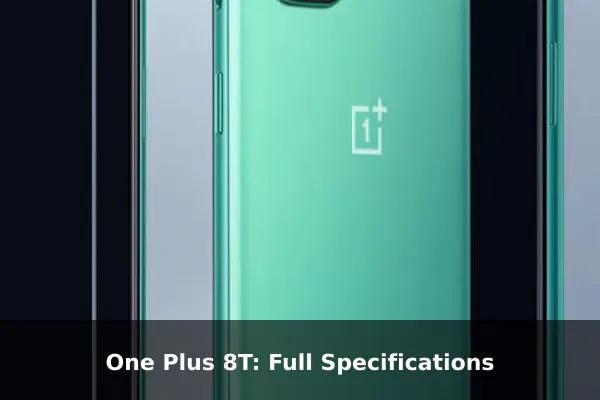
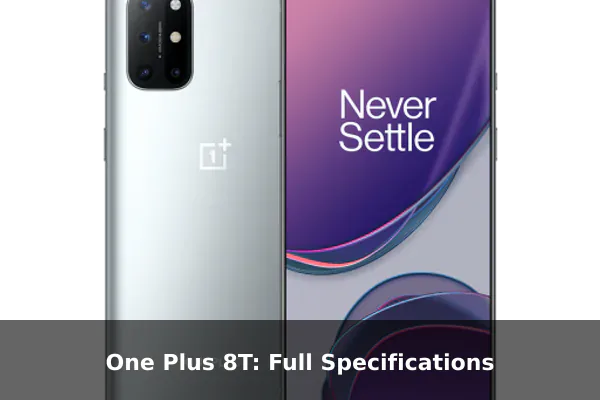
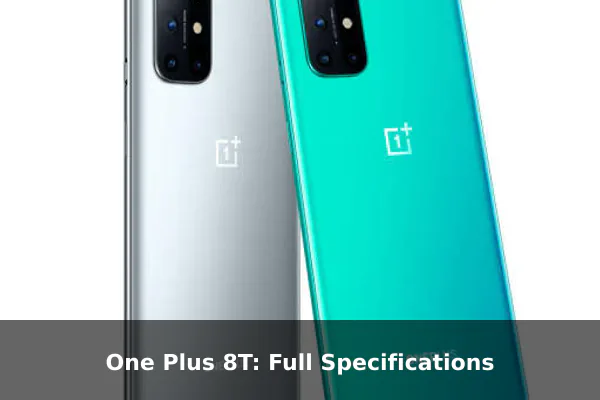
| Colors: | Aquamarine Green, Lunar Silver, Cyberpunk 2077 Edition |
| Models: | KB2001, KB2000, KB2003, KB2005 |
| Price: | € 132.58 / $ 1,095.00 / £ 116.99 |
Our Tests
| Performance: | AnTuTu: 586000 (v8) GeekBench: 3126 (v5.1) GFXBench: 46fps (ES 3.1 onscreen) |
| Display: | 802 nits max brightness (measured) |
| Camera: | Photo / Video |
| Loudspeaker: | -24.0 LUFS (Very good) |
| Battery (old): | Endurance rating 104h |
Price and Availability
The One Plus 8T offers a compelling combination of features and performance. While the base price is around €133, the actual cost may vary depending on your location and retailer. Below, you’ll find the approximate price of the One Plus 8T converted into various currencies. Please note that these are estimates based on recent exchange rates as of July 20, 2026 and may not reflect the exact price you’ll find at a retailer.
- United States: $152
- Japan: ¥24,621
- United Kingdom: £113
- Australia: A$217
- Canada: C$212
- Taiwan: NT$4,903
- Denmark: kr989
- Saudi Arabia: ﷼568
- South Korea: ₩225,357
- Germany: €133
- Brazil: R$775
- Vietnam: ₫3.972.843
- Kenya: KSh 19,604
- India: ₹14,590
- Indonesia: Rp 2.713.258
- Nigeria: ₦208,722
- Pakistan: ₨42,151
- Philippines: ₱9,333
- Bangladesh: ৳১৮,৬৯৬
Why Should You Buy the One Plus 8T?
The main reason to consider the One Plus 8T is its balance of flagship fundamentals. The Snapdragon 865 5G chipset, UFS 3.1 storage, 120Hz AMOLED panel, stereo speakers, and 65W charging give it a specification base that still feels stronger than many budget and lower mid-range phones. It is not a camera-first device by modern standards, but it remains appealing if you value speed, display quality, and fast top-ups more than novelty features.
Design and Build Quality
The One Plus 8T uses a glass front, glass back, and aluminum frame, with Gorilla Glass 5 protection listed for both the front and rear. At 160.7 x 74.1 x 8.4 mm and 188 g, it is not an ultra-compact phone, but it is reasonably slim for a 4500 mAh device. The Nano-SIM plus Nano-SIM setup is useful for travel or separating personal and work numbers, though there is no microSD card slot for storage expansion.
Display Experience
The 6.55-inch Fluid AMOLED display is one of the strongest reasons to keep the One Plus 8T on a comparison list. It supports a 120Hz refresh rate, HDR10+, a 1080 x 2400 resolution, and around 402 ppi density. The measured maximum brightness figure of 802 nits is respectable, and the flat 20:9 panel makes the phone practical for scrolling, video playback, gaming, and day-to-day reading without leaning too heavily on curved-edge styling.
Performance and Storage
Performance is anchored by the Qualcomm Snapdragon 865 5G platform with an Adreno 650 GPU. The CPU layout combines one 2.84 GHz Cortex-A77 core, three 2.42 GHz Cortex-A77 cores, and four 1.80 GHz Cortex-A55 efficiency cores. Source test figures list AnTuTu v8 at 586000, GeekBench 5.1 at 3126, and GFXBench at 46fps in ES 3.1 onscreen testing. The available 128GB with 8GB RAM and 256GB with 12GB RAM versions both use UFS 3.1 storage, which helps app loading and file handling feel quicker than older UFS 2.x phones.
Camera Hardware
The rear camera system is a quad setup led by a 48 MP wide camera with PDAF and OIS. It is joined by a 16 MP ultrawide camera with a 123-degree field of view, a 5 MP macro camera, and a 2 MP monochrome sensor. Video support includes 4K at 30 or 60fps and 1080p recording up to 240fps, with Auto HDR and gyro-EIS. The front camera is a 16 MP wide unit with HDR and 1080p video at 30fps. In practical terms, the main camera is the most important sensor here, while the macro and monochrome cameras are more limited supporting hardware.
Battery and Charging
The 4500 mAh Li-Po battery is paired with 65W wired charging, with the source data listing a full charge in 39 minutes. That is still fast by current standards and is a major usability advantage if you often charge in short sessions. The old battery endurance rating is listed at 104 hours, suggesting the One Plus 8T was efficient enough for mixed daily use when tested under that method.
Software Status
The One Plus 8T launched with Android 11 and is listed as upgradable to Android 14 with OxygenOS 14. That matters because long-term usability depends heavily on software support, app compatibility, and security maintenance. Buyers should still check the exact regional software build and update status before purchasing, especially for used or imported units, because support timing can vary by model and market.
Connectivity and Regional Variants
Connectivity is broad, but the band lists differ by EU, North America, India, and China variants. The phone supports GSM, CDMA, HSPA, LTE, and 5G, with SA and NSA 5G support depending on region. Wi-Fi 6, Bluetooth 5.1 with aptX HD, NFC, USB Type-C 3.1 with OTG, and multi-constellation positioning are also included. Model numbers include KB2001, KB2000, KB2003, and KB2005, so network compatibility should be checked carefully before buying across markets.
Who Should Buy It?
The One Plus 8T makes the most sense for buyers who want an older flagship with a smooth display, strong everyday performance, fast storage, stereo audio, NFC, and rapid wired charging. It is less ideal for users who need a headphone jack, expandable storage, the longest possible future software support, or a modern camera system with advanced telephoto hardware. As a value comparison device, it is strongest when priced closer to older flagship territory rather than current premium-phone pricing.
Conclusion
The One Plus 8T remains a well-rounded Android flagship for display quality, speed, charging, and connectivity, provided the exact model supports your local network bands and the price reflects its age. It is recommended for buyers who prioritize performance and fast charging over the latest camera hardware.
References
- OnePlus 8T Official Specifications – Primary source for dimensions, display, processor, RAM/storage, battery, cameras, connectivity bands, sensors, ports, audio, and in-box contents.
- OnePlus 8T Official Product Page – Official product page with feature claims and footnotes for display, Warp Charge 65, Snapdragon 865, camera, battery capacity, and OxygenOS launch software.
- FCC Equipment Authorization System – Official U.S. regulatory database for checking OnePlus 8T wireless certification documents; search FCC ID 2ABZ2-EF009 for KB2005/KB2007-related filings.
- Qualcomm Snapdragon 865 5G Mobile Platform – Official chipset reference for Snapdragon 865, Adreno 650 GPU, Snapdragon X55 5G modem, CPU architecture, and platform capabilities used by the OnePlus 8T.
- Corning Gorilla Glass – OnePlus 8T – Official Corning verification that the OnePlus 8T uses Gorilla Glass 5 on the front and back.
