
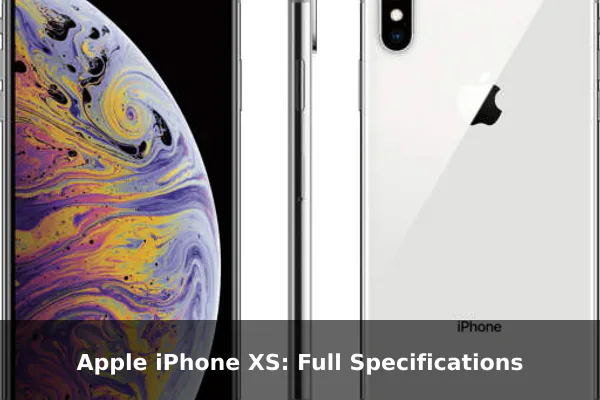
The Apple iPhone XS is a compact flagship from 2018 that still has a clear identity: premium materials, a sharp OLED display, Face ID, strong stereo sound, and a dual-camera system in a smaller body than most modern phones.
This article looks at the iPhone XS from a current value perspective, using the supplied source specifications and reputable references to explain where it still feels capable, where it shows its age, and who should consider it at around 190 EUR.
Full Specifications
Network
| Technology: | GSM / CDMA / HSPA / EVDO / LTE |
| 2G bands: | GSM 850 / 900 / 1800 / 1900 |
| CDMA 800 / 1900 | |
| 3G bands: | HSDPA 850 / 900 / 1700(AWS) / 1900 / 2100 |
| CDMA2000 1xEV-DO | |
| 4G bands: | 1, 2, 3, 4, 5, 7, 8, 12, 13, 14, 17, 18, 19, 20, 25, 26, 28, 29, 30, 32, 34, 38, 39, 40, 41, 46, 66 – A2097 |
| 1, 2, 3, 4, 5, 7, 8, 12, 13, 14, 17, 18, 19, 20, 25, 26, 29, 30, 32, 34, 38, 39, 40, 41, 46, 66, 71 – A1920, A2100 | |
| Speed: | HSPA 42.2/5.76 Mbps, LTE (4CA) Cat16 1024/150 Mbps, EV-DO Rev.A 3.1 Mbps |
Launch
| Announced: | 2018, September 12. Released 2018, September 21 |
| Status: | Discontinued |
Body
| Dimensions: | 143.6 x 70.9 x 7.7 mm (5.65 x 2.79 x 0.30 in) |
| Weight: | 177 g (6.24 oz) |
| Build: | Glass front (Corning-made glass), glass back (Corning-made glass), stainless steel frame |
| SIM: | Nano-SIM + eSIM |
| IP68 dust tight and water resistant (immersible up to 2m for 30 min) Apple Pay (Visa, MasterCard, AMEX certified) |
Display
| Type: | Super Retina OLED, HDR10, Dolby Vision, 625 nits (HBM) |
| Size: | 5.8 inches, 84.4 cm2 (~82.9% screen-to-body ratio) |
| Resolution: | 1125 x 2436 pixels, 19.5:9 ratio (~458 ppi density) |
| Protection: | Scratch-resistant glass |
| 3D Touch |
Platform
| OS: | iOS 12, upgradable to iOS 18.6 |
| Chipset: | Apple A12 Bionic (7 nm) |
| CPU: | Hexa-core (2×2.5 GHz Vortex + 4×1.6 GHz Tempest) |
| GPU: | Apple GPU (4-core graphics) |
Memory
| Card slot: | No |
| Internal: | 64GB 4GB RAM, 256GB 4GB RAM, 512GB 4GB RAM |
| NVMe |
Main Camera
| Dual: | 12 MP, f/1.8, 26mm (wide), 1/2.55″, 1.4µm, dual pixel PDAF, OIS 12 MP, f/2.4, 52mm (telephoto), 1/3.4″, 1.0µm, PDAF, OIS, 2x optical zoom |
| Features: | Quad-LED dual-tone flash, HDR (photo/panorama) |
| Video: | 4K@24/30/60fps, 1080p@30/60/120/240fps, HDR, stereo sound rec. |
Selfie camera
| Single: | 7 MP, f/2.2, 32mm (standard) SL 3D, (depth/biometrics sensor) |
| Features: | HDR |
| Video: | 1080p@30/60fps, gyro-EIS |
Sound
| Loudspeaker: | Yes, with stereo speakers |
| 3.5mm jack: | No |
Comms
| WLAN: | Wi-Fi 802.11 a/b/g/n/ac, dual-band, hotspot |
| Bluetooth: | 5.0, A2DP, LE |
| Positioning: | GPS, GLONASS, GALILEO, QZSS |
| NFC: | Yes |
| Radio: | No |
| USB: | Lightning, USB 2.0 |
Features
| Sensors: | Face ID, accelerometer, gyro, proximity, compass, barometer |
Battery
| Type: | Li-Ion 2658 mAh, non-removable (10.13 Wh) |
| Charging: | 15W wired, PD2.0, 50% in 30 min Wireless (Qi) |
Misc
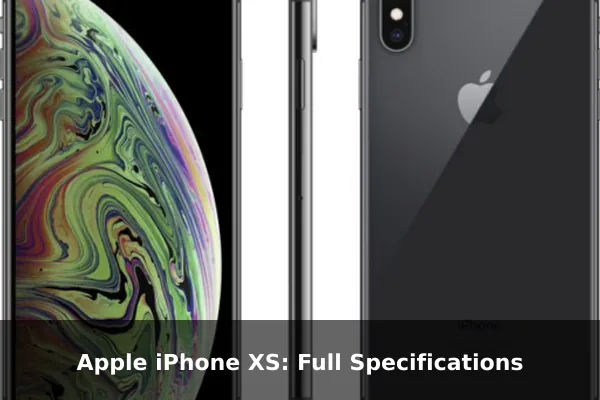
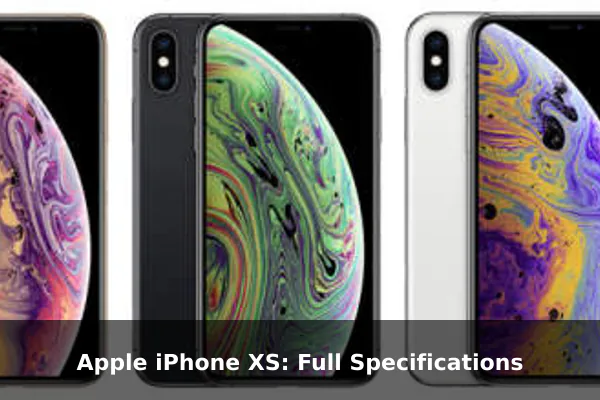
| Colors: | Space Gray, Silver, Gold |
| Models: | A2097, A1920, A2100, A2098, iPhone11,2 |
| SAR: | 1.19 W/kg (head) 1.18 W/kg (body) |
| SAR EU: | 0.99 W/kg (head) 0.99 W/kg (body) |
| Price: | About 190 EUR |
Our Tests
| Performance: | AnTuTu: 346379 (v7) GeekBench: 11472 (v4.4) GFXBench: 47fps (ES 3.1 onscreen) |
| Display: | Contrast ratio: Infinite (nominal), 5.171 (sunlight) |
| Camera: | Photo / Video |
| Loudspeaker: | Voice 71dB / Noise 75dB / Ring 78dB |
| Audio quality: | Noise -93.7dB / Crosstalk -82.8dB |
| Battery (old): | Endurance rating 72h |
Price and Availability
The Apple iPhone XS offers a compelling combination of features and performance. While the base price is around €190, the actual cost may vary depending on your location and retailer. Below, you’ll find the approximate price of the Apple iPhone XS converted into various currencies. Please note that these are estimates based on recent exchange rates as of September 7, 2026 and may not reflect the exact price you’ll find at a retailer.
- United States: $221
- Japan: ¥34,464
- United Kingdom: £163
- Australia: A$306
- Canada: C$305
- Taiwan: NT$6,985
- Denmark: kr1.420
- Saudi Arabia: ﷼827
- South Korea: ₩297,534
- Germany: €190
- Brazil: R$1.130
- Vietnam: ₫5.738.297
- Kenya: KSh 28,584
- India: ₹20,859
- Indonesia: Rp 3.892.530
- Nigeria: ₦292,978
- Pakistan: ₨61,271
- Philippines: ₱13,823
- Bangladesh: ৳২৭,১৩১
Why Should You Buy the Apple iPhone XS?
The strongest reason to consider the Apple iPhone XS today is its balance of flagship construction and low used-market pricing. It was not built as a budget phone, and that still matters. The stainless steel frame, glass front and back, OLED panel, Face ID hardware, stereo speakers, wireless charging, and optical image stabilization give it a more premium foundation than many entry-level phones sold new at a similar price.
Its appeal is not about chasing the newest features. There is no 5G, no high-refresh-rate screen, no USB-C port, and no ultra-wide camera. Instead, the XS makes sense for buyers who want a small iPhone with a high-quality display, dependable cameras, and access to the Apple ecosystem without paying modern flagship prices. It is also a good reference point for readers comparing older premium iPhones against newer budget Android phones.
Image placement note: use one front-and-back product image near this buying-value section, ideally showing the compact body and stainless steel frame.
Design and Build Quality
The iPhone XS measures 143.6 x 70.9 x 7.7 mm and weighs 177 g, making it notably easier to handle than many large-screen phones. Its 5.8-inch footprint is one of the main reasons it remains interesting. Users who dislike oversized devices may find the XS more comfortable for messaging, calls, pocket carry, and one-handed navigation.
The build is clearly premium: Corning-made glass on the front and back, a stainless steel frame, and IP68 dust and water resistance rated for immersion up to 2 meters for 30 minutes. That does not make a used unit risk-free, because seals can weaken with age and repairs, but the original hardware standard was high. The color options are Space Gray, Silver, and Gold, all of which match the understated flagship look Apple used for this generation.
Display Experience
The 5.8-inch Super Retina OLED display is one of the XS model’s best lasting strengths. It supports HDR10 and Dolby Vision, has a 1125 x 2436 resolution, and reaches about 458 ppi. Text, photos, video, and app interfaces remain crisp, and OLED contrast gives the screen a deeper look than typical LCD panels from the same period.
Brightness is listed at 625 nits HBM, which is usable but not as strong as newer premium phones in harsh outdoor light. The panel also includes 3D Touch, a feature Apple later removed from newer iPhones. For users who liked pressure-sensitive shortcuts, the XS is one of the final iPhone generations with that hardware. The main limitation is refresh rate: this is a 60 Hz display, so it will not feel as fluid as modern 90 Hz or 120 Hz phones.
Performance and Storage
The Apple A12 Bionic remains the core performance story. Built on a 7 nm process, it uses a hexa-core CPU with two Vortex performance cores and four Tempest efficiency cores, paired with a 4-core Apple GPU. The supplied test data lists AnTuTu 346379 on v7, GeekBench 11472 on v4.4, and GFXBench 47 fps in ES 3.1 onscreen testing.
For everyday use, that means the XS should still handle messaging, browsing, payments, streaming, navigation, and many apps smoothly when the battery is healthy and storage is not overloaded. The phone comes with 4 GB RAM and 64 GB, 256 GB, or 512 GB of NVMe storage. There is no memory card slot, so the 64 GB model needs more careful storage management. Buyers planning to keep many photos, offline videos, and large apps should prioritize 256 GB or 512 GB.
Camera System
The rear camera setup is simple by modern standards but still useful. It combines a 12 MP wide camera with f/1.8 aperture, dual pixel PDAF, and OIS, plus a 12 MP telephoto camera with f/2.4 aperture, PDAF, OIS, and 2x optical zoom. This gives the XS a more flexible camera system than single-camera iPhones and many budget phones that rely on low-value auxiliary sensors.
Video is a major strength for its age. The XS records 4K at 24, 30, or 60 fps, plus 1080p at up to 240 fps for slow motion. Stereo sound recording and HDR support add to its practical value. The 7 MP front camera is less impressive by today’s standards, but it supports 1080p video at 30 or 60 fps and works with the SL 3D depth and biometric system for Face ID.
Image placement note: use a second image near this camera section, preferably a clean camera-module close-up or official product angle that shows the dual rear camera.
Battery and Charging
The iPhone XS has a 2658 mAh non-removable Li-Ion battery rated at 10.13 Wh. The supplied test data lists an older endurance rating of 72 hours, but real results today depend heavily on battery health. A used XS with a worn battery may feel very different from one with a recent genuine-quality replacement.
Charging support includes 15W wired charging with USB Power Delivery 2.0, advertised as 50% in 30 minutes under suitable conditions, plus Qi wireless charging. These numbers are modest compared with many modern Android phones, but they are acceptable for a compact iPhone. The more important buying advice is to check battery health before purchase and factor replacement cost into the total price if the maximum capacity is low.
Software Support and Longevity
The supplied specification data lists the iPhone XS as launching with iOS 12 and being upgradable to iOS 18.6. That is a long software path for a 2018 device and one reason the XS has aged better than many Android flagships from the same year. Apple also listed iPhone XS among iOS 18-compatible models, confirming its extended support during that software generation.
However, buyers should be cautious about future longevity. Apple’s current iOS 26 compatibility reference no longer lists the iPhone XS, meaning it should be treated as an older iPhone near the end of major-version support rather than a long-term software investment. Security updates, app requirements, and feature availability can change over time, so this phone is best for value-focused use rather than a five-year purchase plan.
Connectivity and Network Notes
The iPhone XS supports GSM, CDMA, HSPA, EVDO, and LTE, with extensive 4G band coverage across its listed models. The source data includes LTE Cat16 speeds up to 1024/150 Mbps, HSPA 42.2/5.76 Mbps, and EV-DO Rev.A 3.1 Mbps. There is no 5G, which is the biggest network limitation compared with newer iPhones.
Wireless features include Wi-Fi 802.11 a/b/g/n/ac, Bluetooth 5.0, GPS with GLONASS, GALILEO, and QZSS, NFC, and Lightning over USB 2.0. The phone supports Nano-SIM plus eSIM, though eSIM availability depends on region and carrier. There is no FM radio and no 3.5 mm headphone jack, so wired audio requires Lightning accessories or an adapter.
Who Should Buy This Phone?
The iPhone XS is best for buyers who want a compact premium iPhone at a modest price, especially if they value OLED quality, Face ID, wireless charging, strong video recording, and polished build quality. It can also be a sensible secondary phone, family phone, travel phone, or low-cost entry into iMessage, FaceTime, Apple Pay, and the App Store.
It is not the best choice for mobile gamers who want maximum thermal headroom, users who need all-day heavy battery life, buyers who require 5G, or anyone who wants the longest possible future iOS support. The closest comparison is not a new flagship; it is a choice between an older Apple flagship and a newer budget or midrange phone.
References
- Apple Support: iPhone XS technical specifications
- Apple Support: iOS 18 compatibility and update guidance
- Apple Support: iPhone models compatible with iOS 26
- Source catalog entry from tampungspekhp.berkasdrive.com
Conclusion
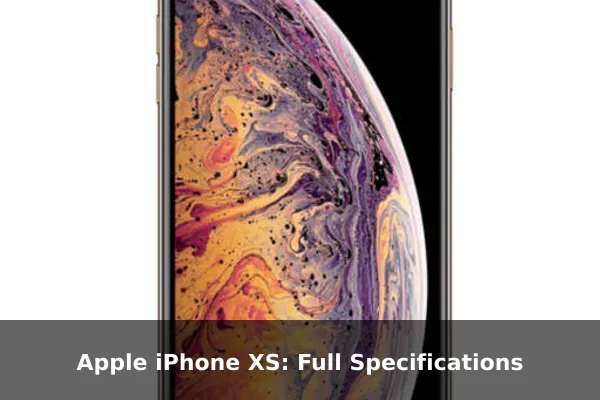
The Apple iPhone XS remains a polished compact iPhone with a premium OLED display, stainless steel build, reliable dual cameras, Face ID, and broad LTE support. Its main drawbacks are age, battery condition, lack of 5G, Lightning USB 2.0, and limited future major iOS support. At around 190 EUR, it is recommended for buyers who want a small, premium iPhone experience at a low price and are comfortable checking battery health before purchase.
