
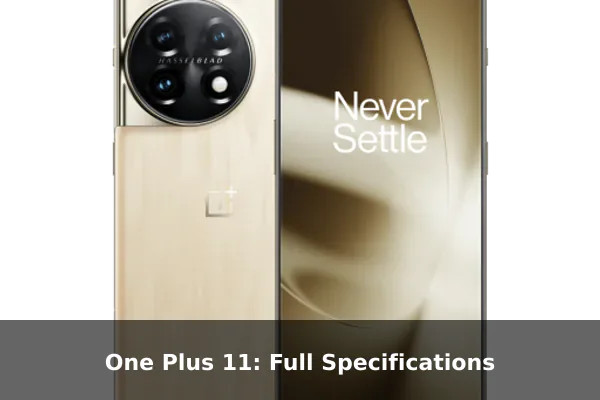
The One Plus 11 is a 2023 flagship Android phone built around a high-end Snapdragon platform, a sharp LTPO AMOLED display, fast wired charging, and a Hasselblad-branded triple camera system. It sits in an interesting position for buyers who want flagship-class hardware without chasing the newest release cycle.
This article focuses on how the One Plus 11 reads as a specs-first value pick today, using the provided catalog data and official reference anchors for the model. The full technical table is handled separately, so the sections below explain the practical meaning of the hardware rather than repeating every line item.
Full Specifications
Network
| Technology: | GSM / CDMA / HSPA / EVDO / LTE / 5G |
| 2G bands: | GSM 850 / 900 / 1800 / 1900 |
| CDMA 800 | |
| 3G bands: | HSDPA 800 / 850 / 900 / 1700(AWS) / 1900 / 2100 |
| CDMA2000 1xEV-DO | |
| 4G bands: | 1, 2, 3, 4, 5, 7, 8, 12, 13, 17, 18, 19, 20, 25, 26, 28, 30, 32, 38, 39, 41, 40, 46, 48, 66, 71 – International |
| 1, 2, 3, 4, 5, 7, 8, 12, 17, 18, 19, 20, 26, 28, 34, 38, 39, 40, 41, 66 – China | |
| 5G bands: | 1, 2, 3, 5, 7, 8, 20, 25, 28, 30, 38, 40, 41, 66, 71, 75, 77, 78 SA/NSA – International |
| 1, 3, 5, 7, 8, 20, 28, 38, 40, 41, 66, 77, 78 SA/NSA – China | |
| Speed: | HSPA, LTE (CA), 5G |
Launch
| Announced: | 2023, January 04 |
| Status: | Available. Released 2023, January 09 |
Body
| Dimensions: | 163.1 x 74.1 x 8.5 mm (6.42 x 2.92 x 0.33 in) |
| Weight: | 205 g (7.23 oz) |
| Build: | Glass front (Gorilla Glass Victus), glass back (Gorilla Glass 5), aluminum frame |
| SIM: | Nano-SIMNano-SIM + Nano-SIM + eSIM (max 2 at a time) |
| IP64 dust tight and water resistant (water splashes) |
Display
| Type: | LTPO3 Fluid AMOLED, 1B colors, 120Hz, Dolby Vision, HDR10+, 500 nits (typ), 800 nits (HBM), 1300 nits (peak) |
| Size: | 6.7 inches, 108.4 cm2 (~89.7% screen-to-body ratio) |
| Resolution: | 1440 x 3216 pixels, 20:9 ratio (~525 ppi density) |
| Protection: | Corning Gorilla Glass Victus |
Platform
| OS: | Android 13, upgradable to Android 15, OxygenOS 15 (International), ColorOS 14 (China) |
| Chipset: | Qualcomm SM8550-AB Snapdragon 8 Gen 2 (4 nm) |
| CPU: | Octa-core (1×3.2 GHz Cortex-X3 & 2×2.8 GHz Cortex-A715 & 2×2.8 GHz Cortex-A710 & 3×2.0 GHz Cortex-A510) |
| GPU: | Adreno 740 |
Memory
| Card slot: | No |
| Internal: | 128GB 8GB RAM, 256GB 12GB RAM, 256GB 16GB RAM, 512GB 16GB RAM |
| UFS 3.1 – 128GB only UFS 4.0 |
Main Camera
| Triple: | 50 MP, f/1.8, 24mm (wide), 1/1.56″, 1.0µm, multi-directional PDAF, OIS 32 MP, f/2.0, 48mm (telephoto), 1/2.74″, PDAF, 2x optical zoom 48 MP, f/2.2, 115˚, (ultrawide), 1/2.0″, AF |
| Features: | Hasselblad Color Calibration, color spectrum sensor, Dual-LED flash, HDR, panorama |
| Video: | 8K@24fps, 4K@30/60fps, 1080p@30/60/240fps, Auto HDR, gyro-EIS |
Selfie camera
| Single: | 16 MP, f/2.5, 25mm (wide), 1.0µm |
| Features: | HDR, panorama |
| Video: | 1080p@30fps, gyro-EIS |
Sound
| Loudspeaker: | Yes, with stereo speakers |
| 3.5mm jack: | No |
| 24-bit/192kHz Hi-Res audio |
Comms
| WLAN: | Wi-Fi 802.11 a/b/g/n/ac/6/7, dual-band, Wi-Fi Direct |
| Bluetooth: | 5.3, A2DP, LE, aptX HD |
| Positioning: | GPS (L1+L5), GLONASS (G1), BDS (B1I+B1c+B2a), GALILEO (E1+E5a), QZSS (L1+L5) |
| NFC: | Yes |
| Radio: | No |
| USB: | USB Type-C 2.0, OTG |
Features
| Sensors: | Fingerprint (under display, optical), accelerometer, gyro, proximity, compass |
Battery
| Type: | Li-Po 5000 mAh |
| Charging: | 100W wired, PD, 50% in 10 min, 100% in 25 min – International 80W wired, PD – USA |
Misc
| Colors: | Titan Black, Eternal Green, Jupiter Rock |
| Models: | PHB110, CPH2449, CPH2447, CPH2451 |
| SAR: | 1.19 W/kg (head) 0.99 W/kg (body) |
| Price: | € 525.28 / $ 499.95 / £ 345.25 / ₹ 39,890 |
Our Tests
| Performance: | AnTuTu: 1140661 (v9) GeekBench: 4899 (v5.1) GFXBench: 57fps (ES 3.1 onscreen) |
| Display: | 767 nits max brightness (measured) |
| Camera: | Photo / Video |
| Loudspeaker: | -25.2 LUFS (Very good) |
| Battery: | Active use score 11:05h |
| Battery (old): | Endurance rating 108h |
Price and Availability
The One Plus 11 offers a compelling combination of features and performance. While the base price is around €525, the actual cost may vary depending on your location and retailer. Below, you’ll find the approximate price of the One Plus 11 converted into various currencies. Please note that these are estimates based on recent exchange rates as of July 18, 2026 and may not reflect the exact price you’ll find at a retailer.
- United States: $601
- Japan: ¥97,579
- United Kingdom: £447
- Australia: A$860
- Canada: C$842
- Taiwan: NT$19,413
- Denmark: kr3.921
- Saudi Arabia: ﷼2,253
- South Korea: ₩892,991
- Germany: €525
- Brazil: R$3.064
- Vietnam: ₫15.754.499
- Kenya: KSh 77,776
- India: ₹57,848
- Indonesia: Rp 10.789.414
- Nigeria: ₦818,586
- Pakistan: ₨167,055
- Philippines: ₱37,017
- Bangladesh: ৳৭৪,০৫৯
Value Angle: A Former Flagship With Current Appeal
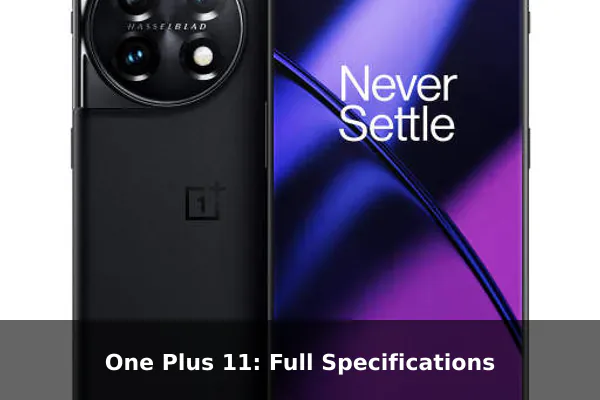
The One Plus 11 is not positioned like a basic mid-range phone. Its Snapdragon 8 Gen 2 chipset, 1440p LTPO display, premium glass-and-aluminum build, and high-speed charging all point to a device that was designed as a true flagship. That matters because buyers comparing it against newer upper-midrange models may find stronger performance headroom, a sharper display, and more versatile cameras here.
The key value question is regional pricing and software support. The source price data suggests the One Plus 11 can be competitive, but actual pricing will vary by market, condition, storage variant, and retailer. For comparison-focused shoppers, the strongest versions are the 256GB and 512GB configurations because they pair larger storage with higher RAM and, unlike the 128GB model, avoid the slower UFS 3.1 storage tier noted in the source data.
Design and Build Quality
The One Plus 11 uses a 163.1 x 74.1 x 8.5 mm body and weighs 205 g, so it is clearly a large phone rather than a compact daily carry. The materials are flagship-grade: Gorilla Glass Victus on the front, Gorilla Glass 5 on the back, and an aluminum frame. That combination gives the phone a premium hardware identity, though the weight may be noticeable for users moving from smaller or lighter devices.
Durability is useful but not class-leading. The IP64 rating means the phone is dust tight and resistant to water splashes, but it is not marketed here as a fully submersible device. Buyers who frequently use phones around pools, beaches, or heavy rain should treat that rating conservatively. Color choices include Titan Black, Eternal Green, and Jupiter Rock, giving the model a more distinctive look than many plain-glass flagships.
Display Experience
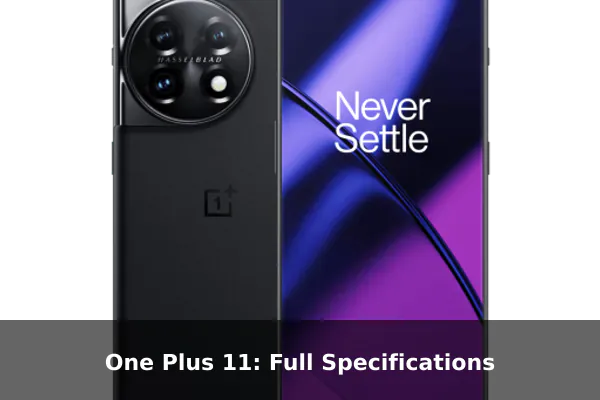
The 6.7-inch LTPO3 Fluid AMOLED panel is one of the One Plus 11’s strongest specification points. It combines a 120Hz refresh rate, 1B color support, Dolby Vision, HDR10+, and a 1440 x 3216 resolution at about 525 ppi. In real use, that means the phone is built for sharp text, smooth scrolling, detailed video playback, and high-end gaming visuals.
The source lists 500 nits typical brightness, 800 nits high brightness mode, and 1300 nits peak brightness, while the test data records 767 nits measured maximum brightness. That is solid, though not necessarily equal to the brightest newer flagship panels. The LTPO technology is still important because it can adjust refresh behavior more efficiently than a fixed high-refresh panel, helping balance smoothness and battery use.
Performance and Gaming
The Snapdragon 8 Gen 2 remains a major reason to consider the One Plus 11. Its CPU layout combines a Cortex-X3 prime core, Cortex-A715 and Cortex-A710 performance cores, and Cortex-A510 efficiency cores, with Adreno 740 graphics. The provided benchmark figures, including AnTuTu 1140661, GeekBench 4899, and GFXBench 57fps, reinforce that this is a fast phone for demanding apps and games.
Storage choice deserves attention. The 128GB version uses UFS 3.1, while the higher-capacity versions are listed with UFS 4.0. That can matter for app loading, large game installs, file transfers, and long-term responsiveness. There is no microSD card slot, so the best practical pick for heavy users is a 256GB or 512GB model rather than relying on external expansion later.
Camera System
The rear camera setup is more balanced than a simple high-megapixel headline suggests. The 50 MP main camera includes optical image stabilization and multi-directional PDAF, the 32 MP telephoto camera provides 2x optical zoom, and the 48 MP ultrawide camera includes autofocus. That gives the One Plus 11 useful coverage for everyday photos, portraits, wider scenes, and close framing without depending entirely on digital zoom.
Hasselblad Color Calibration, a color spectrum sensor, HDR, panorama, and dual-LED flash are listed among the camera features. Video support reaches 8K at 24fps, 4K at 30/60fps, and high-frame-rate 1080p modes, with Auto HDR and gyro-EIS. The selfie camera is more modest at 16 MP with 1080p video, so buyers who prioritize front-facing video above all else may want to compare newer creator-focused phones.
Battery and Charging
The 5000 mAh battery is a sensible match for the large LTPO display and flagship processor. The test data lists an active use score of 11:05h and an older endurance rating of 108h, which points to dependable all-day behavior for mixed use rather than a battery-specialist identity.
Charging is a major advantage, but it depends on region. The source lists 100W wired charging internationally, with 50 percent in 10 minutes and 100 percent in 25 minutes, while the USA version is listed at 80W wired charging. Both versions support PD, and both are much faster than many mainstream flagship phones. Wireless charging is not listed in the supplied data, so buyers should not assume it is present.
Software and Long-Term Use
The phone launched with Android 13 and is listed as upgradable to Android 15, with OxygenOS 15 for international models and ColorOS 14 for China. That regional software split matters when importing a device, because the interface, services, update path, and app behavior can differ depending on the model and market firmware.
For a buyer in 2026, the One Plus 11 should be judged as a strong hardware platform with a software life that is already partly spent. It still has enough performance for demanding use, but buyers who keep phones for many years should compare update timelines carefully against newer OnePlus models and current Android flagship alternatives.
Connectivity and Practical Features
Connectivity is broad, with GSM, CDMA, HSPA, EVDO, LTE, and 5G support listed, plus extensive international and China band sets. Wi-Fi 7 support, Bluetooth 5.3, NFC, dual-frequency positioning support across major satellite systems, and USB-C with OTG make the phone well equipped for modern use.
There are a few practical limitations. The USB port is listed as USB Type-C 2.0, so wired data transfer is not as fast as the performance class of the phone might suggest. There is no 3.5mm headphone jack and no radio. Stereo speakers and 24-bit/192kHz Hi-Res audio help compensate for media playback, and the loudspeaker test result of -25.2 LUFS is rated very good in the supplied data.
Who Should Buy the One Plus 11?
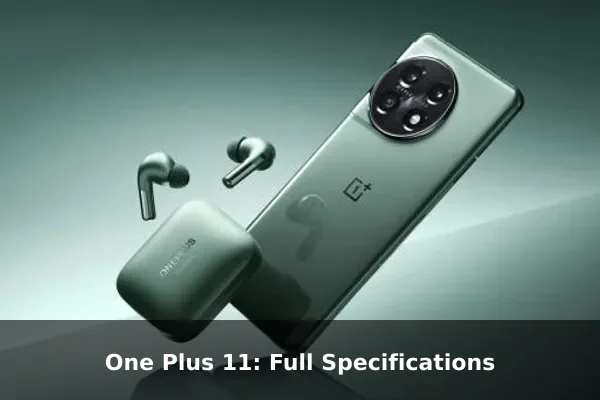
The One Plus 11 makes the most sense for buyers who want flagship speed, a sharp premium display, fast charging, and a versatile rear camera system at a lower price than many newer flagship phones. It is especially appealing in a higher-storage configuration, where the phone gets both more capacity and faster UFS 4.0 storage.
It is less ideal for users who need compact dimensions, official high-grade water immersion protection, a headphone jack, microSD expansion, or the longest possible future software runway. Camera-first buyers should also compare it against newer imaging flagships, but for balanced performance and display quality, the One Plus 11 remains a strong specification package.
Conclusion
The One Plus 11 is a well-rounded flagship-class Android phone with a Snapdragon 8 Gen 2 chipset, a sharp LTPO AMOLED display, fast wired charging, and a capable Hasselblad-tuned rear camera system. Its biggest cautions are the large body, regional charging differences, limited water resistance, no expandable storage, and the older software timeline compared with newer models. Recommended for buyers who want flagship hardware value and can choose a 256GB or 512GB variant at the right price.
References
- OnePlus 11 5G Specs – Primary manufacturer source for official dimensions, display, processor, memory/storage, cameras, battery, charging, connectivity, sensors, and included-box details.
- OnePlus 11 5G Launch Press Release – Official launch source for release context, headline features, software update promise, charging differences by region, and product positioning.
- OnePlus User Manuals – Official support documentation hub for user manuals, safety information, regulatory notes, SAR information, and model-specific documentation.
- Qualcomm OnePlus 11 5G Device Finder – Chipset-maker source confirming the OnePlus 11 5G uses the Snapdragon 8 Gen 2 Mobile Platform and related connectivity platform details.
- FCC Equipment Authorization Search – Official U.S. regulator database for checking FCC equipment authorization, wireless/radio compliance filings, and model-related certification records.
