
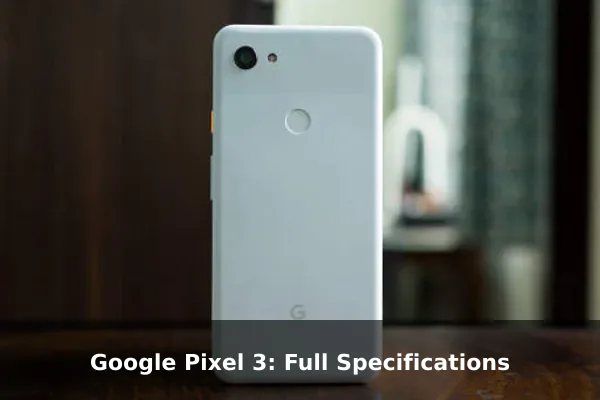
Google Pixel 3 is a compact Android flagship from Google’s 2018 hardware generation, built around a 5.5-inch P-OLED display, Snapdragon 845 performance, and the single rear camera system that helped define Pixel computational photography.
This specs-focused article looks beyond the raw table to explain where the Pixel 3 still makes sense, where its age is obvious, and how its design, camera, software ceiling, and battery profile affect buying decisions today.
Full Specifications
Network
| Technology: | GSM / CDMA / HSPA / EVDO / LTE |
| 2G bands: | GSM 850 / 900 / 1800 / 1900 |
| CDMA 800 / 1900 | |
| 3G bands: | HSDPA 850 / 900 / 1700(AWS) / 1900 / 2100 |
| CDMA2000 1xEV-DO | |
| 4G bands: | 1, 2, 3, 4, 5, 7, 8, 12, 13, 17, 18, 19, 20, 25, 26, 28, 29, 32, 38, 39, 40, 41, 42, 46, 66, 71 |
| Speed: | HSPA 42.2/5.76 Mbps, LTE (5CA) Cat16 1024/75 Mbps |
Launch
| Announced: | 2018, October 09. Released 2018, October 18 |
| Status: | Discontinued |
Body
| Dimensions: | 145.6 x 68.2 x 7.9 mm (5.73 x 2.69 x 0.31 in) |
| Weight: | 148 g (5.22 oz) |
| Build: | Glass front (Gorilla Glass 5), glass back (Gorilla Glass 5), aluminum frame |
| SIM: | Nano-SIM + eSIM |
| IP68 dust tight and water resistant (immersible up to 1.5m for 30 min) |
Display
| Type: | P-OLED, HDR |
| Size: | 5.5 inches, 76.7 cm2 (~77.2% screen-to-body ratio) |
| Resolution: | 1080 x 2160 pixels, 18:9 ratio (~443 ppi density) |
| Protection: | Corning Gorilla Glass 5 |
Platform
| OS: | Android 9.0 (Pie), upgradable to Android 12 |
| Chipset: | Qualcomm SDM845 Snapdragon 845 (10 nm) |
| CPU: | Octa-core (4×2.5 GHz Kryo 385 Gold & 4×1.6 GHz Kryo 385 Silver) |
| GPU: | Adreno 630 |
Memory
| Card slot: | No |
| Internal: | 64GB 4GB RAM, 128GB 4GB RAM |
| UFS 2.1 |
Main Camera
| Single: | 12.2 MP, f/1.8, 28mm (wide), 1/2.55″, 1.4µm, dual pixel PDAF, OIS |
| Features: | Dual-LED flash, Pixel Shift, Auto-HDR, panorama |
| Video: | 4K@30fps, 1080p@30/60/120fps, 1080p@30fps (gyro-EIS) |
Selfie camera
| Dual: | 8 MP, f/1.8, 28mm (wide), PDAF 8 MP, f/2.2, 19mm (ultrawide), no AF |
| Features: | HDR |
| Video: | 1080p@30fps |
Sound
| Loudspeaker: | Yes, with stereo speakers |
| 3.5mm jack: | No |
Comms
| WLAN: | Wi-Fi 802.11 a/b/g/n/ac, dual-band, Wi-Fi Direct, DLNA |
| Bluetooth: | 5.0, A2DP, LE, aptX HD |
| Positioning: | GPS, GLONASS, BDS, GALILEO |
| NFC: | Yes |
| Radio: | No |
| USB: | USB Type-C 3.1 |
Features
| Sensors: | Fingerprint (rear-mounted), accelerometer, gyro, proximity, compass, barometer |
Battery
| Type: | Li-Po 2915 mAh, non-removable |
| Charging: | 18W wired, PD2.0 Wireless |
Misc
| Colors: | Clearly White, Just Black, Not Pink |
| Models: | G013A |
| Price: | About 450 EUR |
Our Tests
| Performance: | AnTuTu: 285044 (v7) GeekBench: 8337 (v4.4) GFXBench: 33fps (ES 3.1 onscreen) |
| Display: | Contrast ratio: Infinite (nominal), 4.350 (sunlight) |
| Camera: | Photo / Video |
| Loudspeaker: | Voice 77dB / Noise 71dB / Ring 81dB |
| Audio quality: | Noise -71.7dB / Crosstalk -70.1dB |
| Battery (old): | Endurance rating 69h |
Price and Availability
The Google Pixel 3 offers a compelling combination of features and performance. While the base price is around €450, the actual cost may vary depending on your location and retailer. Below, you’ll find the approximate price of the Google Pixel 3 converted into various currencies. Please note that these are estimates based on recent exchange rates as of August 18, 2026 and may not reflect the exact price you’ll find at a retailer.
- United States: $521
- Japan: ¥83,054
- United Kingdom: £385
- Australia: A$733
- Canada: C$723
- Taiwan: NT$16,608
- Denmark: kr3.364
- Saudi Arabia: ﷼1,955
- South Korea: ₩737,279
- Germany: €450
- Brazil: R$2.717
- Vietnam: ₫13.567.622
- Kenya: KSh 67,474
- India: ₹49,857
- Indonesia: Rp 9.286.118
- Nigeria: ₦709,623
- Pakistan: ₨144,888
- Philippines: ₱32,074
- Bangladesh: ৳৬৩,৯৬১
Why Should You Buy Google Pixel 3?
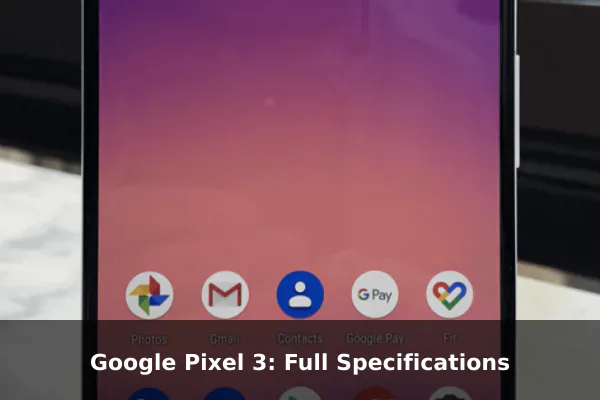
The strongest reason to consider the Google Pixel 3 is its compact flagship character. It is small by modern standards, light at 148 g, and still carries premium materials with Gorilla Glass 5 on the front and back plus an aluminum frame. For readers comparing older Android flagships, the Pixel 3 is less about raw specification dominance and more about a clean Google experience, reliable still photography, stereo speakers, IP68 protection, and broad LTE band support. Its discontinued status matters: it should be judged as a used or refurbished phone, not as a current-generation alternative.
Design and Build Quality
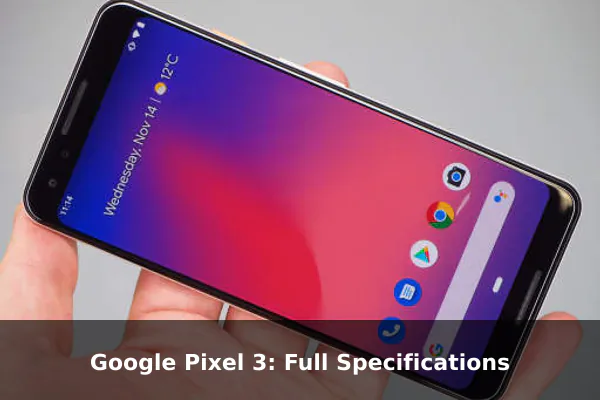
The Pixel 3 uses a restrained design with dimensions of 145.6 x 68.2 x 7.9 mm, making it noticeably easier to handle than many newer phones. The rear-mounted fingerprint sensor is practical, especially for users who prefer a physical scanner over under-display biometrics. Google also included IP68 dust and water resistance, rated for immersion up to 1.5 m for 30 minutes, which was a flagship-grade feature for its time. The main compromises are familiar: there is no 3.5 mm headphone jack, no memory card slot, and the glass body needs care despite the Gorilla Glass 5 protection.
Display Experience
The 5.5-inch P-OLED panel is one of the Pixel 3’s defining everyday features. Its 1080 x 2160 resolution, 18:9 aspect ratio, and roughly 443 ppi density keep text and interface elements sharp without pushing the battery as hard as a larger high-resolution display. HDR support adds value for compatible video, while the listed infinite nominal contrast is typical of OLED behavior. The screen-to-body ratio of around 77.2% reflects its 2018 design language, so it does not feel as borderless as newer phones, but the smaller panel helps preserve one-handed usability.
Performance and Hardware
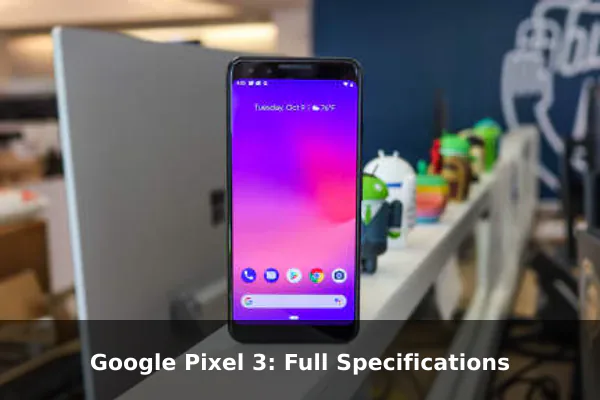
At the center of the Pixel 3 is Qualcomm’s Snapdragon 845, a 10 nm flagship chipset paired with the Adreno 630 GPU. The CPU configuration combines four Kryo 385 Gold cores at 2.5 GHz with four Kryo 385 Silver cores at 1.6 GHz, which was high-end hardware at launch. The supplied test figures, including AnTuTu 285044 on v7 and GeekBench 8337 on v4.4, fit its flagship-era positioning. In practical terms, the 4 GB RAM ceiling is the main limitation now. The phone can still feel responsive for basic tasks, but heavy multitasking, newer games, and large modern apps expose its age.
Storage and Daily Usability
Google offered the Pixel 3 in 64 GB and 128 GB versions, both with 4 GB RAM and UFS 2.1 storage. The faster storage standard helps app loading compared with older eMMC-based phones, but the lack of microSD expansion makes the choice of capacity important. A 64 GB unit can feel tight if the phone is used for offline video, large photo libraries, or messaging apps with years of media. The 128 GB model is the more comfortable option for long-term use, especially because Pixel camera features encourage frequent photo and video capture.
Camera Strengths
The Pixel 3’s rear camera setup is simple on paper: one 12.2 MP wide camera with f/1.8 aperture, dual pixel PDAF, optical image stabilization, Pixel Shift, Auto-HDR, panorama, and dual-LED flash. Its appeal comes from Google’s image processing rather than lens variety. It does not offer dedicated ultrawide, telephoto, or macro rear cameras, so composition flexibility is limited compared with modern multi-camera phones. However, for point-and-shoot stills, portraits, and everyday scenes, the Pixel 3 remains an important reference point in smartphone camera history. Video support reaches 4K at 30 fps and 1080p at up to 120 fps.
Selfie Camera Setup
The front camera system is more unusual than the rear. Google used two 8 MP selfie cameras: a standard 28 mm wide module with PDAF and a wider 19 mm ultrawide module without autofocus. This makes the Pixel 3 useful for group selfies and wider framing without relying only on software cropping. HDR support and 1080p video at 30 fps keep the front camera practical for video calls and casual content. For buyers who value selfies, this dual-front approach is still a distinctive Pixel 3 advantage over many phones that use a single fixed-focus front camera.
Battery and Charging
The 2915 mAh non-removable battery is modest by current standards. The listed endurance rating of 69 hours gives a useful historical benchmark, but real-world battery life today depends heavily on cell health because every Pixel 3 unit is several years old. Charging support is more complete than the battery size suggests: 18 W wired charging with USB Power Delivery 2.0 is included, and wireless charging is supported. Still, buyers should treat battery condition as a key inspection point, particularly with refurbished or second-hand units.
Software, Connectivity, and Support
The Pixel 3 launched with Android 9.0 Pie and is listed as upgradable to Android 12. That software ceiling is important for security-conscious users because it separates the phone from newer Pixel models with longer update commitments. Connectivity remains broad for an LTE device, including GSM, CDMA, HSPA, EVDO, and LTE, with extensive 4G bands such as 1, 3, 5, 7, 20, 38, 40, 41, 66, and 71. Other practical features include Wi-Fi 802.11 a/b/g/n/ac, Bluetooth 5.0 with aptX HD, NFC, GPS with GLONASS, BDS, and GALILEO, plus USB Type-C 3.1.
Who Is It For?
The Pixel 3 is best suited to buyers who want a small Android phone, clean Pixel software, strong still-image processing, and premium build quality at a used-device price point. It is not the right pick for users who need 5G, long software support, all-day heavy battery life, expandable storage, or modern multi-camera versatility. Compared with newer budget phones, it can still feel more refined in hand, but its aging battery, limited RAM, and Android 12 endpoint should be weighed carefully before purchase.
Conclusion
Google Pixel 3 remains a compact and camera-focused Android flagship with premium materials, a sharp OLED display, Snapdragon 845 hardware, stereo speakers, wireless charging, and IP68 protection. Its age is clear in the small battery, 4 GB RAM, missing 5G, no expandable storage, and limited software upgrade path. Buy it only if you specifically want a small Pixel with strong photography basics and can verify good battery condition; otherwise, a newer Pixel will be the better recommendation.
References
- Google Pixel Phone Help – Pixel phone hardware tech specs (earlier models) – Primary Google specification source for Pixel 3 display, cameras, processor, RAM/storage, dimensions, battery, connectivity, sensors, ports, materials, and launch OS.
- Google Pixel Phone Help – Safety & regulatory manual (Pixel 3 & Pixel 3 XL 2018) – Official Google safety and regulatory documentation for Pixel 3/Pixel 3 XL, useful for compliance, SAR, water resistance, model and product information.
- Qualcomm Snapdragon 845 Mobile Platform – Official chipset source for Snapdragon 845 CPU, GPU, modem, wireless, and platform capability details referenced in the Pixel 3 specs.
- FCC Equipment Authorization System (apps.fcc.gov) – Official U.S. regulator database for confirming Pixel 3 radio certification details; search FCC ID A4RG013A / model G013A.
- GSMArena – Google Pixel 3 – Established phone-specification database useful as a secondary cross-check for release date, bands, dimensions, camera, battery, and variant details.
