
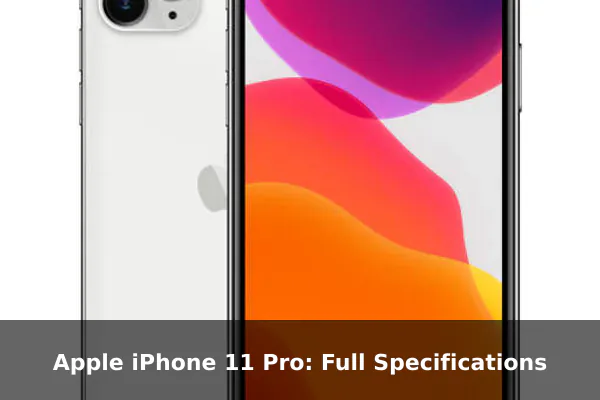
The Apple iPhone 11 Pro is the compact member of Apple’s 2019 Pro lineup, pairing a 5.8-inch Super Retina XDR OLED display with the A13 Bionic chip, stainless steel construction, and a triple 12 MP rear camera system. It sits between the regular iPhone 11 and the larger iPhone 11 Pro Max, making it the more pocketable choice for buyers who want Pro hardware without the bigger body.
Based on the provided source data and Apple’s official documentation, this article looks at the iPhone 11 Pro from a practical specification angle: what still feels premium, what has aged, and where it makes sense as a used or refurbished iPhone at around 240 EUR. The full technical table should be read alongside this analysis for band support, model codes, SAR values, and storage variants.
Full Specifications
Network
| Technology: | GSM / CDMA / HSPA / EVDO / LTE |
| 2G bands: | GSM 850 / 900 / 1800 / 1900 |
| CDMA 800 / 1900 | |
| 3G bands: | HSDPA 850 / 900 / 1700(AWS) / 1900 / 2100 |
| CDMA2000 1xEV-DO | |
| 4G bands: | 1, 2, 3, 4, 5, 7, 8, 11, 12, 13, 17, 18, 19, 20, 21, 25, 26, 28, 29, 30, 32, 34, 38, 39, 40, 41, 42, 46, 48, 66 – A2215 |
| 1, 2, 3, 4, 5, 7, 8, 12, 13, 14, 17, 18, 19, 20, 25, 26, 29, 30, 34, 38, 39, 40, 41, 42, 46, 48, 66, 71 – A2160, A2217 | |
| Speed: | HSPA, LTE 1.6 Gbps DL, EV-DO Rev.A 3.1 Mbps |
Launch
| Announced: | 2019, September 10 |
| Status: | Available. Released 2019, September 20 |
Body
| Dimensions: | 144 x 71.4 x 8.1 mm (5.67 x 2.81 x 0.32 in) |
| Weight: | 188 g (6.63 oz) |
| Build: | Glass front (Corning-made glass), glass back (Corning-made glass), stainless steel frame |
| SIM: | Nano-SIM + eSIMNano-SIM + Nano-SIM (China) |
| IP68 dust tight and water resistant (immersible up to 4m for 30 min) Apple Pay (Visa, MasterCard, AMEX certified) |
Display
| Type: | Super Retina XDR OLED, HDR10, Dolby Vision, 800 nits (HBM), 1200 nits (peak) |
| Size: | 5.8 inches, 84.4 cm2 (~82.1% screen-to-body ratio) |
| Resolution: | 1125 x 2436 pixels, 19.5:9 ratio (~458 ppi density) |
| Protection: | Scratch-resistant glass |
Platform
| OS: | iOS 13, upgradable to iOS 18.6 |
| Chipset: | Apple A13 Bionic (7 nm+) |
| CPU: | Hexa-core (2×2.65 GHz Lightning + 4×1.8 GHz Thunder) |
| GPU: | Apple GPU (4-core graphics) |
Memory
| Card slot: | No |
| Internal: | 64GB 4GB RAM, 256GB 4GB RAM, 512GB 4GB RAM |
| NVMe |
Main Camera
| Triple: | 12 MP, f/1.8, 26mm (wide), 1/2.55″, 1.4µm, dual pixel PDAF, OIS 12 MP, f/2.0, 52mm (telephoto), 1/3.4″, 1.0µm, PDAF, OIS, 2x optical zoom 12 MP, f/2.4, 120˚, 13mm (ultrawide), 1/3.6″ |
| Features: | Dual-LED dual-tone flash, HDR (photo/panorama) |
| Video: | 4K@24/25/30/60fps, 1080p@25/30/60/120/240fps, HDR, stereo sound rec. |
Selfie camera
| Single: | 12 MP, f/2.2, 23mm (wide), 1/3.6″, 1.0µm SL 3D, (depth/biometrics sensor) |
| Features: | HDR |
| Video: | 4K@24/25/30/60fps, 1080p@25/30/60/120fps, gyro-EIS |
Sound
| Loudspeaker: | Yes, with stereo speakers |
| 3.5mm jack: | No |
Comms
| WLAN: | Wi-Fi 802.11 a/b/g/n/ac/6, dual-band, hotspot |
| Bluetooth: | 5.0, A2DP, LE |
| Positioning: | GPS, GLONASS, GALILEO, QZSS |
| NFC: | Yes |
| Radio: | No |
| USB: | Lightning, USB 2.0 |
Features
| Sensors: | Face ID, accelerometer, gyro, proximity, compass, barometer |
| Ultra Wideband (UWB) support |
Battery
| Type: | Li-Ion 3046 mAh, non-removable (11.67 Wh) |
| Charging: | Wired, PD2.0, 50% in 30 min Wireless (Qi) |
Misc
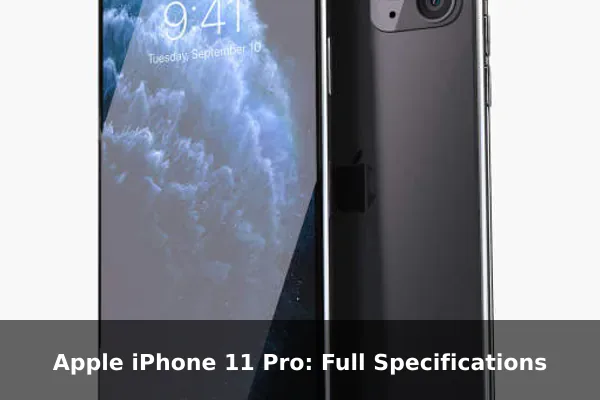
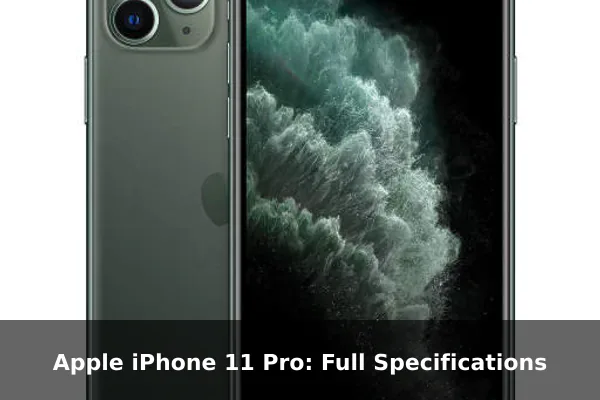
| Colors: | Matte Space Gray, Matte Silver, Matte Gold, Matte Midnight Green |
| Models: | A2215, A2160, A2217, iPhone12,3 |
| SAR: | 1.18 W/kg (head) 1.16 W/kg (body) |
| SAR EU: | 0.99 W/kg (head) 0.99 W/kg (body) |
| Price: | About 240 EUR |
Our Tests
| Performance: | AnTuTu: 460784 (v7) GeekBench: 13829 (v4.4) GFXBench: 57fps (ES 3.1 onscreen) |
| Display: | 805 nits max brightness (measured) |
| Camera: | Photo / Video |
| Loudspeaker: | -24.3 LUFS (Very good) |
| Audio quality: | Noise -94.2dB / Crosstalk -81.0dB |
| Battery (old): | Endurance rating 86h |
Price and Availability
The Apple iPhone 11 Pro offers a compelling combination of features and performance. While the base price is around €240, the actual cost may vary depending on your location and retailer. Below, you’ll find the approximate price of the Apple iPhone 11 Pro converted into various currencies. Please note that these are estimates based on recent exchange rates as of August 4, 2026 and may not reflect the exact price you’ll find at a retailer.
- United States: $276
- Japan: ¥43,440
- United Kingdom: £206
- Australia: A$395
- Canada: C$388
- Taiwan: NT$8,951
- Denmark: kr1.791
- Saudi Arabia: ﷼1,036
- South Korea: ₩395,468
- Germany: €240
- Brazil: R$1.403
- Vietnam: ₫7.211.297
- Kenya: KSh 35,791
- India: ₹26,354
- Indonesia: Rp 4.969.899
- Nigeria: ₦376,650
- Pakistan: ₨76,763
- Philippines: ₱16,835
- Bangladesh: ৳৩৪,১০৬
Value Position
The iPhone 11 Pro has a different value story from most newer specification sheets. It is not a budget phone by design; it is an older flagship that has moved into a lower price bracket. That matters because the core hardware remains strong: Apple A13 Bionic performance, an OLED HDR display, stainless steel rails, IP68 protection, stereo speakers, Face ID, wireless charging, and a three-camera rear setup with wide, telephoto, and ultrawide lenses. For buyers comparing older iPhones, its appeal is not raw novelty but the balance of premium build and lower current-market pricing.
The raw source price of about 240 EUR should be treated as a reference point rather than a universal market price. Condition, battery health, storage capacity, region, warranty, and whether the phone has been repaired can change real purchase value significantly. The 64 GB version is the least flexible today, while the 256 GB and 512 GB models are more comfortable for photos, 4K video, and long-term app use.
Design and Durability
The iPhone 11 Pro is compact by modern flagship standards, measuring 144 x 71.4 x 8.1 mm and weighing 188 g. That weight is noticeable for a 5.8-inch phone, but it comes from the denser materials: glass on the front and back with a stainless steel frame. Compared with aluminum-framed models, this gives the phone a more rigid, premium feel, while the matte glass finish helps separate it visually from the standard iPhone 11.
Apple lists the iPhone 11 Pro in Gold, Space Gray, Silver, and Midnight Green, with official identification details available through Apple’s model guide at Apple Support. The IP68 rating is another important distinction, with protection listed up to 4 meters for 30 minutes under controlled conditions. As always with older phones, water resistance should not be treated as permanent because seals can degrade over time.
Display Experience
The 5.8-inch Super Retina XDR OLED is one of the strongest reasons to choose the iPhone 11 Pro over the standard iPhone 11. The panel supports HDR10 and Dolby Vision, has a 1125 x 2436 resolution, and reaches a sharp density of about 458 ppi. Apple’s official specification page confirms the OLED display, HDR support, and brightness targets at Apple Support.
In everyday terms, this screen is better suited to users who watch HDR video, edit photos, read outdoors, or prefer high contrast over the LCD panel used in the non-Pro iPhone 11. The measured 805 nits maximum brightness in the provided test data lines up well with the phone’s practical outdoor usability. The trade-off is size: 5.8 inches is comfortable and easy to handle, but users who want a larger canvas for gaming, maps, or long reading sessions may prefer a Max model or a newer large-screen iPhone.
Performance and Storage
The A13 Bionic chip remains the backbone of the iPhone 11 Pro. Its hexa-core CPU combines two Lightning performance cores with four Thunder efficiency cores, while the 4-core Apple GPU handles graphics. The provided benchmark results, including AnTuTu 460784 and GeekBench 13829, reflect flagship-class performance for its launch period and still explain why the phone can feel responsive in common apps today.
All storage variants include 4 GB of RAM and NVMe storage, with 64 GB, 256 GB, and 512 GB options. There is no memory card slot, so storage choice matters more than it does on some Android phones. A 64 GB unit can work for light users who rely on cloud storage, but it is easy to outgrow if you record 4K video, keep offline media, or store years of photos locally.
Triple Camera System
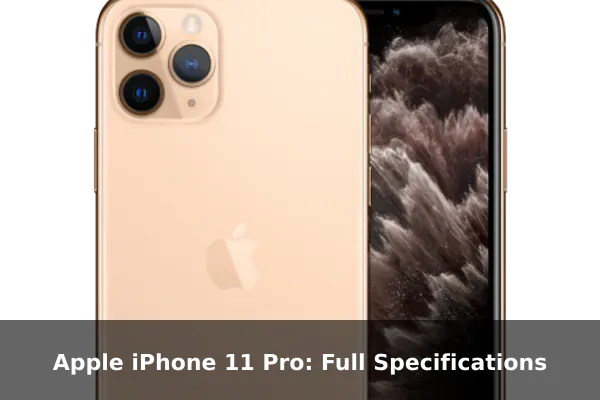
The rear camera system is the major Pro feature. The iPhone 11 Pro combines a 12 MP wide camera with optical image stabilization, a 12 MP telephoto camera with 2x optical zoom and optical stabilization, and a 12 MP ultrawide camera with a 120-degree field of view. This gives it more framing flexibility than the regular iPhone 11, which lacks the dedicated telephoto camera.
For stills, the setup covers everyday snapshots, portraits, wider travel scenes, and tighter framing without relying only on digital zoom. For video, the specification remains impressive: 4K recording at up to 60 fps, 1080p slow motion up to 240 fps, HDR capture, and stereo sound recording. The front TrueDepth camera also supports 12 MP photos and 4K video up to 60 fps, making the phone useful for vlogging, FaceTime, and social video. Newer iPhones have moved ahead in low-light processing and sensor size, but the iPhone 11 Pro still has a well-rounded camera layout.
Battery and Charging
The iPhone 11 Pro uses a 3046 mAh lithium-ion battery rated at 11.67 Wh. The provided endurance rating of 86 hours is respectable for a compact flagship, and Apple’s launch materials positioned the 11 Pro as a meaningful battery-life improvement over the iPhone XS. The official 2019 announcement is available from Apple Newsroom.
Charging support includes wired Power Delivery 2.0, with 50 percent in around 30 minutes under suitable conditions, plus Qi wireless charging. The more important buying point today is battery health. A used iPhone 11 Pro with a heavily worn battery will not represent the phone at its best, even if the rest of the specification looks strong. For refurbished purchases, battery condition should be checked as carefully as storage capacity and display condition.
Software and Features
The source data lists the phone as launching with iOS 13 and being upgradable to iOS 18.6. That long software path is one of the reasons older iPhones can remain competitive in the used market. The A13 Bionic still supports modern iOS features well, although future support windows can change and should always be checked close to purchase time.
Feature support includes Face ID, an accelerometer, gyro, proximity sensor, compass, barometer, NFC, Apple Pay support, and Ultra Wideband. The UWB chip is particularly notable because it was not a standard feature on older iPhones before this generation. The missing pieces are also clear: there is no 3.5 mm headphone jack, no microSD expansion, no FM radio, and no USB-C port. The phone uses Lightning with USB 2.0 speeds.
Connectivity and Model Choice
The iPhone 11 Pro is a 4G LTE phone, not a 5G phone. Its network support is broad, covering GSM, CDMA, HSPA, EVDO, and LTE, with extensive band support that varies by model number. The source data lists A2215, A2160, and A2217, plus the internal identifier iPhone12,3. Buyers should match the model to their region and carrier, especially when importing used units.
Wireless connectivity is stronger than many people expect from a 2019 model: Wi-Fi 6, Bluetooth 5.0, NFC, GPS, GLONASS, GALILEO, and QZSS are all included. SIM support depends on region, with Nano-SIM plus eSIM for many markets and dual Nano-SIM for China. The absence of 5G is the main long-term connectivity limitation, but for buyers who mainly need reliable LTE, Wi-Fi calling, messaging, maps, and streaming, the specification remains practical.
Who Should Buy It
The iPhone 11 Pro makes the most sense for buyers who want a compact premium iPhone with an OLED display, strong cameras, Face ID, and long iOS support history at a lower price than newer Pro models. It is especially appealing if the unit has good battery health, clean repair history, and at least 256 GB of storage.
It is less suitable for users who need 5G, USB-C, a high-refresh-rate display, very large screen size, or the latest computational photography features. It also may not be the best choice for heavy mobile gamers who want maximum future headroom. In a comparison list, the iPhone 11 Pro is best understood as a compact used flagship rather than a modern budget phone.
Conclusion
The Apple iPhone 11 Pro remains a well-built compact flagship with a sharp OLED display, A13 Bionic performance, versatile triple cameras, stereo speakers, wireless charging, and broad LTE connectivity. Its biggest limitations are the lack of 5G, Lightning USB 2.0, fixed storage, and the battery uncertainty that comes with used devices. If you want a smaller premium iPhone and can find a clean unit with healthy battery life, the iPhone 11 Pro is still a sensible value pick.
References
- Apple Support – iPhone 11 Pro Technical Specifications – Primary source for official iPhone 11 Pro specifications, including dimensions, display, cameras, chip, wireless bands, battery claims, SIM support, sensors, and environmental requirements.
- Apple Support – Identify your iPhone model – Official source for iPhone 11 Pro model numbers, regional variants, launch year, capacities, colors, and physical identification details.
- Apple Newsroom – iPhone 11 Pro and iPhone 11 Pro Max announcement – Official launch announcement confirming the product introduction date and key feature positioning for the A13 Bionic, Super Retina XDR display, camera system, and battery-life claims.
- Apple Product Environmental Report – iPhone 11 Pro – Official Apple PDF for environmental, materials, energy-efficiency, packaging, and lifecycle details specific to iPhone 11 Pro.
- FCC Equipment Authorization Search – Official FCC portal for verifying regulatory filings, RF exposure/SAR documentation, and equipment authorization records such as FCC ID BCG-E3305A for iPhone 11 Pro model A2160.
