
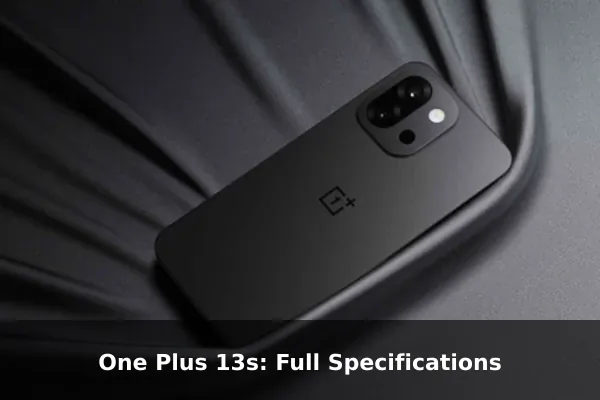
The One Plus 13s is a compact flagship Android phone built around a smaller 6.32-inch LTPO AMOLED display, Snapdragon 8 Elite performance, and a large 5850 mAh battery. It is positioned for buyers who want top-tier hardware without moving to an oversized phone.
Instead of focusing only on headline benchmark numbers, this article looks at how the One Plus 13s balances size, display quality, cameras, battery life, charging, connectivity, and everyday value. The complete specification table will be added separately from the source data.
Full Specifications
Network
| Technology: | GSM / HSPA / LTE / 5G |
| 2G bands: | GSM 850 / 900 / 1800 / 1900 |
| 3G bands: | HSDPA 850 / 900 / 1900 / 2100 |
| 4G bands: | 1, 3, 4, 5, 8, 18, 19, 26, 28, 34, 38, 39, 40, 41, 42, 48, 66 |
| 5G bands: | 1, 3, 5, 8, 26, 28, 38, 40, 41, 48, 66, 77, 78 SA/NSA |
| Speed: | HSPA, LTE (CA), 5G |
Launch
| Announced: | 2025, June 05 |
| Status: | Available. Released 2025, June 12 |
Body
| Dimensions: | 150.8 x 71.7 x 8.2 mm (5.94 x 2.82 x 0.32 in) |
| Weight: | 185 g (6.53 oz) |
| Build: | Glass front, aluminum alloy frame |
| SIM: | Nano-SIM + Nano-SIM + eSIM (max 2 at a time) |
| IP65 dust tight and water resistant (low pressure water jets) |
Display
| Type: | LTPO AMOLED, 1B colors, 120Hz, 2160Hz PWM, Dolby Vision, HDR10+, HDR Vivid, 1600 nits (HBM) |
| Size: | 6.32 inches, 97.9 cm2 (~90.6% screen-to-body ratio) |
| Resolution: | 1216 x 2640 pixels, 19.5:9 ratio (~460 ppi density) |
| Protection: | Crystal Shield Glass |
Platform
| OS: | Android 15, OxygenOS 15 |
| Chipset: | Qualcomm SM8750-AB Snapdragon 8 Elite (3 nm) |
| CPU: | Octa-core (2×4.32 GHz Oryon V2 Phoenix L + 6×3.53 GHz Oryon V2 Phoenix M) |
| GPU: | Adreno 830 |
Memory
| Card slot: | No |
| Internal: | 256GB 12GB RAM, 512GB 12GB RAM |
| UFS 4.0 |
Main Camera
| Dual: | 50 MP, f/1.8, 24mm (wide), 1/1.56″, 1.0µm, multi-directional PDAF, OIS 50 MP, f/2.0, (telephoto), 1/2.75″, 0.64µm, 2x optical zoom, PDAF |
| Features: | Color spectrum sensor, LED flash, HDR, panorama |
| Video: | 4K@30/60fps, 1080p@30/60/240fps, gyro-EIS, OIS, Dolby Vision HDR |
Selfie camera
| Single: | 32 MP, f/2.0, 21mm (wide), 1/3.1″, 0.7µm, AF |
| Features: | HDR, panorama |
| Video: | 4K@30fps, 1080p@30fps, gyro-EIS |
Sound
| Loudspeaker: | Yes, with stereo speakers |
| 3.5mm jack: | No |
Comms
| WLAN: | Wi-Fi 802.11 a/b/g/n/ac/6/7, dual-band, Wi-Fi Direct |
| Bluetooth: | 6.0, A2DP, LE, aptX HD, LHDC 5 |
| Positioning: | GPS (L1+L5), BDS (B1I+B1C+B2a), GALILEO (E1+E5a), QZSS (L1+L5), NavIC (L5), GLONASS |
| NFC: | Yes |
| Infrared port: | Yes |
| Radio: | No |
| USB: | USB Type-C 2.0, OTG |
Features
| Sensors: | Fingerprint (under display, optical), accelerometer, gyro, proximity, compass |
| Circle to Search |
Battery
| Type: | 5850 mAh |
| Charging: | 80W wired, 33W PPS, 18W PD, 18W QC 5W reverse wired |
Misc
| Colors: | Green Silk, Black Velvet, Pink Satin |
| Models: | CPH2723 |
| Price: | ₹ 54,998 |
Our Tests
| Performance: | AnTuTu: 2499190 (v10) GeekBench: 9093 (v6) 3DMark: 6473 (Wild Life Extreme) |
Price and Availability
The One Plus 13s offers a compelling combination of features and performance. While the base price is around ₹54,998, the actual cost may vary depending on your location and retailer. Below, you’ll find the approximate price of the One Plus 13s converted into various currencies. Please note that these are estimates based on recent exchange rates as of August 21, 2026 and may not reflect the exact price you’ll find at a retailer.
- United States: $574
- Japan: ¥91,238
- United Kingdom: £422
- Australia: A$807
- Canada: C$792
- Taiwan: NT$18,292
- Denmark: kr3.678
- Saudi Arabia: ﷼2,153
- South Korea: ₩800,726
- Germany: €492
- Brazil: R$2.983
- Vietnam: ₫14.952.703
- Kenya: KSh 74,438
- India: ₹54,998
- Indonesia: Rp 10.206.727
- Nigeria: ₦778,247
- Pakistan: ₨159,613
- Philippines: ₱35,439
- Bangladesh: ৳৭০,২৩০
Compact Flagship Value
The One Plus 13s stands out because it brings flagship-class hardware into a noticeably smaller body than many premium Android phones. At 150.8 mm tall and 71.7 mm wide, it is easier to handle than large-screen flagships, yet it still uses the Snapdragon 8 Elite platform, UFS 4.0 storage, 12GB of RAM, and a high-resolution LTPO AMOLED panel. That combination makes the phone especially interesting for users who want speed and endurance without accepting a bulky device.
The listed price of ₹ 54,998 places it in premium territory, but the value argument is not only about raw performance. Buyers are getting a modern display stack, a strong battery rating, dual high-resolution rear cameras, stereo speakers, Wi-Fi 7, Bluetooth 6.0, NFC, infrared, and broad 5G band support. The absence of expandable storage and a headphone jack should be noted, but those omissions are now common in this class.
Design and Build
The One Plus 13s uses a glass front with an aluminum alloy frame, giving it the material profile expected from a premium phone. Its 185 g weight is not ultra-light, but it is reasonable considering the large 5850 mAh battery inside. The 8.2 mm thickness also suggests a device designed around endurance without becoming overly thick.
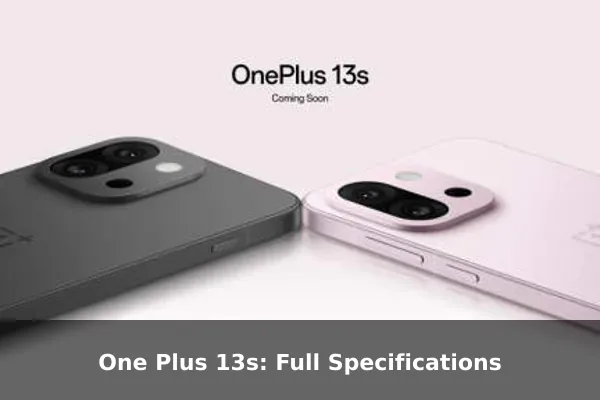
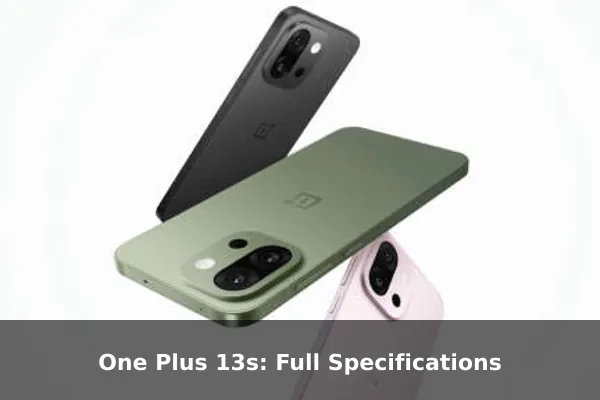
The IP65 rating is useful for daily protection because it covers dust tightness and resistance to low-pressure water jets. It should not be treated like full waterproofing for swimming or submersion, but it is still a meaningful upgrade over phones with no formal resistance rating. Color options include Green Silk, Black Velvet, and Pink Satin, giving the device a softer style range than the usual black-only flagship look.
Display Experience
The 6.32-inch LTPO AMOLED display is one of the most important parts of the One Plus 13s identity. It is compact by current flagship standards, but the 1216 x 2640 resolution and roughly 460 ppi density keep it sharp for reading, browsing, gaming interfaces, and high-resolution media. The quoted 90.6 percent screen-to-body ratio also supports a modern, immersive front design.
The panel supports 1 billion colors, 120Hz refresh, Dolby Vision, HDR10+, HDR Vivid, and up to 1600 nits high brightness mode. The 2160Hz PWM dimming specification may also matter to users sensitive to display flicker, though real comfort can vary by person and brightness level. Crystal Shield Glass is listed for protection, but buyers should still consider a case or screen protector if they frequently use the phone outdoors.
Performance and Gaming
The Snapdragon 8 Elite chipset is the strongest signal that this is not a mid-range compact phone. Built on a 3 nm process and paired with an Adreno 830 GPU, it is designed for demanding apps, high-frame-rate gaming, video editing, and multitasking. The CPU configuration uses two high-performance Oryon V2 Phoenix L cores and six Oryon V2 Phoenix M cores, which gives the phone a flagship performance profile.
The listed test results are also aggressive: AnTuTu v10 at 2499190, GeekBench 6 at 9093, and 3DMark Wild Life Extreme at 6473. Benchmarks do not guarantee identical sustained performance in every game or climate, but they confirm that the One Plus 13s belongs in the top performance tier. UFS 4.0 storage should help with app loading, large file movement, and system responsiveness.
Camera Setup
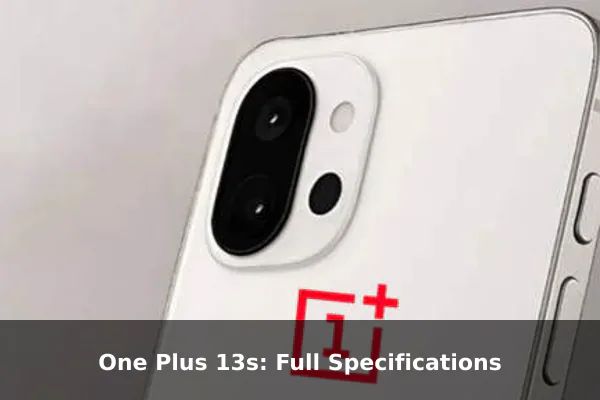
The rear camera system uses two 50 MP sensors rather than filling the camera island with low-value auxiliary lenses. The main 50 MP wide camera includes multi-directional PDAF and optical image stabilization, both important for everyday sharpness and low-light stability. The second 50 MP telephoto camera adds 2x optical zoom, making portraits and closer framing more flexible than a basic wide-only setup.
Video support is strong for this segment, with 4K recording at 30 or 60fps, 1080p up to 240fps, gyro-EIS, OIS, and Dolby Vision HDR. The color spectrum sensor, HDR, panorama, and LED flash complete the rear imaging feature set. The phone does not list an ultrawide camera, so users who frequently shoot landscapes, architecture, or large group photos should consider that tradeoff before buying.
Selfie Camera and Video Calls
The 32 MP front camera is more capable than a basic selfie module because it includes autofocus. That matters for sharper faces at different distances, especially for video calls, vlogging clips, and group selfies. The 21 mm wide field of view also helps fit more of the scene into the frame.
Front video reaches 4K at 30fps and 1080p at 30fps, with gyro-EIS listed for stabilization. This makes the One Plus 13s a better fit for users who record social video from the front camera than phones limited to 1080p selfie capture. HDR and panorama support add extra flexibility for difficult lighting and wider scenes.
Battery and Charging
The 5850 mAh battery is unusually large for a phone with a 6.32-inch display. That is one of the strongest practical advantages of the One Plus 13s, because it combines a compact body with battery capacity normally associated with larger devices. Actual endurance will depend on refresh rate, 5G use, gaming, brightness, and background apps, but the hardware foundation is promising.
Charging support is broad. The phone lists 80W wired charging, 33W PPS, 18W PD, 18W QC, and 5W reverse wired charging. The 80W rating is likely the fastest route when using a compatible charger, while PPS and PD support improve flexibility with third-party USB-C chargers. Reverse wired charging is modest, but useful for emergency top-ups of accessories.
Software and AI Features
The One Plus 13s ships with Android 15 and OxygenOS 15. That gives it a current software base for Android users who want newer privacy tools, interface features, and long-term app compatibility. The source data also lists Circle to Search, which adds a practical AI-assisted search layer for identifying text, images, and objects directly from the screen.
For buyers comparing it with older One Plus models, the software experience is as important as the chipset. A fast processor can keep a phone feeling smooth for years, but update policy, thermal management, and app optimization will shape the long-term experience. Users should check the current official update commitment in their region before purchase if software longevity is a top priority.
Connectivity and Daily Use
Connectivity is one of the more complete parts of the One Plus 13s specification sheet. It supports GSM, HSPA, LTE, and 5G, with SA and NSA 5G bands listed. Wi-Fi 7, dual-band Wi-Fi, Wi-Fi Direct, Bluetooth 6.0, aptX HD, LHDC 5, NFC, infrared, USB-C OTG, and multi-system positioning are all included.
The SIM setup supports Nano-SIM plus Nano-SIM plus eSIM, with a maximum of two active at a time. That is useful for travel, work and personal numbers, or carrier switching. The USB Type-C port is listed as USB 2.0, so wired data transfer will not be as fast as phones using USB 3.x standards. There is no FM radio and no 3.5 mm headphone jack, so wireless audio or USB-C audio will be the normal route.
Who Should Buy the One Plus 13s?
The One Plus 13s is best suited to users who want flagship performance, a premium display, strong battery capacity, and modern connectivity in a more manageable body. It is a strong match for commuters, mobile gamers who dislike oversized phones, frequent video callers, and Android users who want high-end hardware without moving to the largest screen size available.
It is less ideal for buyers who need expandable storage, a headphone jack, an ultrawide rear camera, or the fastest USB data transfer. It also may not be the best pick for users who prioritize extreme camera versatility above compact design and battery capacity. As a balanced compact flagship, however, it fills a niche that many large premium phones leave open.
Conclusion
The One Plus 13s combines Snapdragon 8 Elite power, a sharp LTPO AMOLED display, a large 5850 mAh battery, fast wired charging, and strong connectivity in a compact flagship body. Its main compromises are the lack of expandable storage, no headphone jack, USB 2.0, and no ultrawide rear camera. For buyers who want a smaller premium Android phone with serious performance and battery life, the One Plus 13s is easy to recommend.
References
- OnePlus 13s Official Specs – Primary source for the OnePlus 13s dimensions, display, chipset, RAM/storage, battery, cameras, charging, bands, Wi-Fi, Bluetooth, and other hardware specifications.
- OnePlus 13s Official Product Page – Official product page for confirming headline features, colors, design claims, AI features, camera highlights, battery and charging claims, and manufacturer disclaimers.
- OnePlus 13s Launch Page – Official launch page useful for confirming announcement timing and launch-positioning details for the OnePlus 13s.
- Qualcomm Snapdragon 8 Elite Mobile Platform – Primary chipset source for validating Snapdragon 8 Elite platform details, CPU/GPU names, connectivity capabilities, and performance claims referenced by OnePlus.
- 91mobiles OnePlus 13s Specifications – Established mobile-spec reference for cross-checking official specs, India pricing, storage variants, availability, and independently reported test results.
