

The One Plus 13R lands as the brand’s mid-flagship for early 2025, pairing last year’s top-tier silicon with a large battery and a refined glass-and-aluminum build. Announced on January 7, 2025 and released a week later, it targets buyers who want flagship-grade speed without paying full flagship money, and the price points of roughly €519 / $499.99 / £479 / ₹39,999 underline that value-first positioning.
Rather than rehashing every line of the spec sheet, this overview focuses on how the One Plus 13R balances its standout strengths against its deliberate compromises, so you can decide whether its mix of performance, endurance, and display quality fits the way you actually use a phone. For exact figures, the dedicated specifications table below remains your reference.
Full Specifications
Network
| Technology: | GSM / CDMA / HSPA / LTE / 5G |
| 2G bands: | GSM 850 / 900 / 1800 / 1900 |
| CDMA 800 | |
| 3G bands: | HSDPA 800 / 850 / 900 / 1700(AWS) / 1900 / 2100 – International |
| HSDPA 850 / 900 / 1900 / 2100 – India | |
| 4G bands: | 1, 2, 3, 4, 5, 7, 8, 12, 13, 17, 18, 19, 20, 25, 26, 28, 30, 32, 38, 39, 40, 41, 48, 66, 71 – International |
| 1, 3, 4, 5, 8, 28, 38, 39, 40, 41 – India | |
| 5G bands: | 1, 2, 3, 5, 7, 8, 12, 20, 25, 26, 28, 30, 38, 40, 41, 48, 66, 71, 77, 78 SA/NSA – International |
| 1, 3, 5, 8, 28, 40, 41, 77, 78 SA/NSA – India | |
| Speed: | HSPA, LTE (CA), 5G |
Launch
| Announced: | 2025, January 07 |
| Status: | Available. Released 2025, January 14 |
Body
| Dimensions: | 161.7 x 75.8 x 8 mm (6.37 x 2.98 x 0.31 in) |
| Weight: | 206 g (7.27 oz) |
| Build: | Glass front (Gorilla Glass 7i), aluminum frame, glass back |
| SIM: | Nano-SIM + Nano-SIM + eSIM (max 2 at a time)Nano-SIM + Nano-SIM |
| IP65 dust tight and water resistant (low pressure water jets) |
Display
| Type: | LTPO 4.1 AMOLED, 1B colors, 120Hz, 2160Hz PWM, HDR10+, Dolby Vision, HDR Vivid, 1600 nits (HBM), 4500 nits (peak) |
| Size: | 6.78 inches, 111.7 cm2 (~91.2% screen-to-body ratio) |
| Resolution: | 1264 x 2780 pixels (~450 ppi density) |
| Protection: | Corning Gorilla Glass 7i |
| Ultra HDR image support |
Platform
| OS: | Android 15, up to 4 major Android upgrades, OxygenOS 15 |
| Chipset: | Qualcomm SM8650-AB Snapdragon 8 Gen 3 (4 nm) |
| CPU: | Octa-core (1×3.3 GHz Cortex-X4 & 3×3.2 GHz Cortex-A720 & 2×3.0 GHz Cortex-A720 & 2×2.3 GHz Cortex-A520) |
| GPU: | Adreno 750 |
Memory
| Card slot: | No |
| Internal: | 256GB 12GB RAM, 512GB 16GB RAM |
| UFS 4.0 |
Main Camera
| Triple: | 50 MP, f/1.8, 24mm (wide), 1/1.56″, 1.0µm, multi-directional PDAF, OIS 50 MP, f/2.0, 47mm (telephoto), 1/2.75″, 0.64µm, PDAF, 2x optical zoom 8 MP, f/2.2, 16mm, 112˚ (ultrawide), 1/4.0″, 1.12µm |
| Features: | Color spectrum sensor, LED flash, HDR, panorama |
| Video: | 4K@30/60fps, 1080p@30/60/120/240fps, gyro-EIS, OIS |
Selfie camera
| Single: | 16 MP, f/2.4, 26mm (wide), 1/3.1″, 1.0µm |
| Features: | HDR, panorama |
| Video: | 1080p@30fps, gyro-EIS |
Sound
| Loudspeaker: | Yes, with stereo speakers |
| 3.5mm jack: | No |
Comms
| WLAN: | Wi-Fi 802.11 a/b/g/n/ac/6e/7, dual-band (6e is market specific) |
| Bluetooth: | 5.4, A2DP, LE, aptX HD, LHDC 5 |
| Positioning: | GPS (L1+L5), GLONASS (G1), BDS (B1I+B1c+B2a), GALILEO (E1+E5a), QZSS (L1+L5) |
| NFC: | Yes |
| Infrared port: | Yes |
| Radio: | No |
| USB: | USB Type-C 2.0 |
Features
| Sensors: | Fingerprint (under display, optical), accelerometer, gyro, proximity, compass |
| Circle to Search |
Battery
| Type: | Li-Ion 6000 mAh |
| Charging: | 80W wired, 50% in 20 min, 100% in 52/54 min |
Misc
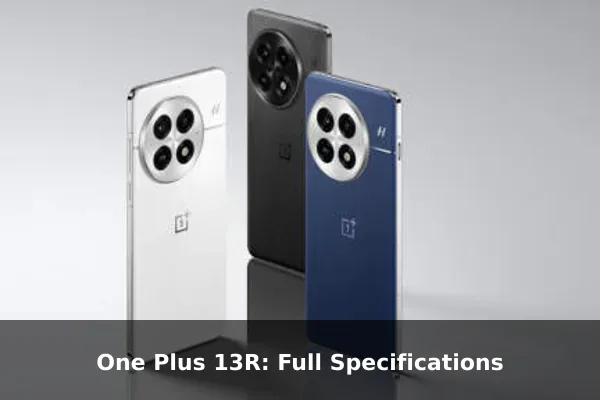
| Colors: | Astral Trail, Nebula Noir |
| Models: | CPH2645, CPH2691, CPH2647 |
| SAR: | 1.19 W/kg (head) 0.90 W/kg (body) |
| Price: | € 519.00 / $ 499.99 / £ 479.00 / ₹ 39,999 |
Our Tests
| Performance: | AnTuTu: 2109299 (v10) GeekBench: 6803 (v6) 3DMark: 4979 (Wild Life Extreme) |
| Display: | 1223 nits max brightness (measured) |
| Loudspeaker: | -23.4 LUFS (Very good) |
| Battery: | Active use score 15:09h |
Price and Availability
The One Plus 13R offers a compelling combination of features and performance. While the base price is around €519, the actual cost may vary depending on your location and retailer. Below, you’ll find the approximate price of the One Plus 13R converted into various currencies. Please note that these are estimates based on recent exchange rates as of June 8, 2026 and may not reflect the exact price you’ll find at a retailer.
- United States: $599
- Japan: ¥95,920
- United Kingdom: £448
- Australia: A$849
- Canada: C$834
- Taiwan: NT$18,919
- Denmark: kr3.872
- Saudi Arabia: ﷼2,245
- South Korea: ₩931,467
- Germany: €519
- Brazil: R$3.068
- Vietnam: ₫15.616.062
- Kenya: KSh 77,822
- India: ₹56,956
- Indonesia: Rp 10.812.669
- Nigeria: ₦817,215
- Pakistan: ₨166,783
- Philippines: ₱36,848
- Bangladesh: ৳৭৩,৬০৩
Value: Flagship Hardware at a Mid-Flagship Price
The clearest argument for the One Plus 13R is value. With launch pricing around $499.99 / €519 / £479 / ₹39,999, it undercuts conventional flagships while still carrying a Snapdragon 8 Gen 3, a high-resolution LTPO display, and a 6000 mAh battery. According to OnePlus official materials, regional availability and storage options can vary, so confirm the exact configuration in your market before buying. For shoppers cross-shopping mid-range and premium tiers, it occupies an unusually competitive middle ground.
Design and Build Quality
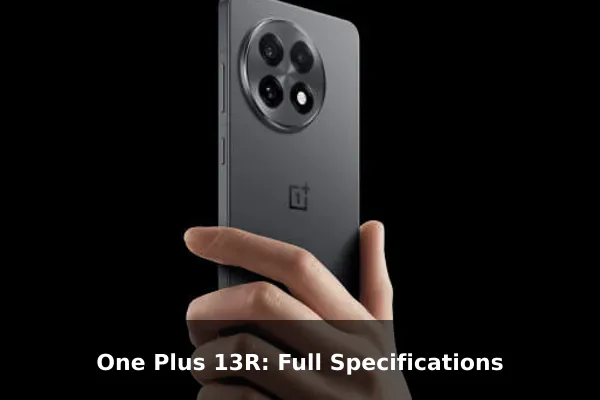
At 161.7 x 75.8 x 8 mm and 206 g, the One Plus 13R is a substantial handset, a direct consequence of its large battery. The build is reassuringly premium: a Gorilla Glass 7i front, an aluminum frame, and a glass back. An IP65 rating means it is dust tight and protected against low-pressure water jets, though it is worth noting this is not the full immersion-rated IP68 found on some pricier rivals. Color choices are Astral Trail and Nebula Noir.
Display: Large, Bright, and Smooth
The 6.78-inch LTPO 4.1 AMOLED panel is a highlight. It runs at up to 120Hz, supports HDR10+, Dolby Vision, and HDR Vivid, and quotes 1600 nits in high-brightness mode with a 4500-nit peak. Resolution sits at 1264 x 2780 (~450 ppi), and 2160Hz PWM dimming aims to ease eye strain. Independent-style measurements cited for this unit reached around 1223 nits in real-world testing, which still translates to comfortable outdoor visibility.
Performance: Last Year’s Best, Still Formidable
Powered by the Qualcomm Snapdragon 8 Gen 3 (4 nm) with the Adreno 750 GPU and up to 16GB of RAM with UFS 4.0 storage, the One Plus 13R remains a strong performer. Reported benchmark figures include an AnTuTu score near 2.1 million, a GeekBench 6 multi-core result around 6803, and roughly 4979 in 3DMark Wild Life Extreme. For gaming, multitasking, and demanding apps, this is flagship-class throughput that should stay relevant for years.
Camera System

The triple rear setup leads with a 50 MP wide (f/1.8, OIS), backed by a 50 MP telephoto offering 2x optical zoom and an 8 MP ultrawide. A color spectrum sensor assists white balance, and video tops out at 4K@60fps with OIS and gyro-EIS. The 16 MP front camera handles selfies at 1080p. It is a versatile, well-rounded package, though the modest ultrawide resolution is a reminder of where costs were trimmed.
Battery and Charging
Endurance is a core selling point. The 6000 mAh Li-Ion cell is large for a phone this size, and an active-use score of around 15 hours in testing backs up its longevity claims. Charging is rated at 80W wired, reaching 50% in about 20 minutes and a full charge in roughly 52 to 54 minutes. There is no wireless charging here, which keeps the price down but may matter to some buyers.
Software and Longevity
The One Plus 13R ships with Android 15 and OxygenOS 15, with OnePlus promising up to four major Android upgrades. Features such as Circle to Search add everyday convenience. That update commitment, combined with capable hardware, helps justify the phone as a multi-year investment rather than a short-term purchase.
Connectivity
Connectivity is broad: Wi-Fi 7 (with 6E market-dependent), Bluetooth 5.4 with aptX HD and LHDC 5, NFC, an infrared port, and comprehensive dual-band GNSS positioning. The notable trade-off is USB Type-C limited to USB 2.0 speeds, which slows wired data transfers. There is no 3.5mm headphone jack and no microSD expansion, so plan storage needs at purchase.
Who Should Buy the One Plus 13R
This phone suits buyers who prioritize battery life, fast charging, and sustained performance over niche extras like wireless charging or IP68 immersion protection. Heavy users, mobile gamers, and anyone wanting flagship speed on a tighter budget will find it compelling, while photography purists chasing the very best ultrawide or zoom may want to look higher up the range.
Conclusion
The One Plus 13R is a confident value flagship: a big, bright display, proven Snapdragon 8 Gen 3 performance, a class-leading 6000 mAh battery, and rapid 80W charging, all at a mid-flagship price. Its compromises—USB 2.0 speeds, no wireless charging, IP65 rather than IP68, and no expandable storage—are reasonable given the cost. If you want long endurance and dependable speed without flagship pricing, the One Plus 13R is an easy recommendation; verify the exact regional variant and price against OnePlus official sources before you buy.
Official references
- OnePlus 13R Official Product Page (US) – Official manufacturer page for OnePlus 13R feature claims, hardware highlights, regional charging notes, availability, and current store context.
- OnePlus 13R Official Specifications (North America) – Primary source for the full OnePlus 13R technical specification sheet, including dimensions, display, cameras, battery, storage, bands, sensors, and package contents.
- OnePlus North America Launch Press Release – Official launch reference for announcement context, regional availability, launch pricing, and OnePlus 13R positioning.
- OnePlus 13R Official Specifications (India) – Official India-region specification sheet useful for verifying regional variants, RAM/storage options, charging details, and India-specific model information.
- OnePlus 13R Quick Guide PDF – Official OnePlus documentation for model identifiers, safety, radio frequency details, SAR/regulatory notes, and charging specifications.
