
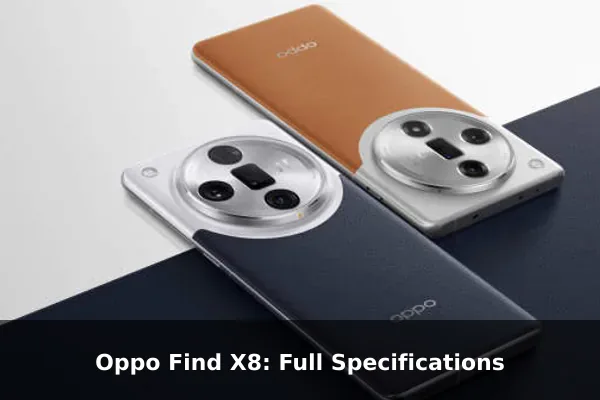
The Oppo Find X8 arrives as the compact-flagship member of Oppo’s 2024 Find X series, sitting a step below the Find X8 Pro while keeping most of the ingredients that define a modern high-end phone. Announced on October 24, 2024 and released later that month, it pairs the flagship MediaTek Dimensity 9400 chipset with a Hasselblad-tuned triple 50 MP camera system, a bright 6.59-inch AMOLED display, and a large Si/C battery inside a body that stays under 194 grams. For roughly 850 EUR, it targets buyers who want genuine flagship performance without stretching to the larger, pricier Pro model.
This article takes a value-and-context angle rather than simply listing numbers: how the Find X8 compares against its own Pro sibling and rival compact flagships, where Oppo made smart trade-offs, and who benefits most from choosing it. The complete technical breakdown appears in the dedicated specifications table below, so here we focus on what those specs mean in daily use.
Full Specifications
Network
| Technology: | GSM / HSPA / LTE / 5G |
| 2G bands: | GSM 850 / 900 / 1800 / 1900 |
| 3G bands: | HSDPA 800 / 850 / 900 / 1700(AWS) / 1900 / 2100 |
| 4G bands: | 1, 2, 3, 4, 5, 7, 8, 12, 17, 18, 19, 20, 26, 28, 38, 39, 40, 41, 42, 66 – International |
| 1, 3, 4, 5, 7, 8, 18, 19, 26, 28, 34, 38, 39, 40, 41, 66 – China | |
| 5G bands: | 1, 2, 3, 5, 7, 8, 12, 20, 28, 38, 40, 41, 66, 77, 78 SA/NSA – International |
| 1, 3, 5, 7, 8, 28, 38, 40, 41, 66, 77, 78 SA/NSA – China | |
| Speed: | HSPA, LTE, 5G |
Launch
| Announced: | 2024, October 24 |
| Status: | Available. Released 2024, October 30 |
Body
| Dimensions: | 157.4 x 74.3 x 7.9 mm (6.20 x 2.93 x 0.31 in) |
| Weight: | 193 g (6.81 oz) |
| Build: | Glass front (Gorilla Glass 7i), glass back (Gorilla Glass 7i), aluminum frame |
| SIM: | Nano-SIM + eSIMNano-SIM + Nano-SIM |
| IP68/IP69 dust tight and water resistant (high pressure water jets; immersible up to 1.5m for 30 min) |
Display
| Type: | AMOLED, 1B colors, 120Hz, 3840Hz PWM, Dolby Vision, HDR10+, 800 nits (typ), 1600 nits (HBM), 4500 nits (peak) |
| Size: | 6.59 inches, 105.6 cm2 (~90.3% screen-to-body ratio) |
| Resolution: | 1256 x 2760 pixels (~460 ppi density) |
| Protection: | Corning Gorilla Glass 7i |
| Ultra HDR image support |
Platform
| OS: | Android 15, up to 5 major Android upgrades, ColorOS 15 |
| Chipset: | Mediatek Dimensity 9400 (3 nm) |
| CPU: | Octa-core (1×3.63 GHz Cortex-X925 & 3×3.3 GHz Cortex-X4 & 4×2.4 GHz Cortex-A720) |
| GPU: | Immortalis-G925 |
Memory
| Card slot: | No |
| Internal: | 256GB 12GB RAM, 256GB 16GB RAM, 512GB 12GB RAM, 512GB 16GB RAM, 1TB 16GB RAM |
| UFS 4.0 |
Main Camera
| Triple: | 50 MP, f/1.8, 24mm (wide), 1/1.56″, 1.0µm, multi-directional PDAF, OIS 50 MP, f/2.6, 73mm (periscope telephoto), 1/1.95″, 0.61µm, 3x optical zoom, multi-directional PDAF, OIS 50 MP, f/2.0, 15mm, 120˚ (ultrawide), 1/2.75″, 0.64µm, multi-directional PDAF |
| Features: | Laser AF, color spectrum sensor, Hasselblad Color Calibration, LED flash, HDR, panorama |
| Video: | 4K@30/60fps, 1080p@30/60/240fps; gyro-EIS; HDR, 10‑bit video, Dolby Vision |
Selfie camera
| Single: | 32 MP, f/2.4, 21mm (wide), 1/2.74″, 0.8µm |
| Features: | Panorama |
| Video: | 4K@30/60fps, 1080p@30/60fps, gyro-EIS |
Sound
| Loudspeaker: | Yes, with stereo speakers |
| 3.5mm jack: | No |
Comms
| WLAN: | Wi-Fi 802.11 a/b/g/n/ac/6/7, dual-band, Wi-Fi Direct |
| Bluetooth: | 5.4, A2DP, LE, aptX HD, LHDC 5 |
| Positioning: | GPS (L1+L5), BDS (B1I+B1c+B2a+B2b), GALILEO (E1+E5a+E5b), QZSS (L1+L5), GLONASS, NavIC (L5) |
| NFC: | Yes |
| Infrared port: | Yes |
| Radio: | No |
| USB: | USB Type-C 3.0 (Global), 2.0 (China), OTG |
Features
| Sensors: | Fingerprint (under display, optical), accelerometer, gyro, proximity, compass |
| Circle to Search |
Battery
| Type: | Si/C Li-Ion 5630 mAh |
| Charging: | 80W wired, PD 55W, PPS, UFCS 50W wireless 10W reverse wireless |
Misc
| Colors: | Star Grey, Space Black, Shell Pink, Blue |
| Models: | CPH2651, PKB110 |
| Price: | About 850 EUR |
Our Tests
| Performance: | AnTuTu: 2751909 (v10) GeekBench: 8885 (v6) 3DMark: 6513 (Wild Life Extreme) |
| Display: | 1364 nits max brightness (measured) |
| Loudspeaker: | -24.0 LUFS (Very good) |
| Battery: | Active use score 13:58h |
Price and Availability
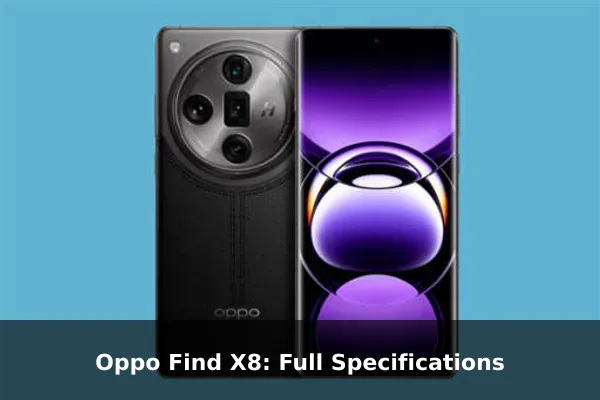
The Oppo Find X8 offers a compelling combination of features and performance. While the base price is around €850, the actual cost may vary depending on your location and retailer. Below, you’ll find the approximate price of the Oppo Find X8 converted into various currencies. Please note that these are estimates based on recent exchange rates as of July 9, 2026 and may not reflect the exact price you’ll find at a retailer.
- United States: $970
- Japan: ¥157,688
- United Kingdom: £725
- Australia: A$1,400
- Canada: C$1,375
- Taiwan: NT$31,131
- Denmark: kr6.344
- Saudi Arabia: ﷼3,638
- South Korea: ₩1,462,631
- Germany: €850
- Brazil: R$5.000
- Vietnam: ₫25.436.573
- Kenya: KSh 125,391
- India: ₹92,656
- Indonesia: Rp 17.465.430
- Nigeria: ₦1,323,869
- Pakistan: ₨270,145
- Philippines: ₱59,705
- Bangladesh: ৳১,১৯,৬৬০
Why Should You Buy the Oppo Find X8?
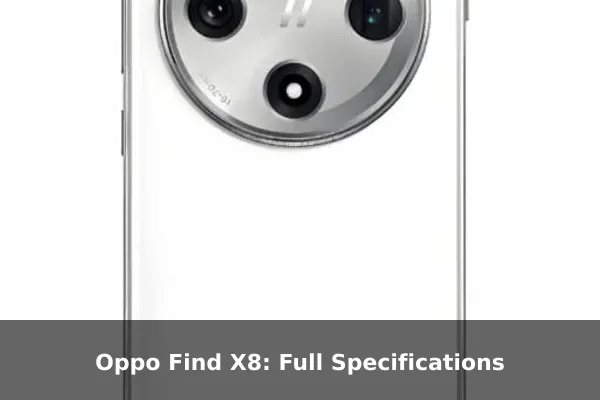
The Find X8’s core appeal is delivering a near-complete flagship experience in a smaller, lighter chassis. At around 850 EUR it undercuts the Find X8 Pro while sharing the same Dimensity 9400 processor, Hasselblad camera calibration, and up to 16 GB of RAM with 1 TB of storage. For shoppers cross-shopping compact flagships like the Xiaomi 15 or Samsung Galaxy S25, the Find X8 makes a strong case on charging speed, telephoto reach, and battery capacity relative to its footprint. It is best understood as the value-conscious flagship of the range rather than a mid-tier compromise.
Design and Build Quality
Measuring 157.4 x 74.3 x 7.9 mm and weighing 193 g, the Find X8 is comfortably one-hand friendly by 2024 flagship standards. Oppo uses Gorilla Glass 7i on both the front and back with an aluminum frame, and the phone carries an IP68/IP69 rating for dust and water resistance, including protection against high-pressure jets and immersion up to 1.5 m for 30 minutes. That IP69 durability is unusual at this price and adds real peace of mind. Four colorways — Star Grey, Space Black, Shell Pink, and Blue — give the lineup broad appeal.
Display Experience
The 6.59-inch AMOLED panel runs at 1256 x 2760 pixels for roughly 460 ppi, with a 120 Hz refresh rate and high-frequency 3840 Hz PWM dimming to ease eye strain in low light. Oppo quotes 800 nits typical, 1600 nits in high-brightness mode, and up to 4500 nits peak for HDR highlights; independent testing measured about 1364 nits of usable brightness, which remains very readable outdoors. Dolby Vision, HDR10+, and Ultra HDR image support round out a display well suited to streaming and photography review.
Performance and Software
Built on the 3 nm MediaTek Dimensity 9400, the Find X8 pairs a Cortex-X925 prime core with three Cortex-X4 cores and four efficiency cores, plus the Immortalis-G925 GPU and fast UFS 4.0 storage. Benchmark figures reported in testing — around 2.75 million on AnTuTu v10, roughly 8885 on Geekbench 6, and about 6513 on 3DMark Wild Life Extreme — place it firmly among the fastest phones of its generation. It ships with Android 15 and ColorOS 15, with Oppo promising up to five major Android upgrades, so long-term support is competitive with other flagships.
Camera System
Photography is the Find X8’s headline strength for the money. The triple rear array combines a 50 MP f/1.8 wide with OIS, a 50 MP f/2.6 periscope telephoto offering 3x optical zoom with OIS, and a 50 MP f/2.0 120-degree ultrawide — a rare all-50 MP setup on a non-Pro flagship. Laser autofocus, a color spectrum sensor, and Hasselblad Color Calibration support consistent tuning, while video reaches 4K at up to 60fps with 10-bit Dolby Vision capture. The 32 MP front camera also records 4K, making it a capable all-rounder for vlogging.
Battery and Charging
A sizeable 5630 mAh Si/C Li-Ion battery gives the Find X8 strong endurance for its compact size, and testing produced an active-use score of nearly 14 hours. Charging is generous: 80W wired, plus 50W wireless and 10W reverse wireless, with PD 55W, PPS, and UFCS support for broad compatibility. That combination of high capacity and fast top-ups means the phone comfortably lasts a full day and refills quickly, an area where it can edge out several rivals in its price bracket.
Connectivity and Extras
The Find X8 is well equipped, with Wi-Fi 7, Bluetooth 5.4 (including aptX HD and LHDC 5), NFC, an infrared port, and multi-band GNSS positioning across GPS L1+L5, Galileo, BeiDou, and more. The global model uses USB Type-C 3.0 for faster data transfer, while an under-display optical fingerprint sensor and stereo speakers complete the package. Note there is no 3.5mm jack, no microSD expansion, and no FM radio — typical omissions at this tier.
Who Should Buy It?
The Find X8 suits buyers who want a genuine flagship camera and chipset in a manageable size, and who value fast charging and durability over the absolute largest screen or battery. Photography enthusiasts drawn to the Hasselblad tuning and triple 50 MP system get the most out of it. Those who prefer an even bigger display, brighter peak output, or the top-tier zoom hardware should compare it against the Find X8 Pro before deciding.
Conclusion
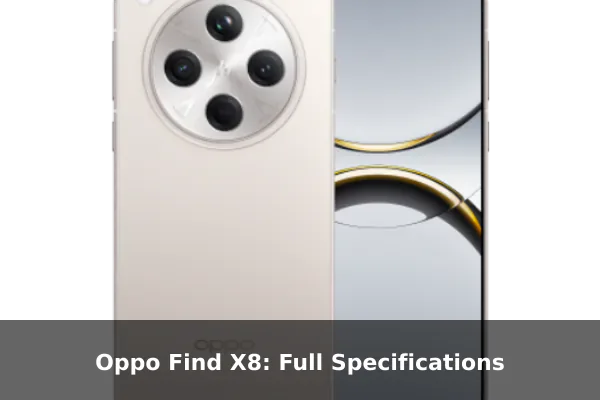
The Oppo Find X8 is a well-balanced compact flagship that delivers flagship silicon, a versatile Hasselblad-tuned camera, a bright AMOLED display, and standout battery-and-charging figures at a comparatively approachable price. Its main compromises — no expandable storage and a slightly smaller screen than the Pro — are easy to accept given what it offers in return. If you want most of a top-tier Oppo experience without paying Pro money, the Find X8 is an easy recommendation; just confirm the latest pricing and availability in your region, as those details can change.
References
- OPPO Find X8 Specs | OPPO Global – Primary manufacturer specification sheet for dimensions, display, cameras, battery, charging, chipset, memory, connectivity, and model facts.
- Spesifikasi OPPO Find X8 | OPPO Indonesia – Official Indonesian OPPO specs page useful for checking local variant details, model number CPH2651, available memory configurations, bands, and retail-market facts.
- OPPO Find X8 Product Page | OPPO Global – Official product overview for feature claims such as camera system, AI features, battery positioning, colors, design, and durability claims.
- MediaTek Dimensity 9400 | MediaTek – Primary chipset source to verify Dimensity 9400 CPU/GPU, process, AI, camera, connectivity, and platform capabilities referenced in the phone specs.
- GSMArena (gsmarena.com) – Well-known independent phone specification database useful as a secondary cross-check for launch status, network bands, camera details, dimensions, and market variants.
