
The Google Pixel 3 XL is the larger 2018 Pixel flagship, built around a sharp QHD+ OLED display, Google’s single-camera computational photography approach, and the Snapdragon 845 platform. It sits in a different lane from many modern mid-range phones: older, discontinued, but still interesting for buyers who value classic Pixel imaging and a clean Android experience.
This article takes a practical specs-editor view of the Pixel 3 XL, focusing on how its display, cameras, software ceiling, LTE connectivity, and battery setup hold up today. The dedicated full specifications table is intentionally left to the separate specs block, while this analysis explains what the numbers mean.
Full Specifications
Network
| Technology: | GSM / CDMA / HSPA / EVDO / LTE |
| 2G bands: | GSM 850 / 900 / 1800 / 1900 |
| CDMA 800 / 1900 | |
| 3G bands: | HSDPA 850 / 900 / 1700(AWS) / 1900 / 2100 |
| CDMA2000 1xEV-DO | |
| 4G bands: | 1, 2, 3, 4, 5, 7, 8, 12, 13, 17, 18, 19, 20, 25, 26, 28, 29, 32, 38, 39, 40, 41, 42, 46, 66, 71 |
| Speed: | HSPA 42.2/5.76 Mbps, LTE (5CA) Cat16 1024/75 Mbps |
Launch
| Announced: | 2018, October 09. Released 2018, October 18 |
| Status: | Discontinued |
Body
| Dimensions: | 158 x 76.7 x 7.9 mm (6.22 x 3.02 x 0.31 in) |
| Weight: | 184 g (6.49 oz) |
| Build: | Glass front (Gorilla Glass 5), glass back (Gorilla Glass 5), aluminum frame |
| SIM: | Nano-SIM + eSIM |
| IP68 dust tight and water resistant (immersible up to 1.5m for 30 min) |
Display
| Type: | P-OLED, HDR |
| Size: | 6.3 inches, 100.3 cm2 (~82.8% screen-to-body ratio) |
| Resolution: | 1440 x 2960 pixels, 18.5:9 ratio (~523 ppi density) |
| Protection: | Corning Gorilla Glass 5 |
Platform
| OS: | Android 9.0 (Pie), upgradable to Android 12 |
| Chipset: | Qualcomm SDM845 Snapdragon 845 (10 nm) |
| CPU: | Octa-core (4×2.5 GHz Kryo 385 Gold & 4×1.6 GHz Kryo 385 Silver) |
| GPU: | Adreno 630 |
Memory
| Card slot: | No |
| Internal: | 64GB 4GB RAM, 128GB 4GB RAM |
| UFS 2.1 |
Main Camera
| Single: | 12.2 MP, f/1.8, 28mm (wide), 1/2.55″, 1.4µm, dual pixel PDAF, OIS |
| Features: | Dual-LED flash, Pixel Shift, Auto-HDR, panorama |
| Video: | 4K@30fps, 1080p@30/60/120fps, 1080p@30fps (gyro-EIS) |
Selfie camera
| Dual: | 8 MP, f/1.8, 28mm (wide), PDAF 8 MP, f/2.2, 19mm (ultrawide), no AF |
| Features: | HDR |
| Video: | 1080p@30fps |
Sound
| Loudspeaker: | Yes, with stereo speakers |
| 3.5mm jack: | No |
Comms
| WLAN: | Wi-Fi 802.11 a/b/g/n/ac, dual-band, Wi-Fi Direct, DLNA |
| Bluetooth: | 5.0, A2DP, LE, aptX HD |
| Positioning: | GPS, GLONASS, BDS, GALILEO |
| NFC: | Yes |
| Radio: | No |
| USB: | USB Type-C 3.1 |
Features
| Sensors: | Fingerprint (rear-mounted), accelerometer, gyro, proximity, compass, barometer |
Battery
| Type: | Li-Po 3430 mAh, non-removable |
| Charging: | 18W wired, PD2.0 Wireless |
Misc
| Colors: | Clearly White, Just Black, Not Pink |
| Models: | G013C |
| Price: | About 260 EUR |
Our Tests
| Performance: | AnTuTu: 258244 (v7), 341814 (v8) GeekBench: 8088 (v4.4), 2092 (v5.1) GFXBench: 12fps (ES 3.1 onscreen) |
Price and Availability
The Google Pixel 3 XL offers a compelling combination of features and performance. While the base price is around €260, the actual cost may vary depending on your location and retailer. Below, you’ll find the approximate price of the Google Pixel 3 XL converted into various currencies. Please note that these are estimates based on recent exchange rates as of October 4, 2026 and may not reflect the exact price you’ll find at a retailer.
- United States: $293
- Japan: ¥46,325
- United Kingdom: £221
- Australia: A$421
- Canada: C$417
- Taiwan: NT$9,331
- Denmark: kr1.944
- Saudi Arabia: ﷼1,097
- South Korea: ₩394,960
- Germany: €260
- Brazil: R$1.527
- Vietnam: ₫7.602.612
- Kenya: KSh 38,506
- India: ₹28,175
- Indonesia: Rp 5.228.735
- Nigeria: ₦400,415
- Pakistan: ₨81,089
- Philippines: ₱18,296
- Bangladesh: ৳৩৬,৪২৩
Value Position
The Pixel 3 XL is best understood as a used or refurbished flagship rather than a current mainstream recommendation. Its appeal comes from the combination of a premium 2018 build, a high-resolution OLED panel, reliable Pixel image processing, and a clean Android interface. That makes it more attractive to collectors, backup-phone buyers, and users who want a low-cost way into the Pixel camera style than to people chasing long software support or 5G.
Its biggest value risk is age. A phone from 2018 may have battery wear, possible screen burn-in, and no modern update runway from Google. Buyers should judge individual condition carefully, especially battery health, charging behavior, speaker performance, and whether the display has tinting or retention. A good unit can still feel refined; a tired unit can quickly lose the value argument.
Design and Build
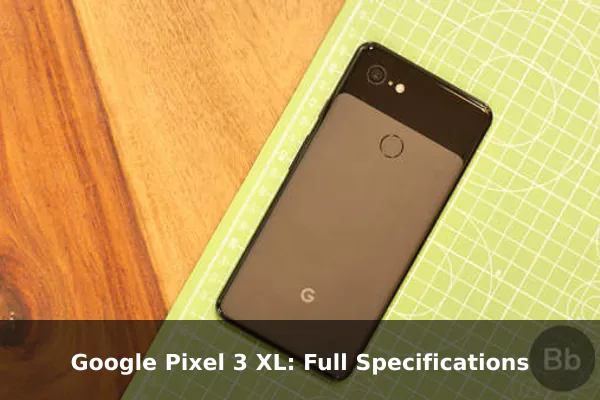
The Pixel 3 XL uses a glass front, Gorilla Glass 5 glass back, and aluminum frame, giving it the kind of flagship construction that still feels more premium than many budget phones. At 184 g and 7.9 mm thick, it is not unusually heavy, and the curved rear glass helps the phone sit comfortably in the hand despite the tall 6.3-inch format.
The IP68 rating is a useful durability point, with resistance against dust and immersion in fresh water under rated conditions. As with any older phone, however, water resistance should be treated cautiously because seals can degrade with repairs, drops, heat, and years of use. The rear-mounted fingerprint reader is also worth noting: it is fast, tactile, and easy to find by feel, although it lacks the modern look of an in-display sensor.
Display Experience
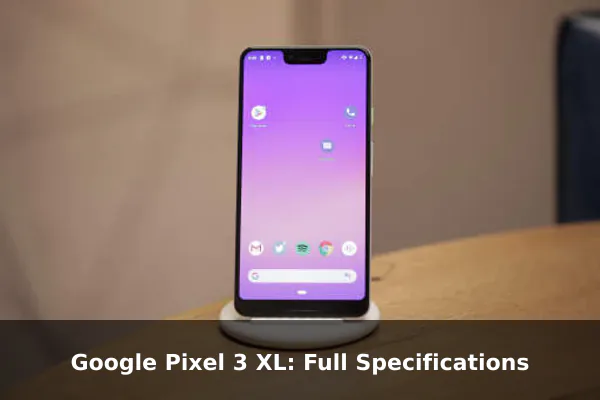
The 6.3-inch P-OLED display is one of the Pixel 3 XL’s defining strengths. Its 1440 x 2960 resolution gives it a very dense 523 ppi image, so text, photos, maps, and desktop-style webpages look crisp. HDR support and OLED contrast help movies and photos look more satisfying than the basic LCD panels still found on some entry-level phones.
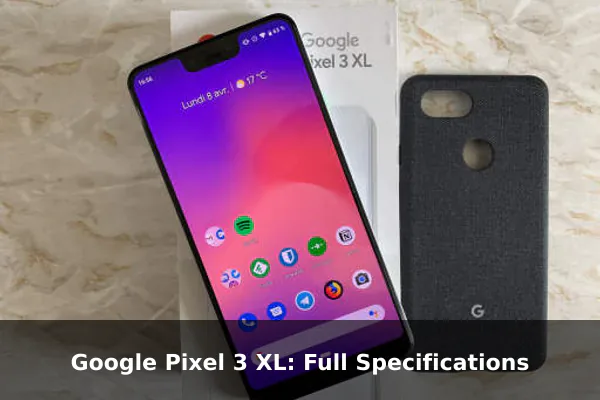
The trade-off is the very visible notch, which was one of the most debated design choices of the Pixel 3 XL. The screen itself is sharp and capable, but the top cutout is large by today’s standards. Users who mostly browse, read, and watch standard video may adapt quickly; users who dislike interruptions in the status bar area may prefer a newer punch-hole Pixel.
Performance
The Snapdragon 845 was a true flagship chipset in its generation, paired here with the Adreno 630 GPU and UFS 2.1 storage. The listed benchmark results place the Pixel 3 XL well above older budget hardware, and daily tasks such as messaging, browsing, streaming, photo viewing, and navigation should still be manageable on a healthy device.
The main limitation is memory. With 4GB of RAM, the Pixel 3 XL can reload apps more often than newer phones with 8GB or more. Heavy multitasking, modern 3D games, and demanding social apps may expose the gap between this phone and current mid-range models. It remains usable, but it is no longer a performance-first purchase.
Camera Character
The rear camera is a single 12.2 MP wide unit with dual pixel autofocus and optical image stabilization. On paper, that looks modest beside today’s triple-camera systems, but this phone is important because Google’s computational photography did much of the heavy lifting. The Pixel 3 XL can still produce pleasing still photos in everyday scenes, especially when lighting is stable and the subject is not too far away.
The missing hardware is just as important as the included sensor. There is no rear ultrawide camera and no dedicated telephoto lens, so zoom and wide landscape flexibility are limited. The dual front camera setup is more distinctive: one standard selfie camera with autofocus and one ultrawide selfie camera for groups. For video, 4K recording is limited to 30 fps, while 1080p modes offer more flexibility.
Battery and Charging
The 3430 mAh battery capacity was reasonable for a 2018 large Pixel, but battery life today depends heavily on the condition of the specific unit. A new or freshly replaced battery can cover light to moderate use, while an original battery may struggle with long days, navigation, camera use, or mobile data-heavy routines.
Charging support includes 18W USB-C wired charging with USB Power Delivery 2.0, plus wireless charging. That is convenient, but not fast by modern standards. Buyers should also remember that older batteries can charge inconsistently or heat up more easily, so the charger, cable, and battery condition matter more here than on a new phone.
Software Support
The Pixel 3 XL launched with Android 9 Pie and is listed as upgradable to Android 12. That is historically good for its launch period, but it also means the phone is now beyond the main software-support expectations that buyers associate with newer Pixels. For privacy-conscious users, banking apps, work profiles, and long-term daily use, the lack of current official security updates is a serious consideration.
For offline media, testing, photography experiments, or a secondary phone, Android 12 can still feel clean and familiar. The software is one of the reasons the Pixel 3 XL aged with more grace than many heavily customized Android phones from the same period. Still, it should not be bought with the expectation of a modern update cycle.
Connectivity
The Pixel 3 XL is an LTE phone, not a 5G phone. Its band list is broad, including many LTE bands used across different regions, and the Cat16 LTE specification gives it strong potential on compatible networks. It also includes Wi-Fi 802.11ac, Bluetooth 5.0 with aptX HD, NFC, USB Type-C 3.1, and major satellite positioning systems.
There is no 3.5 mm headphone jack and no FM radio, so wired audio users will need USB-C audio or an adapter. The Nano-SIM plus eSIM arrangement is forward-looking for its era, though actual eSIM support depends on carrier policy and region. Before buying a used import, checking carrier compatibility is essential.
Who Should Buy It
The Pixel 3 XL makes the most sense for buyers who want an inexpensive larger Pixel for photography, Android nostalgia, app testing, or a backup device. It can also suit users who prefer a rear fingerprint reader, stereo speakers, wireless charging, and a very sharp display over the latest design trends.
It is not ideal for anyone who needs 5G, current security updates, long battery endurance, expandable storage, a headphone jack, or versatile rear cameras. If the phone will be a primary device for payments, work, travel, or sensitive accounts, a newer Pixel with active support is the more sensible choice.
References
Reference sources used for this analysis include the source catalog at tampungspekhp.berkasdrive.com, Google’s official Pixel phone hardware technical specifications, the Android Developers Android 12 device information, and Qualcomm’s official Snapdragon 845 Mobile Platform documentation.
Conclusion
The Google Pixel 3 XL remains a distinctive large-screen Pixel with a crisp QHD+ OLED display, strong single-camera heritage, stereo speakers, IP68 protection, wireless charging, and wide LTE support. Its age is the deciding factor: battery condition, discontinued status, and the Android 12 software ceiling make it a selective buy. Recommended only as a well-priced refurbished or secondary Pixel, not as a long-term primary phone.
