
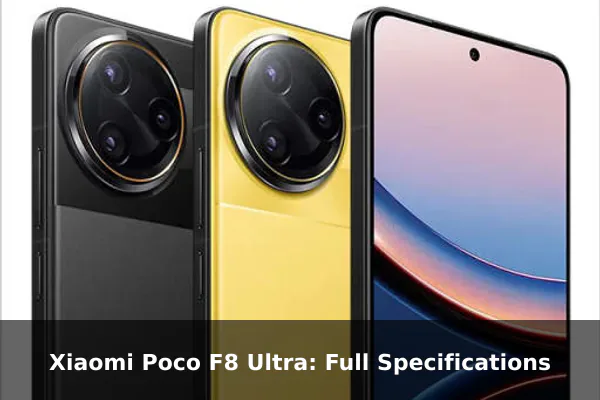
The Xiaomi Poco F8 Ultra arrives as the brand’s most ambitious flagship-killer to date, announced on 26 November 2025 and positioned to blur the line between value-focused hardware and true premium tier. Built around the Snapdragon 8 Elite Gen 5, a 6.9-inch AMOLED panel, and a Bose-tuned 2.1 stereo system with an actual woofer, it targets buyers who want top-shelf specifications without paying conventional flagship money.
What makes the F8 Ultra stand out is how few compromises it makes: an IP68 rating, a triple 50 MP camera array with a 5x periscope telephoto, a 6500 mAh battery with 100W wired and 50W wireless charging, and UFS 4.1 storage. This article looks at what those numbers mean in daily use and who the phone is genuinely built for.
Full Specifications
Network
| Technology: | GSM / HSPA / LTE / 5G |
| 2G bands: | GSM 850 / 900 / 1800 / 1900 |
| 3G bands: | HSDPA 800 / 850 / 900 / 1700(AWS) / 1900 / 2100 |
| 4G bands: | 1, 2, 3, 4, 5, 7, 8, 18, 19, 20, 26, 28, 38, 40, 41, 42, 48, 66, 71 |
| 5G bands: | 1, 2, 3, 5, 7, 8, 20, 26, 28, 38, 40, 41, 48, 66, 71, 77, 78 SA/NSA |
| Speed: | HSPA, LTE, 5G |
Launch
| Announced: | 2025, November 26 |
| Status: | Available. Released 2025, November 26 |
Body
| Dimensions: | 163.3 x 77.8 x 7.9 mm or 8.3 mm |
| Weight: | 218 g or 220 g (7.69 oz) |
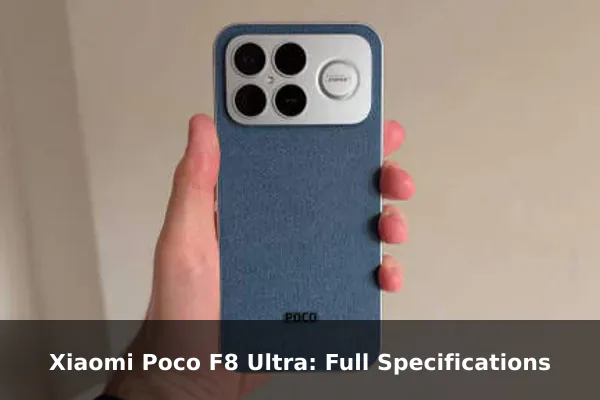
| Build: | Glass front (Poco Shield Glass), aluminum alloy frame, fiber-reinforced plastic back or silicone polymer back |
| SIM: | · Nano-SIM + Nano-SIM + eSIM + eSIM (max 2 at a time)· Nano-SIM + Nano-SIM + eSIM (max 2 at a time) |
| IP68 dust tight and water resistant (immersible up to 1.5m for 30 min) |
Display
| Type: | AMOLED, 68B colors, 2560Hz PWM, 120Hz, Dolby Vision, HDR10+, 2000 nits (HBM), 3500 nits (peak) |
| Size: | 6.9 inches, 116.6 cm2 (~91.8% screen-to-body ratio) |
| Resolution: | 1200 x 2608 pixels, 19.5:9 ratio (~416 ppi density) |
| Protection: | Poco Shield Glass |
Platform
| OS: | Android 16, HyperOS 3 |
| Chipset: | Qualcomm SM8850-AC Snapdragon 8 Elite Gen 5 (3 nm) |
| CPU: | Octa-core (2×4.6 GHz Oryon V3 Phoenix L + 6×3.62 GHz Oryon V3 Phoenix M) |
| GPU: | Adreno 840 |
Memory
| Card slot: | No |
| Internal: | 256GB 12GB RAM, 512GB 16GB RAM |
| UFS 4.1 |
Main Camera
| Triple: | 50 MP, f/1.7, 23mm (wide), 1/1.31″, 1.2µm, dual pixel PDAF, OIS 50 MP, f/3.0, 115mm (periscope telephoto), 1/2.76″, 0.64µm, PDAF (30cm – ∞), OIS, 5x optical zoom 50 MP, f/2.4, 18mm, 102˚ (ultrawide), 1/2.88″, 0.61µm |
| Features: | Color spectrum sensor, LED flash, HDR, panorama |
| Video: | 8K@30fps, 4K@30/60fps, 1080p@30/60/120/240/960fps, 720p@1920fps, gyro-EIS, HDR10+ |
Selfie camera
| Single: | 32 MP, f/2.2, 21mm (wide), 1/3.44″, 0.64µm |
| Features: | HDR |
| Video: | 4K@30fps, 1080p@30/60fps |
Sound
| Loudspeaker: | Yes, with stereo speakers (with Dolby Atmos) |
| 3.5mm jack: | No |
| Tuned by Bose Bose 2.1 stereo sound system with a woofer 24-bit/192kHz Hi-Res & Hi-Res wireless audio |
Comms
| WLAN: | Wi-Fi 802.11 a/b/g/n/ac/6/7, dual-band, Wi-Fi Direct |
| Bluetooth: | 6.0, A2DP, LE, aptX HD, aptX Adaptive, LHDC 5.0, ASHA, MIHC |
| Positioning: | GPS (L1+L5), BDS (B1I+B1c+B2a), GALILEO (E1+E5a), QZSS (L1+L5), NavIC (L5), GLONASS |
| NFC: | Yes (market/region dependent) |
| Infrared port: | Yes |
| Radio: | No |
| USB: | USB Type-C 3.2, Display Port, OTG |
Features
| Sensors: | Fingerprint (under display, ultrasonic), accelerometer, proximity, gyro, compass |
Battery
| Type: | 6500 mAh |
| Charging: | 100W wired, PD3.0, QC3+, 100W PPS, 100% in 38 mins 50W wireless, 50% in 31 mins 22.5W reverse wireless |
Misc
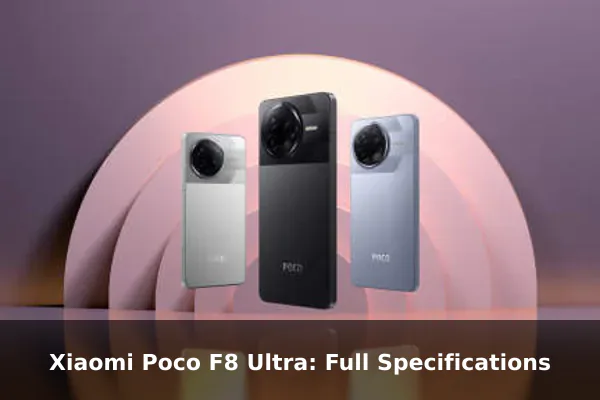
| Colors: | Black, White, Denim Blue |
| Models: | 25102PCBEG |
| Price: | € 829.90 / £ 749.00 |
Our Tests
| Performance: | AnTuTu: 2720760 (v10), 3887841 (v11) GeekBench: 10876 (v6) 3DMark: 6864 (Wild Life Extreme) |
| Display: | 1077 nits max brightness (measured) |
| Loudspeaker: | -26.0 LUFS (Very good) |
| Battery: | Active use score 18:52h |
Price and Availability
The Xiaomi Poco F8 Ultra offers a compelling combination of features and performance. While the base price is around €830, the actual cost may vary depending on your location and retailer. Below, you’ll find the approximate price of the Xiaomi Poco F8 Ultra converted into various currencies. Please note that these are estimates based on recent exchange rates as of June 30, 2026 and may not reflect the exact price you’ll find at a retailer.
- United States: $947
- Japan: ¥153,370
- United Kingdom: £715
- Australia: A$1,375
- Canada: C$1,346
- Taiwan: NT$30,181
- Denmark: kr6.194
- Saudi Arabia: ﷼3,553
- South Korea: ₩1,460,570
- Germany: €830
- Brazil: R$4.894
- Vietnam: ₫24.824.250
- Kenya: KSh 122,542
- India: ₹89,516
- Indonesia: Rp 16.879.922
- Nigeria: ₦1,294,456
- Pakistan: ₨263,345
- Philippines: ₱57,947
- Bangladesh: ৳১,১৬,৬৩২
Why Should You Buy the Poco F8 Ultra?
At around €829.90 / £749.00, the Poco F8 Ultra undercuts mainstream flagships from Samsung and Apple while matching or beating them on raw internal specification. You get the current-generation Snapdragon 8 Elite Gen 5, up to 16GB of RAM, 512GB of UFS 4.1 storage, and a genuine periscope zoom camera — a combination that is rare at this price. For buyers who prioritise performance-per-dollar over brand prestige, the value proposition is immediately obvious.
The catch, as with most Poco devices, is availability and after-sales support, which vary sharply by region. NFC, for example, is listed as market dependent, so intending buyers should confirm local specifications before purchase. Pricing and configurations can also shift after launch, so treat the figures here as indicative rather than fixed.
Design and Build Quality
Measuring 163.3 x 77.8 mm and roughly 7.9-8.3 mm thick, the F8 Ultra is a large phone that weighs 218-220 g. Xiaomi pairs a Poco Shield Glass front with an aluminium alloy frame and a fibre-reinforced plastic or silicone polymer back, keeping weight in check while maintaining a premium feel. The IP68 rating for dust and water resistance, with immersion up to 1.5 m for 30 minutes, is a meaningful upgrade for a phone in this tier and something budget-flagship rivals often omit.
Colour options include Black, White, and Denim Blue. The infrared port and under-display ultrasonic fingerprint sensor round out a design that feels considered rather than cost-cut.
Display Experience
The 6.9-inch AMOLED display is one of the phone’s headline features. It runs at 1200 x 2608 resolution (~416 ppi) with a 120Hz refresh rate, 2560Hz PWM dimming, Dolby Vision, and HDR10+ support. Xiaomi quotes 2000 nits high-brightness mode and 3500 nits peak, though independent measurement in our tests recorded around 1077 nits sustained — still bright enough for comfortable outdoor use, if short of the marketing peak.
With a ~91.8% screen-to-body ratio, the panel dominates the front. High-frequency PWM dimming is a welcome inclusion for users sensitive to flicker, and Dolby Vision playback makes it a strong choice for streaming.
Performance and Software
The Snapdragon 8 Elite Gen 5 on a 3 nm process, paired with the Adreno 840 GPU, places the F8 Ultra firmly in flagship territory. Benchmark figures back this up: AnTuTu results near 3.88 million (v11) and a GeekBench 6 multi-core score around 10,876 indicate that gaming and heavy multitasking are handled with ease. The octa-core Oryon V3 CPU, clocked up to 4.6 GHz, keeps the interface fluid.
Software is Android 16 with HyperOS 3 on top. As with any manufacturer skin, long-term update commitments and bloat vary by region, so check Xiaomi’s stated support window for your market. For verified platform details, the POCO Global specification page and Qualcomm’s Snapdragon documentation are the best primary references.
Camera System
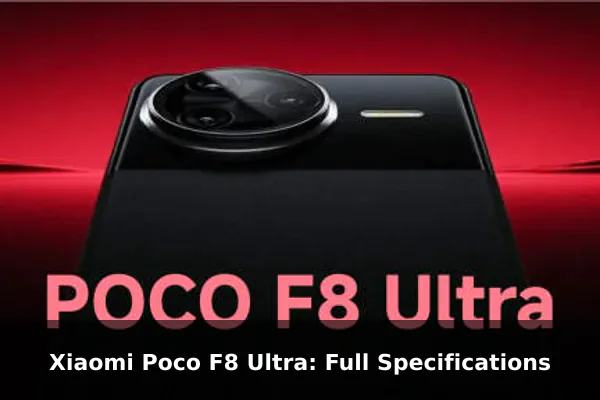
The rear camera is a triple 50 MP setup: a wide with f/1.7 aperture and OIS, a 50 MP periscope telephoto offering 5x optical zoom with OIS, and a 50 MP 102-degree ultrawide. A dedicated colour spectrum sensor aids white balance accuracy. Video tops out at 8K@30fps with HDR10+ and gyro-EIS, making it capable across both stills and motion.
The periscope telephoto is the standout, as true 5x optical zoom is uncommon in this price bracket. On the front, a 32 MP selfie camera handles 4K@30fps video. As always, real-world image quality depends on processing, so cross-referencing hands-on reviews such as Android Central’s is advisable before buying primarily for the camera.
Battery and Charging
A 6500 mAh battery anchors the F8 Ultra, and it delivered an active-use score of 18:52h in our testing — a strong result that should comfortably cover a heavy day. Charging is equally aggressive: 100W wired fills the cell in a claimed 38 minutes, while 50W wireless reaches 50% in 31 minutes. There is also 22.5W reverse wireless charging for topping up accessories.
This blend of large capacity and fast top-ups means the phone rarely feels tethered to a charger, addressing one of the most common daily frustrations for power users.
Audio and Connectivity
The Bose-tuned 2.1 stereo system with a woofer is a genuine differentiator, as reported by The Verge at launch. Combined with Dolby Atmos and 24-bit/192kHz Hi-Res audio support, the F8 Ultra is aimed at media consumers who want more than thin phone speakers. Connectivity is comprehensive: Wi-Fi 7, Bluetooth 6.0 with aptX Adaptive and LHDC 5.0, USB Type-C 3.2 with DisplayPort output, and broad 5G band support.
Note there is no 3.5mm headphone jack and no FM radio, so wireless audio is the intended path.
Conclusion
The Xiaomi Poco F8 Ultra is a compelling package for buyers who want flagship-grade performance, a versatile triple-camera system with real optical zoom, standout Bose-tuned audio, and long battery life without paying top-tier flagship prices. Its main caveats are region-dependent features like NFC and the usual uncertainty around software support and availability, so confirm local specifications before purchase. If you value substance over brand cachet and can live with those variables, the F8 Ultra is one of the strongest value flagships of its generation and an easy recommendation.
References
- POCO Global – POCO F8 Ultra Specs – Primary manufacturer specification page for processor, RAM/storage, dimensions, display, cameras, battery, charging, network bands, IP rating, audio, sensors, and OS.
- Qualcomm – Snapdragon 8 Elite Gen 5 Mobile Platform – Official chipset source to verify Snapdragon 8 Elite Gen 5 platform details used in the phone.
- Android Central – POCO F8 Ultra Review – Reputable hands-on review useful for cross-checking launch timing, configurations, pricing, battery, display, camera, software, and real-world notes.
- The Verge – Poco partners with Bose to put a subwoofer in its latest phone – Established technology publication covering the POCO F8 series launch, Bose audio partnership, core specs, pricing, and model positioning.
- GSMArena – Xiaomi Poco F8 Ultra full phone specifications (gsmarena.com) – Well-known smartphone specification database useful as a secondary cross-check for published spec tables when the exact product URL is confirmed by the writer.
