
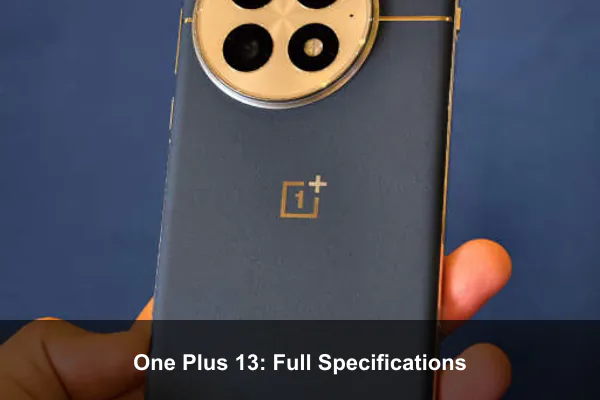
The One Plus 13 lands as the brand’s 2024 flagship, pairing the 3 nm Qualcomm Snapdragon 8 Elite with a 6.82-inch LTPO 4.1 AMOLED panel and a Hasselblad-tuned triple 50 MP camera. Announced on October 31, 2024 and on sale the following day, it targets buyers who want top-tier silicon, a huge 6000 mAh battery and IP68/IP69 durability without stepping up to an ultra-premium price.
This guide looks beyond the spec sheet to explain how those numbers translate into daily use, where the One Plus 13 earns its keep, and how it stacks up against rival flagships. The dedicated specifications table sits separately below, so here we focus on context, trade-offs and the kind of owner each strength suits best.
Full Specifications
Network
| Technology: | GSM / HSPA / LTE / 5G |
| 2G bands: | GSM 850 / 900 / 1800 / 1900 |
| 3G bands: | HSDPA 800 / 850 / 900 / 1700(AWS) / 1900 / 2100 – International |
| HSDPA 850 / 900 / 1900 / 2100 – India | |
| 4G bands: | 1, 2, 3, 4, 5, 7, 8, 12, 13, 17, 18, 19, 20, 25, 26, 28, 30, 32, 38, 39, 40, 41, 48, 66, 71 – International |
| 1, 3, 4, 5, 7, 8, 18, 19, 20, 26, 28, 34, 38, 39, 40, 41, 42, 48, 66 – China, India | |
| 5G bands: | 1, 2, 3, 5, 7, 8, 12, 20, 25, 28, 30, 38, 40, 41, 48, 66, 71, 75, 77, 78 SA/NSA/Sub6 – International |
| 1, 3, 5, 7, 8, 20, 28, 38, 40, 41, 48, 66, 77, 78 SA/NSA – China, India | |
| Speed: | HSPA, LTE (CA), 5G |
Launch
| Announced: | 2024, October 31 |
| Status: | Available. Released 2024, November 01 |
Body
| Dimensions: | 162.9 x 76.5 x 8.5 mm or 8.9 mm |
| Weight: | 210 g or 213 g (7.41 oz) |
| Build: | Glass front (Ceramic Guard), glass back or silicone polymer back (eco leather), aluminum frame |
| SIM: | Nano-SIM + Nano-SIM + eSIM (max 2 at a time)Nano-SIM + Nano-SIM |
| IP68/IP69 dust tight and water resistant (high pressure water jets; immersible up to 1.5m for 30 min) |
Display
| Type: | LTPO 4.1 AMOLED, 1B colors, 120Hz, 2160Hz PWM, Dolby Vision, HDR10+, HDR Vivid, 800 nits (typ), 1600 nits (HBM), 4500 nits (peak) |
| Size: | 6.82 inches, 113.0 cm2 (~90.7% screen-to-body ratio) |
| Resolution: | 1440 x 3168 pixels (~510 ppi density) |
| Protection: | Ceramic Guard glass, Mohs level 4 |
| Ultra HDR image support |
Platform
| OS: | Android 15, up to 4 major Android upgrades, OxygenOS 15 (International), ColorOS 15 (China) |
| Chipset: | Qualcomm SM8750-AB Snapdragon 8 Elite (3 nm) |
| CPU: | Octa-core (2×4.32 GHz Oryon V2 Phoenix L + 6×3.53 GHz Oryon V2 Phoenix M) |
| GPU: | Adreno 830 |
Memory
| Card slot: | No |
| Internal: | 256GB 12GB RAM, 512GB 12GB RAM, 512GB 16GB RAM, 1TB 24GB RAM |
| UFS 4.0 |
Main Camera
| Triple: | 50 MP, f/1.6, 23mm (wide), 1/1.43″, 1.12µm, multi-directional PDAF, OIS 50 MP, f/2.6, 73mm (periscope telephoto), 1/1.95″, 0.8µm, 3x optical zoom, PDAF, OIS 50 MP, f/2.0, 15mm, 120˚ (ultrawide), 1/2.75″, 0.64µm, PDAF |
| Features: | Laser focus, Hasselblad Color Calibration, color spectrum sensor, Dual-LED flash, HDR, panorama |
| Video: | 8K@30fps, 4K@30/60fps, 1080p@30/60/240/480fps, Auto HDR, gyro-EIS, Dolby Vision |
Selfie camera
| Single: | 32 MP, f/2.4, 21mm (wide), 1/2.74″, 0.8µm |
| Features: | HDR, panorama |
| Video: | 4K@30/60fps, 1080p@30/60fps, gyro-EIS |
Sound
| Loudspeaker: | Yes, with stereo speakers |
| 3.5mm jack: | No |
| 24-bit/192kHz Hi-Res audio |
Comms
| WLAN: | Wi-Fi 802.11 a/b/g/n/ac/6/7, dual or tri-band, Wi-Fi Direct |
| Bluetooth: | 5.4, A2DP, LE, aptX HD, LHDC 5 |
| Positioning: | GPS (L1+L5), GLONASS (G1), BDS (B1I+B1c+B2a), GALILEO (E1+E5a), QZSS (L1+L5), NavIC |
| NFC: | Yes |
| Infrared port: | Yes |
| Radio: | No |
| USB: | USB Type-C 3.2, OTG |
Features
| Sensors: | Fingerprint (under display, ultrasonic), accelerometer, gyro, proximity, compass, barometer |
| Circle to Search |
Battery
| Type: | Si/C Li-Ion 6000 mAh |
| Charging: | 100W wired, PD, QC, 50% in 13 min, 100% in 36 min 50W wireless 10W reverse wireless 5W reverse wired |
Misc
| Colors: | Black Eclipse, Arctic Dawn, Midnight Ocean |
| Models: | CPH2655, CPH2653, PJZ110, CPH2649 |
| SAR: | 1.13 W/kg (head) 1.15 W/kg (body) |
| Price: | € 822.00 / $ 787.98 / £ 749.99 / ₹ 62,999 |
Our Tests
| Performance: | AnTuTu: 2690491 (v10) GeekBench: 9278 (v6) 3DMark: 6615 (Wild Life Extreme) |
| Display: | 1204 nits max brightness (measured) |
| Loudspeaker: | -23.5 LUFS (Very good) |
| Battery: | Active use score 15:28h |
EU LABEL
| Energy: | Class A |
| Battery: | 61:36h endurance, 1000 cycles |
| Free fall: | Class D (45 falls) |
| Repairability: | Class B |
Price and Availability
The One Plus 13 offers a compelling combination of features and performance. While the base price is around €822, the actual cost may vary depending on your location and retailer. Below, you’ll find the approximate price of the One Plus 13 converted into various currencies. Please note that these are estimates based on recent exchange rates as of June 18, 2026 and may not reflect the exact price you’ll find at a retailer.
- United States: $950
- Japan: ¥152,366
- United Kingdom: £711
- Australia: A$1,349
- Canada: C$1,335
- Taiwan: NT$30,095
- Denmark: kr6.135
- Saudi Arabia: ﷼3,561
- South Korea: ₩1,444,067
- Germany: €822
- Brazil: R$4.841
- Vietnam: ₫24.879.179
- Kenya: KSh 123,495
- India: ₹89,931
- Indonesia: Rp 16.877.526
- Nigeria: ₦1,288,727
- Pakistan: ₨264,115
- Philippines: ₱57,526
- Bangladesh: ৳১,১৬,৫৪৬
Value: What the One Plus 13 Offers for the Money
At roughly €822 / $788 / £750 / ₹62,999 for the entry configuration, the One Plus 13 undercuts most Snapdragon 8 Elite rivals while matching them on the essentials. You get flagship silicon, UFS 4.0 storage, wireless charging and full IP68/IP69 protection, areas where cheaper phones usually compromise. Four guaranteed major Android upgrades add long-term value, making the asking price feel like a deliberate counter to pricier Samsung and Apple flagships.
Design and Build Quality
Measuring 162.9 x 76.5 mm and weighing 210-213 g, the One Plus 13 is a large but well-balanced device. The aluminium frame is flanked by a glass front with Ceramic Guard and a choice of glass or silicone-polymer eco-leather backs across Black Eclipse, Arctic Dawn and Midnight Ocean. The standout here is the IP68/IP69 rating, which survives high-pressure water jets in addition to immersion, a level of ingress protection still rare even among premium phones.
Display Experience
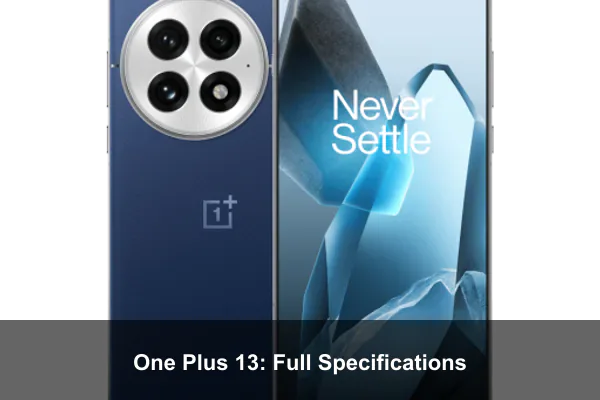
The 6.82-inch LTPO 4.1 AMOLED runs at a sharp 1440 x 3168 (510 ppi) with a 120Hz adaptive refresh rate and 2160Hz PWM dimming for eye comfort. Peak brightness is quoted at 4500 nits, and independent testing measured around 1204 nits in everyday use, more than enough for sunlight. Dolby Vision, HDR10+, HDR Vivid and Ultra HDR image support round out one of the most complete display packages in its class.
Performance and Storage
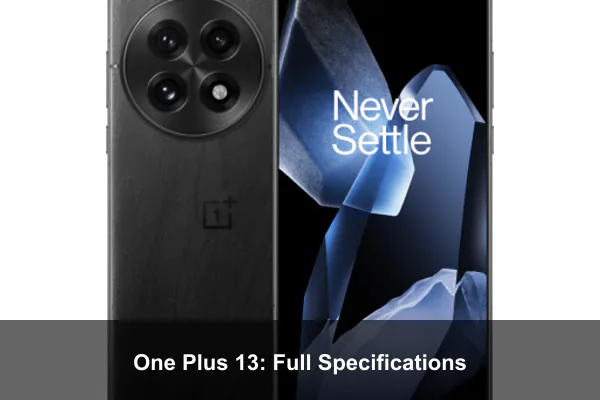
The Snapdragon 8 Elite, with its dual 4.32 GHz Oryon V2 Phoenix L cores and Adreno 830 GPU, places the One Plus 13 among the fastest Android phones available. Benchmark runs of roughly 2.69 million on AnTuTu, 9278 on GeekBench 6 and 6615 on 3DMark Wild Life Extreme confirm sustained flagship muscle. Configurations scale from 256GB/12GB RAM up to 1TB/24GB RAM on fast UFS 4.0, though there is no microSD expansion.
Camera System
Hasselblad colour calibration anchors a versatile triple 50 MP array: a wide with OIS, a 3x periscope telephoto with OIS, and a 120-degree ultrawide. Laser focus, a colour spectrum sensor and a dual-LED flash support the setup, while video tops out at 8K@30fps with Dolby Vision capture. The 32 MP selfie camera shoots 4K@60fps. It is a system designed for consistency across focal lengths rather than a single headline lens.
Battery and Charging
A large 6000 mAh Si/C battery delivers a strong active-use score of 15:28h and an EU endurance rating of 61:36h. Charging is equally aggressive: 100W wired refills 50% in about 13 minutes and a full charge in 36, backed by 50W wireless, 10W reverse wireless and 5W reverse wired. For heavy users, this combination of capacity and speed is among the phone’s most compelling traits.
Software and Longevity
Shipping with Android 15 and OxygenOS 15 (ColorOS 15 in China), the One Plus 13 promises up to four major Android upgrades, plus modern touches like Circle to Search. With an EU repairability Class B and a 1000-cycle battery rating, it is built to stay relevant for several years, which strengthens the long-term value argument.
Connectivity and Extras
Connectivity is comprehensive: Wi-Fi 7, Bluetooth 5.4 with aptX HD and LHDC 5, multi-band GNSS, NFC, an infrared port and USB Type-C 3.2 with OTG. An ultrasonic under-display fingerprint sensor, stereo speakers measured at a clean -23.5 LUFS and 24-bit/192kHz Hi-Res audio complete a well-rounded package. The omission of a 3.5mm jack and microSD slot are the only notable gaps.
Who Should Buy the One Plus 13
This phone suits power users, mobile gamers and photographers who want flagship performance, a premium display and exceptional battery life at a price below the biggest names. Those who rely on expandable storage or wired headphones should look elsewhere, but for most buyers chasing high-end value, the One Plus 13 makes a strong case.
Conclusion

The One Plus 13 is a confident, well-rounded flagship that blends Snapdragon 8 Elite speed, a superb LTPO AMOLED display, a flexible Hasselblad triple camera and a class-leading 6000 mAh battery with fast 100W charging. Its IP68/IP69 durability and four years of Android updates add reassuring longevity. If you want near-top-tier flagship performance without paying ultra-premium prices, and you can live without a headphone jack or memory card slot, the One Plus 13 is an easy recommendation.
