
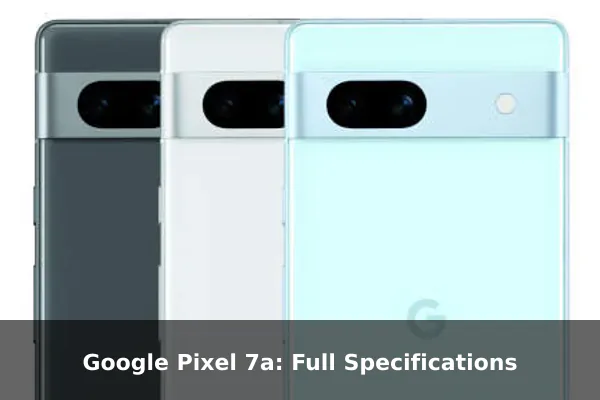
The Google Pixel 7a slots into Google’s mid-range lineup as a phone that borrows heavily from the flagship playbook, pairing the in-house Tensor G2 chipset with a compact 6.1-inch OLED panel and Google’s photography-first camera tuning. Announced on 10 May 2023, it aims squarely at buyers who want the clean Pixel software experience and computational photography without paying flagship money.
On paper it reads like a shrunken Pixel 7: a 90Hz display, IP67 rating, wireless charging, and a promise of multiple years of Android updates. This breakdown looks at how those specifications translate into everyday value, where the 7a shines, and who it makes the most sense for.
Full Specifications
Network
| Technology: | GSM / HSPA / LTE / 5G |
| 2G bands: | GSM 850 / 900 / 1800 / 1900 |
| 3G bands: | HSDPA 800 / 850 / 900 / 1700(AWS) / 1900 / 2100 |
| 4G bands: | 1, 2, 3, 4, 5, 7, 8, 12, 13, 14, 17, 20, 25, 26, 28, 29, 30, 38, 40, 41, 48, 66, 71 – GWKK3, G0DZQ |
| 1, 2, 3, 4, 5, 7, 8, 12, 17, 18, 19, 20, 21, 25, 28, 32, 38, 39, 40, 41, 42, 66 – GHL1X, G82U8 | |
| 5G bands: | 1, 2, 3, 5, 7, 8, 12, 14, 20, 25, 28, 30, 38, 41, 48, 66, 71, 77, 78 SA/NSA/Sub6 – GWKK3 |
| 1, 2, 3, 5, 7, 8, 12, 14, 20, 25, 28, 30, 38, 41, 48, 66, 71, 77, 78, 260, 261 SA/NSA/Sub6/mmWave – G0DZQ | |
| 1, 2, 3, 5, 7, 8, 12, 20, 25, 28, 38, 40, 41, 66, 75, 76, 77, 78, 79 SA/NSA/Sub6 – GHL1X, G82U8 | |
| Speed: | HSPA, LTE (CA), 5G |
Launch
| Announced: | 2023, May 10 |
| Status: | Available. Released 2023, May 10 |
Body
| Dimensions: | 152 x 72.9 x 9 mm (5.98 x 2.87 x 0.35 in) |
| Weight: | 193.5 g (6.84 oz) |
| Build: | Glass front (Gorilla Glass 3), aluminum frame, plastic back |
| SIM: | Nano-SIM + eSIM |
| IP67 dust/water resistant (up to 1m for 30 min) |
Display
| Type: | OLED, HDR, 90Hz |
| Size: | 6.1 inches, 90.7 cm2 (~81.8% screen-to-body ratio) |
| Resolution: | 1080 x 2400 pixels, 20:9 ratio (~429 ppi density) |
| Protection: | Corning Gorilla Glass 3 |
Platform
| OS: | Android 13, upgradable to Android 15, up to 5 major Android upgrades |
| Chipset: | Google Tensor G2 (5 nm) |
| CPU: | Octa-core (2×2.85 GHz Cortex-X1 & 2×2.35 GHz Cortex-A78 & 4×1.80 GHz Cortex-A55) |
| GPU: | Mali-G710 MP7 |
Memory
| Card slot: | No |
| Internal: | 128GB 8GB RAM |
| UFS 3.1 |
Main Camera
| Dual: | 64 MP, f/1.9, 26mm (wide), 1/1.73″, 0.8µm, dual pixel PDAF, OIS 13 MP, f/2.2, 120˚ (ultrawide), 1.12µm |
| Features: | Dual-LED flash, Pixel Shift, Auto-HDR, panorama |
| Video: | 4K@30/60fps, 1080p@30/60/120/240fps, OIS |
Selfie camera
| Single: | 13 MP, f/2.2, 20mm (ultrawide), 1.12µm |
| Features: | HDR, panorama |
| Video: | 4K@30fps, 1080p@30fps |
Sound
| Loudspeaker: | Yes, with stereo speakers |
| 3.5mm jack: | No |
Comms
| WLAN: | Wi-Fi 802.11 a/b/g/n/ac/6e, tri-band |
| Bluetooth: | 5.3, A2DP, LE |
| Positioning: | GPS, GLONASS, GALILEO, BDS, QZSS, NavIC |
| NFC: | Yes |
| Radio: | No |
| USB: | USB Type-C 3.2 |
Features
| Sensors: | Fingerprint (under display, optical), accelerometer, gyro, proximity, compass, barometer |
| Circle to Search |
Battery
| Type: | Li-Po 4385 mAh |
| Charging: | 18W wired, PD3.0 7.5W wireless |
Misc
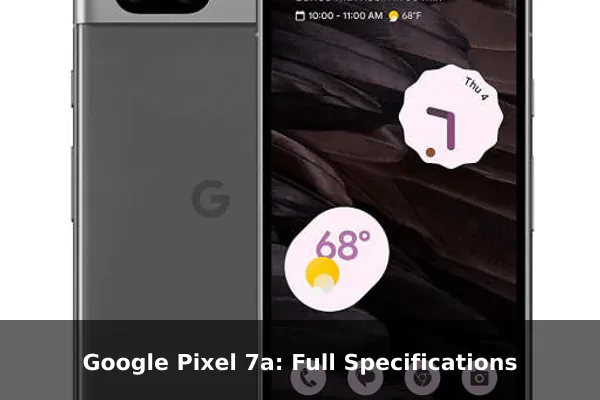
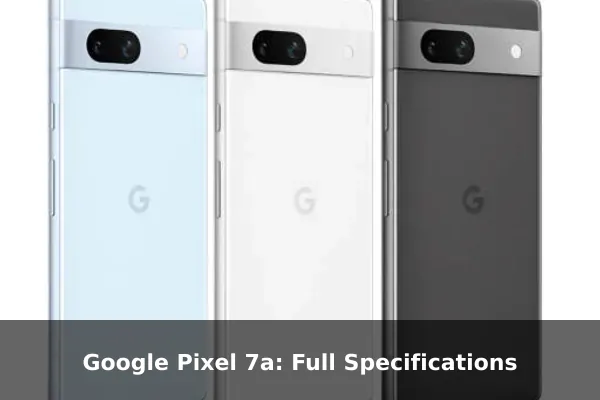
| Colors: | Charcoal, Snow, Sea, Coral |
| Models: | GWKK3, GHL1X, G0DZQ, G82U8 |
| Price: | € 195.00 / $ 161.45 / £ 175.20 / ₹ 27,999 |
Our Tests
| Performance: | AnTuTu: 765281 (v9) GeekBench: 3191 (v5.1), 3631 (v6) GFXBench: 62fps (ES 3.1 onscreen) |
| Display: | 1070 nits max brightness (measured) |
| Camera: | Photo / Video |
| Loudspeaker: | -26.5 LUFS (Good) |
| Battery (old): | Endurance rating 76h |
Price and Availability
The Google Pixel 7a offers a compelling combination of features and performance. While the base price is around €195, the actual cost may vary depending on your location and retailer. Below, you’ll find the approximate price of the Google Pixel 7a converted into various currencies. Please note that these are estimates based on recent exchange rates as of September 10, 2026 and may not reflect the exact price you’ll find at a retailer.
- United States: $227
- Japan: ¥34,846
- United Kingdom: £167
- Australia: A$314
- Canada: C$313
- Taiwan: NT$7,142
- Denmark: kr1.458
- Saudi Arabia: ﷼851
- South Korea: ₩303,925
- Germany: €195
- Brazil: R$1.157
- Vietnam: ₫5.866.448
- Kenya: KSh 29,345
- India: ₹21,569
- Indonesia: Rp 3.968.751
- Nigeria: ₦305,524
- Pakistan: ₨62,934
- Philippines: ₱14,173
- Bangladesh: ৳২৭,৮৯০
Value: A Flagship Experience on a Mid-Range Budget
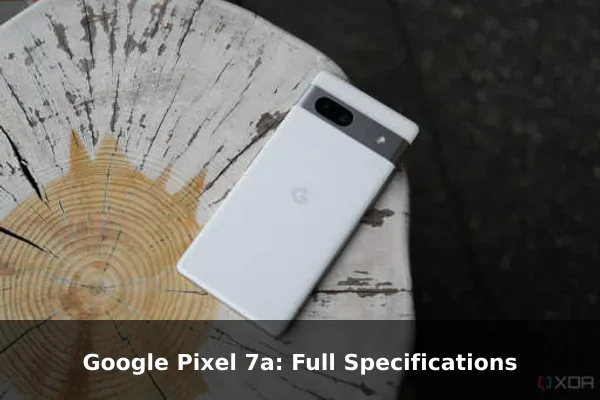
The Pixel 7a’s core appeal is that it delivers the pieces most people actually notice — a sharp OLED screen, dependable cameras, and long software support — at a price that undercuts premium rivals. With the same Tensor G2 silicon found in the pricier Pixel 7, buyers are not stepping down in raw capability, only in polish. Features usually reserved for costlier phones, such as wireless charging and an IP67 rating, appear here too, which is unusual at this tier.
Design and Build Quality
Measuring 152 x 72.9 x 9 mm and weighing 193.5 g, the 7a stays genuinely pocketable in an era of oversized handsets. Google uses a Gorilla Glass 3 front, an aluminum frame, and a plastic back — a sensible mix that keeps weight down while feeling sturdier than an all-plastic device. The IP67 dust and water resistance rating (submersion up to 1 m for 30 minutes) is reassuring for a mid-ranger. Color options include Charcoal, Snow, Sea, and Coral, and the signature Pixel camera bar keeps the design instantly recognizable.
Display: Compact and Smooth
The 6.1-inch OLED panel runs at a 1080 x 2400 resolution (around 429 ppi) and steps up to a 90Hz refresh rate, a welcome upgrade over the flat 60Hz of earlier A-series Pixels. HDR support and a measured peak brightness of roughly 1070 nits mean the screen stays legible outdoors and handles high-contrast content well. At about 81.8% screen-to-body ratio, it is a comfortable size for one-handed use while remaining crisp for reading and video.
Performance and Software
Tensor G2 (5 nm) drives an octa-core CPU layout with Cortex-X1, A78, and A55 cores, paired with a Mali-G710 MP7 GPU and 8GB of RAM. Benchmark figures — AnTuTu around 765,281, GeekBench 6 multi-core near 3,631, and roughly 62fps in GFXBench ES 3.1 — place it firmly in the upper mid-range rather than flagship territory, but everyday tasks and most games run smoothly. The real advantage is Google’s software: the phone ships on Android 13, is upgradable through Android 15, and is promised up to five major Android upgrades, plus modern touches like Circle to Search. UFS 3.1 storage keeps app loading brisk, though the fixed 128GB with no microSD slot is a limitation for media hoarders.
Camera: Google’s Computational Edge
The 64 MP f/1.9 main sensor with OIS and dual-pixel PDAF is joined by a 13 MP ultrawide, and Google’s image processing does the heavy lifting to produce the natural color and reliable dynamic range Pixels are known for. Video tops out at 4K at 60fps with OIS, and the 13 MP ultrawide selfie camera captures group shots comfortably. Features such as Pixel Shift, Auto-HDR, and panorama round out a package that consistently punches above its price bracket for point-and-shoot photography.
Battery and Charging
A 4,385 mAh Li-Po battery supports the compact frame, delivering an endurance rating of around 76 hours in earlier testing — enough for a full day of typical use. Charging is the weaker link: 18W wired charging is modest by 2023 standards, though the inclusion of 7.5W PD3.0 wireless charging is a genuine bonus at this price. Buyers who prioritize rapid top-ups may find the wired speed conservative.
Connectivity
The 7a is well equipped for the future, offering 5G (Sub6 and, on select models, mmWave), tri-band Wi-Fi 6e, Bluetooth 5.3, and USB Type-C 3.2. Positioning support is broad, spanning GPS, GLONASS, GALILEO, BDS, QZSS, and NavIC. NFC is present for contactless payments, and dual connectivity comes via Nano-SIM plus eSIM. There is no 3.5mm headphone jack, but stereo speakers handle audio duties.
Who Should Buy the Pixel 7a
The Pixel 7a is ideal for anyone who wants clean, bloat-free Android, class-leading computational photography, and years of guaranteed updates in a compact body. It suits users upgrading from an older mid-ranger, photography enthusiasts on a budget, and those who value software longevity over spec-sheet extremes. Power users who demand the fastest charging, expandable storage, or top-tier gaming performance may want to look higher up the range.
Conclusion
The Google Pixel 7a distills the best of Google’s flagship experience — Tensor G2 performance, a smooth 90Hz OLED, standout cameras, and long-term software support — into an affordable, pocket-friendly package. Its modest 18W charging and fixed storage are the main compromises, but they are easy to forgive given everything else on offer. For buyers who want a dependable, camera-strong Android phone that stays current for years, the Pixel 7a remains an easy recommendation.
References
- Google Store — Pixel 7a Official Product Page – Official Google product page for the Pixel 7a — the primary source for design, colors, pricing, and headline features.
- Google Pixel 7a — Official Tech Specs – Google's official technical specifications sheet, the authoritative source for processor (Tensor G2), display, camera, battery, memory, and connectivity details.
- Google Pixel Help / Support – Official Google support documentation for Pixel devices, useful for verifying feature behavior, software support timelines, and hardware details.
- GSMArena — Google Pixel 7a – Well-established smartphone specification reference site providing a comprehensive, cross-checked spec sheet for the Pixel 7a.
- The Verge — Google Pixel 7a Coverage – Reputable technology news organization with detailed review and real-world verification of the Pixel 7a's specifications and performance.
