
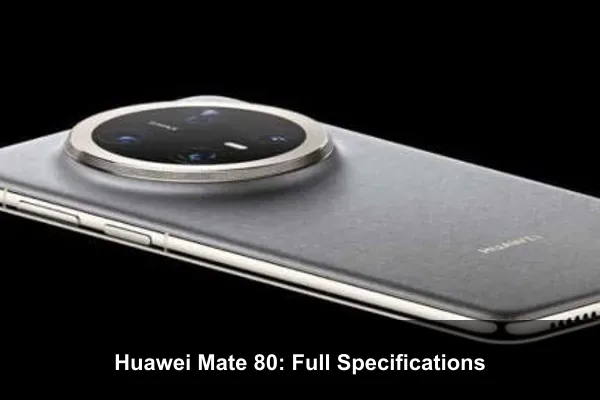
Huawei Mate 80 targets buyers who want a true flagship hardware mix without stepping into ultra-premium pricing. It combines a durable chassis, high-end display tech, a flexible camera setup, and modern connectivity in one package.
Instead of repeating the full spec sheet, this overview focuses on what those specs mean in real buying decisions: value, daily usability, imaging strengths, battery behavior, and who this phone is best suited for.
Full Specifications
Network
| Technology: | GSM / CDMA / HSPA / CDMA2000 / LTE / 5G |
| 2G bands: | GSM 850 / 900 / 1800 / 1900 |
| CDMA 800 | |
| 3G bands: | HSDPA 800 / 850 / 900 / 1700(AWS) / 1900 / 2100 |
| CDMA2000 1x | |
| 4G bands: | LTE |
| 5G bands: | SA/NSA |
| Speed: | HSPA, LTE, 5G |
Launch
| Announced: | 2025, November 25 |
| Status: | Available. Released 2025, November 25 |
Body
| Dimensions: | 161.9 x 76 x 8 mm (6.37 x 2.99 x 0.31 in) |
| Weight: | 217 g (7.65 oz) |
| Build: | Glass front, aluminum alloy frame, fiber-reinforced plastic back |
| SIM: | Nano-SIM + Nano-SIM |
| IP68/IP69 dust tight and water resistant (high pressure water jets; immersible up to 6m for 30 min) |
Display
| Type: | LTPO OLED, 1B colors, 120Hz, 1440Hz PWM, HDR Vivid |
| Size: | 6.75 inches, 110.3 cm2 (~89.7% screen-to-body ratio) |
| Resolution: | 1280 x 2832 pixels (~460 ppi density) |
| Protection: | Huawei Kunlun Glass 2 |
Platform
| OS: | HarmonyOS 6.0 |
| Chipset: | Kirin 9020 (7 nm) |
| CPU: | Octa-core (1×2.5 GHz & 3×2.15 GHz & 4×1.6 GHz) |
| GPU: | Maleoon 920 |
Memory
| Card slot: | No |
| Internal: | 256GB 12GB RAM, 512GB 12GB RAM, 512GB 16GB RAM |
Main Camera
| Triple: | 50 MP, f/1.4-f/4.0, 24mm (wide), PDAF, OIS 12 MP, f/3.4, 125mm (periscope telephoto), PDAF, OIS, 5.5x optical zoom 40 MP, f/2.2, 13mm, 120˚ (ultrawide), PDAF |
| Features: | Laser AF, color spectrum sensor, LED flash, panorama, HDR |
| Video: | 4K, 1080p@240fps, HDR, gyro-EIS, OIS, HDR Vivid |
Selfie camera
| Single: | 13 MP, f/2.0, 18mm (ultrawide), AF TOF 3D, (depth/biometrics sensor) |
| Features: | HDR, panorama |
| Video: | 4K, 1080p, HDR, gyro-EIS |
Sound
| Loudspeaker: | Yes, with stereo speakers |
| 3.5mm jack: | No |
| High-definition audio |
Comms
| WLAN: | Wi-Fi 802.11 a/b/g/n/ac/6/7, dual-band, Wi-Fi Direct |
| Bluetooth: | 6.0, A2DP, LE, L2HC |
| Positioning: | GPS (L1+L5), GLONASS (L1), BDS (B1I+B1c+B2a+B2b), GALILEO (E1+E5a+E5b), QZSS (L1+L5), NavIC |
| NFC: | Yes |
| Infrared port: | Yes |
| Radio: | No |
| USB: | USB Type-C 3.1, OTG, DisplayPort 1.2 |
Features
| Sensors: | Face ID, fingerprint (side-mounted), accelerometer, gyro, proximity, barometer, compass |
| BDS Satellite Calling and Messaging – China only |
Battery
| Type: | 5750 mAh |
| Charging: | 66W wired 50W wireless Reverse wireless 5W reverse wired |
Misc
| Colors: | Black, White, Green, Gold |
| Models: | VYG-AL00 |
| Price: | About 570 EUR |
Price and Availability
The Huawei Mate 80 offers a compelling combination of features and performance. While the base price is around €570, the actual cost may vary depending on your location and retailer. Below, you’ll find the approximate price of the Huawei Mate 80 converted into various currencies. Please note that these are estimates based on recent exchange rates as of April 24, 2026 and may not reflect the exact price you’ll find at a retailer.
- United States: $666
- Japan: ¥106,385
- United Kingdom: £494
- Australia: A$933
- Canada: C$912
- Taiwan: NT$21,036
- Denmark: kr4.254
- Saudi Arabia: ﷼2,499
- South Korea: ₩987,182
- Germany: €570
- Brazil: R$3.309
- Vietnam: ₫17.395.908
- Kenya: KSh 86,178
- India: ₹62,726
- Indonesia: Rp 11.526.608
- Nigeria: ₦895,773
- Pakistan: ₨185,793
- Philippines: ₱40,273
- Bangladesh: ৳৮১,৭৬১
Value in the Upper-Flagship Tier
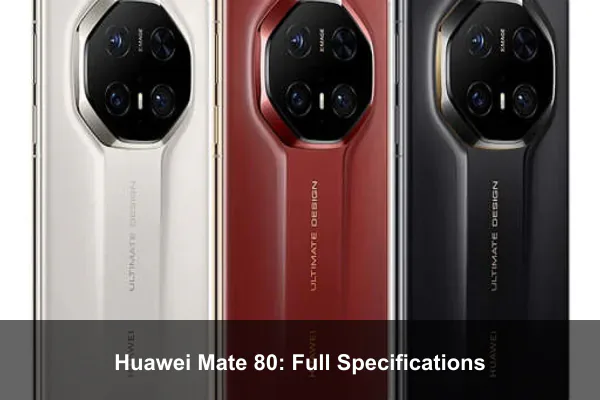
At around 570 EUR, the Mate 80 sits in an interesting zone: not budget, but notably below many top-end flagship launch prices. The combination of LTPO OLED, IP68/IP69 protection, periscope zoom, wireless charging, and Wi-Fi 7 gives it a strong price-to-hardware balance for spec-focused buyers.
Design and Durability
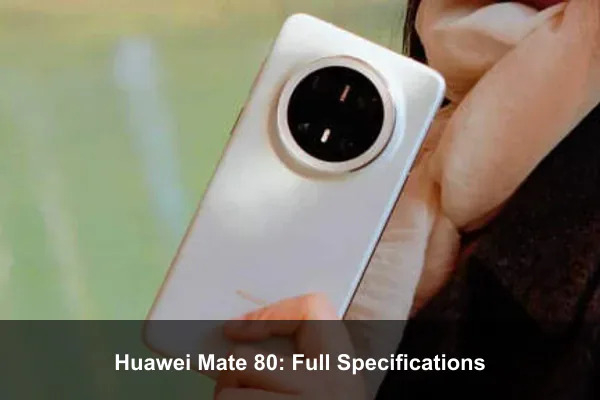
The build prioritizes resilience and premium feel at the same time: glass front, aluminum alloy frame, and fiber-reinforced plastic back. With IP68/IP69 and up to 6 meters water immersion rating, this is positioned as a tougher daily carry than many similarly priced devices.
Display Quality and Viewing Experience
The 6.75-inch LTPO OLED panel delivers high-end fundamentals for mixed use: smooth 120Hz refresh, rich color depth, and HDR Vivid support. The 1440Hz PWM figure also indicates a more eye-comfort-aware approach for users sensitive to flicker during low-brightness viewing.
Performance and Platform Direction
Huawei pairs HarmonyOS 6.0 with the Kirin 9020 and Maleoon 920 GPU, aiming for stable flagship-class responsiveness rather than headline benchmark chasing. With 12GB or 16GB RAM options, multitasking headroom should remain strong for heavy app switching and longer device ownership cycles.
Camera System Practicality
The rear setup is tuned for flexibility: a variable-aperture main sensor, a 5.5x optical periscope telephoto, and a high-resolution ultrawide. That mix is especially useful for users who shoot across portraits, distant subjects, and landscape scenes without relying too heavily on digital crop.
Video and Creator Readiness
4K capture on both front and rear, plus OIS and gyro-EIS support, makes the Mate 80 better suited for handheld social and travel video than many phones in its price class. Slow-motion support at 1080p up to 240fps adds another practical tool for short-form content creation.
Battery and Charging Balance
The 5750 mAh battery capacity is one of the phone’s most buyer-friendly specs, especially for power users. 66W wired and 50W wireless charging reduce downtime, while reverse wired and reverse wireless options add utility for accessories and emergency top-ups.
Connectivity and Everyday Utility
Beyond 5G SA/NSA support, the Mate 80 stands out with Wi-Fi 7, Bluetooth 6.0, full multi-system positioning support, NFC, infrared, and USB-C 3.1 with DisplayPort output. This is a comprehensive connectivity profile for users who rely on phone-as-hub workflows.
Who Should Buy the Huawei Mate 80
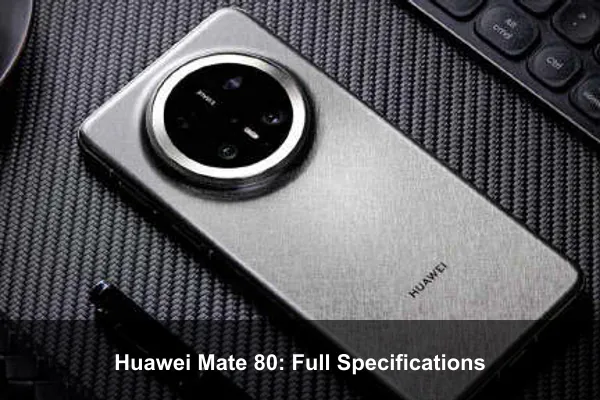
This phone makes the most sense for buyers who prioritize complete hardware value: premium display, durable construction, versatile cameras, and large battery with fast wired and wireless charging. It is a strong fit for spec-conscious users who want near-flagship breadth without paying top-tier flagship pricing.
Conclusion
The Huawei Mate 80 is a well-rounded, specs-heavy flagship alternative that gets the fundamentals right across build, screen, camera flexibility, battery, and connectivity. If your priority is maximum hardware value per euro in a premium segment, it is an easy model to shortlist.
